


Chintz Upholstered Chair
A chintz upholstered chair brings printed floral pattern and comfortable seating into a room, making it a classic choice for traditional spaces.
Chintz Upholstered Chair
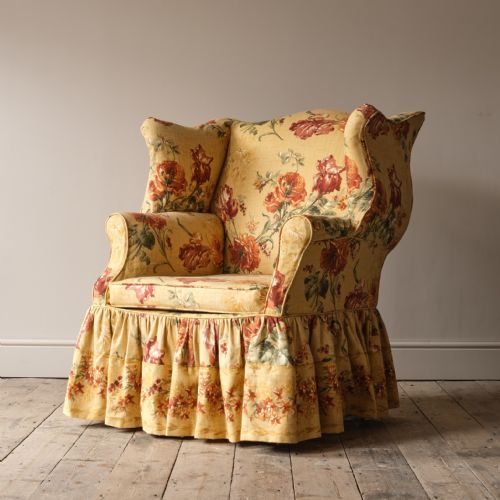
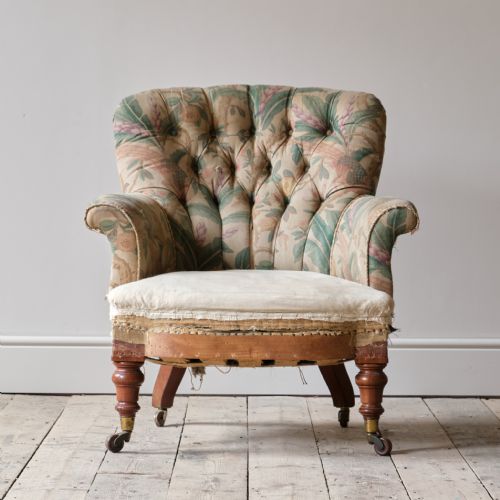
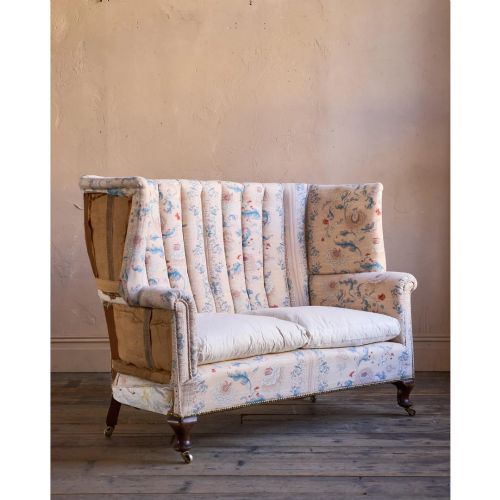
A chintz upholstered chair typically appears as a traditional armchair, slipper chair, nursing chair, or sofa within the selection. These pieces originate from various periods including the Georgian era, the nineteenth century, the Edwardian period, and the early twentieth century.
The styles range from large George III wingbacks and nineteenth-century country house armchairs to Howard style open armchairs and French Napoleon III scroll back designs. Buyers will most frequently encounter nineteenth-century and early twentieth-century examples shaped by Victorian, Edwardian, and English country house aesthetics.
Materials and construction
The frames utilise timber and mahogany, often supported by brass components and internal hessian webbing. Traditional construction methods rely on sturdy wooden frames designed to support deep cushioning and upholstery.
The exterior surfaces feature fabric, cotton, cotton chintz, and vintage linen. These printed and woven textiles are secured directly to the frame or padded structures to create the finished seat.
Some nineteenth-century chairs arrive wearing their history quite literally, ready for recovery after decades of service in country house drawing rooms.
Judging quality
Quality varies according to the integrity of the underlying wooden frame and the precision of the upholstery work. Pieces constructed from solid mahogany or sturdy timber retain structural stability better over time than lighter alternatives.
The distinction between standard and superior examples also depends on the character of the fabric and the depth of the seating. Finer pieces demonstrate careful pattern placement in the chintz or linen alongside robust internal stuffing.
Maple and Co
The Chintz Upholstered Chair Glossary
- Chintz
- A printed and glazed or unglazed cotton fabric traditionally featuring floral designs. It forms the defining textile covering for these chairs.
- Bergere
- An enclosed wooden armchair with upholstered sides and back. The frame is typically exposed mahogany or timber.
- Slipper chair
- A low-seated upholstered chair originally designed for bedrooms. It lacks arms in many historical configurations.
- Wingback
- An armchair with high sides attached to the arms to shield the sitter from draughts. Georgian and Victorian makers produced substantial variations of this form.
- Hessian
- A coarse woven fabric utilised as a foundational layer beneath the final textile covering. It provides structural support for internal padding.
Chintz Upholstered Chair: Frequently Asked Questions
What periods do these chairs come from?
The selection spans multiple eras, including Georgian, nineteenth-century Victorian, Edwardian, and early twentieth-century periods. Each era brings distinct proportions and frame shapes.
Maker styles such as George III and Howard also influence the overall appearance and construction of the seating.
How do I identify a country house style?
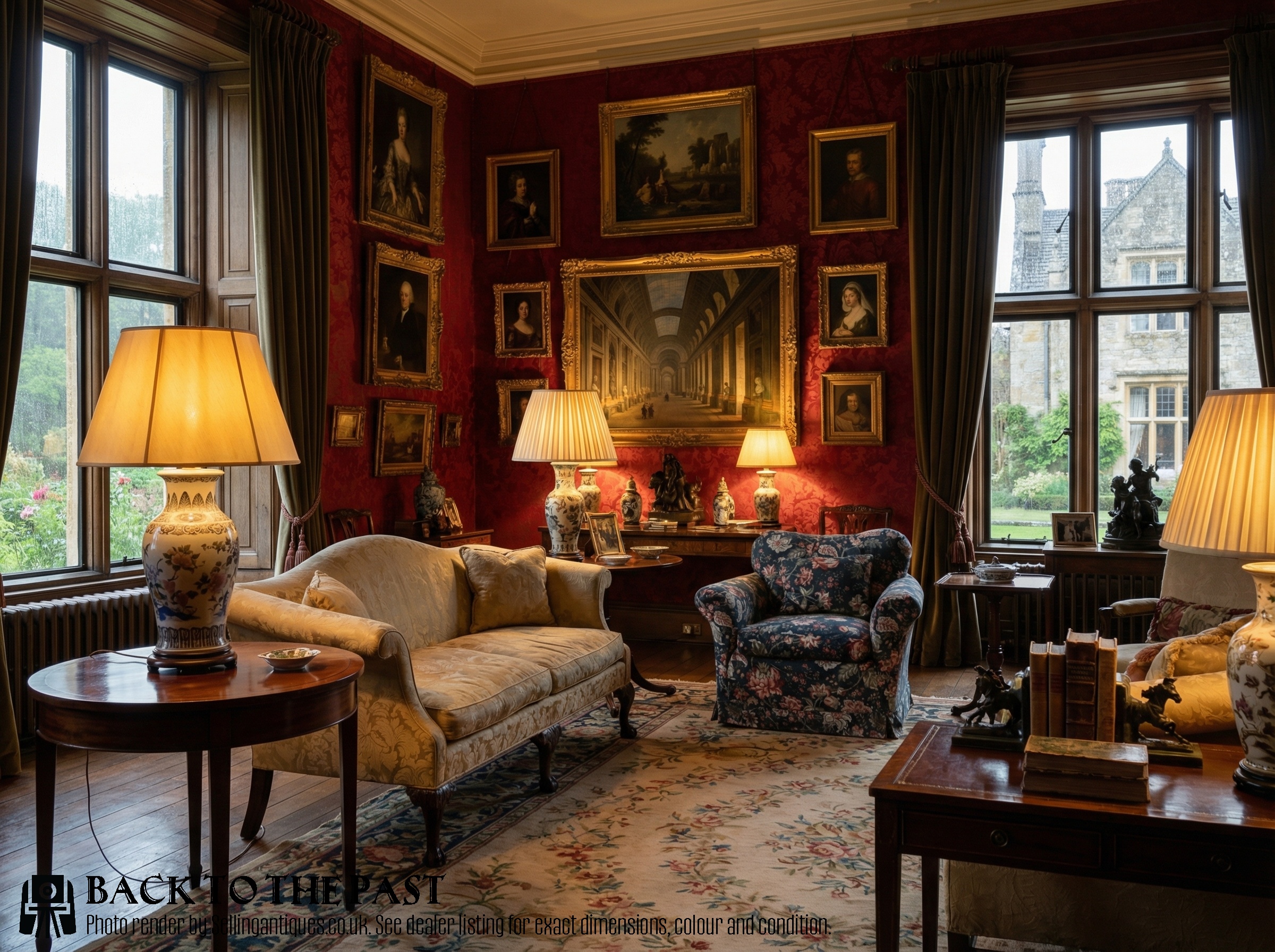
Country house seating prioritises deep comfort, relaxed proportions, and traditional floral textiles like cotton chintz or linen. These pieces often show softer lines and generous padding.
They reflect an aesthetic developed across generations in large British residences rather than strict formal symmetry.
Are these chairs suitable for daily use?
These pieces were built with sturdy timber and mahogany frames designed for regular seating. Their durability depends on the condition of the internal webbing and padding.
Buyers should assess whether the structural frame remains solid for everyday domestic requirements.