




Baroque Religious Canvas Art
Baroque religious canvas art brings intense devotion and dramatic theatrical lighting straight from seventeenth and eighteenth-century European workshops.
Baroque Religious Canvas Art
When you search for baroque religious canvas art, you encounter devotional paintings from seventeenth and eighteenth-century European schools, spanning Italian, Spanish, French, and colonial traditions. These works depict biblical narratives, saints, and holy figures with deep spiritual gravity.
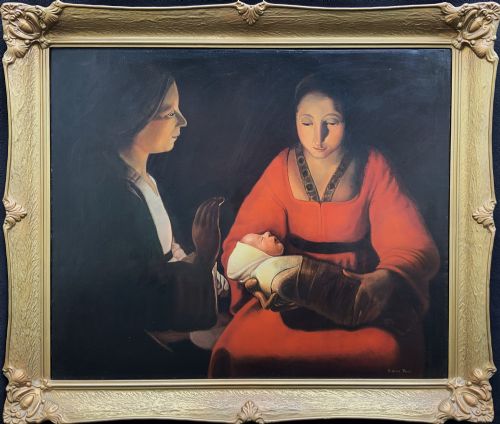
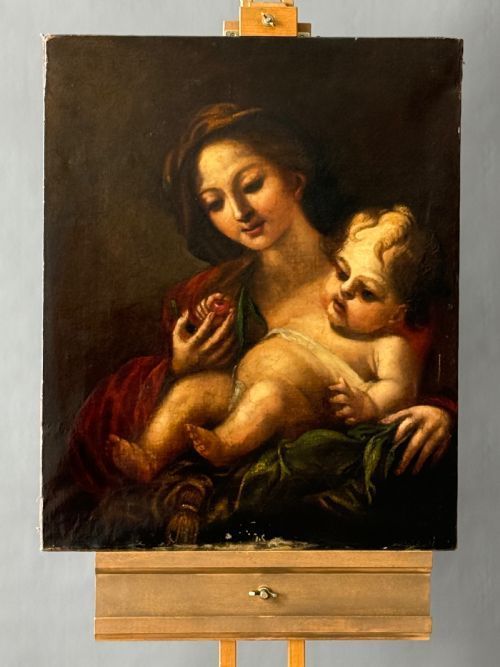
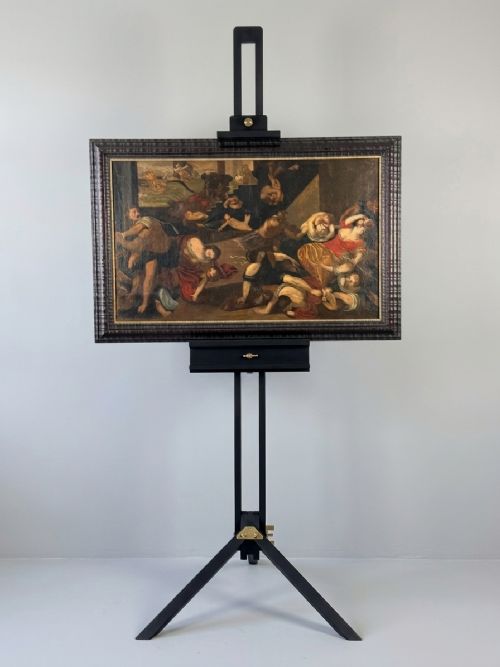
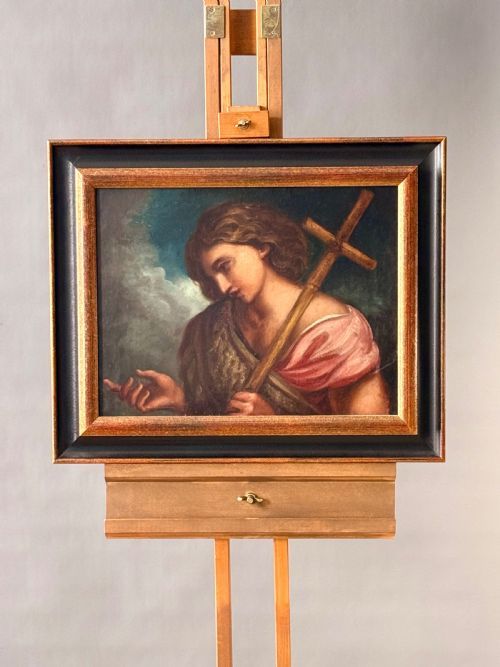
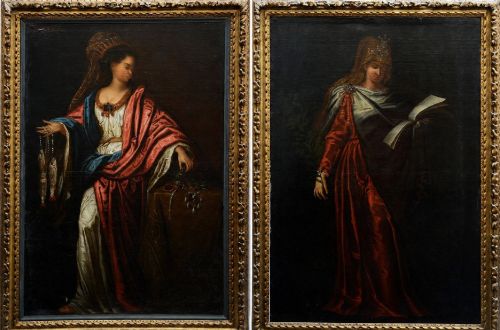
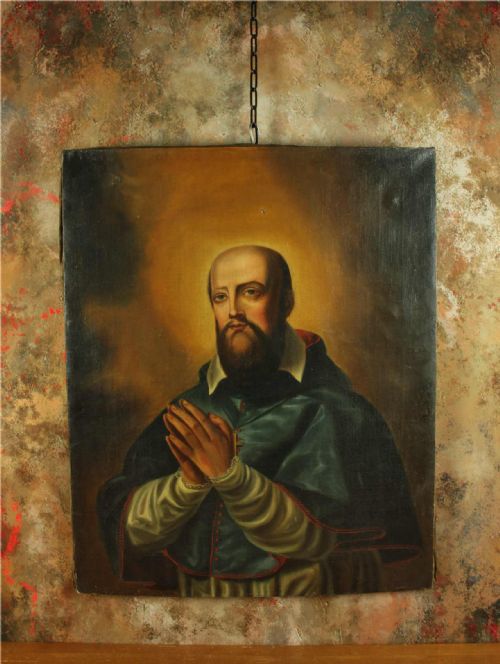
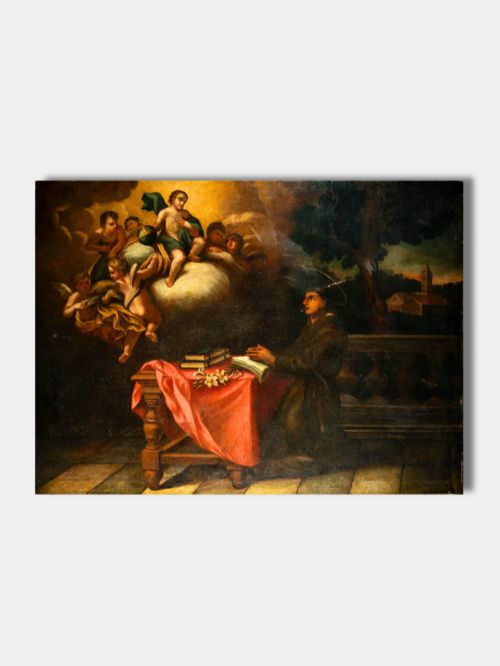
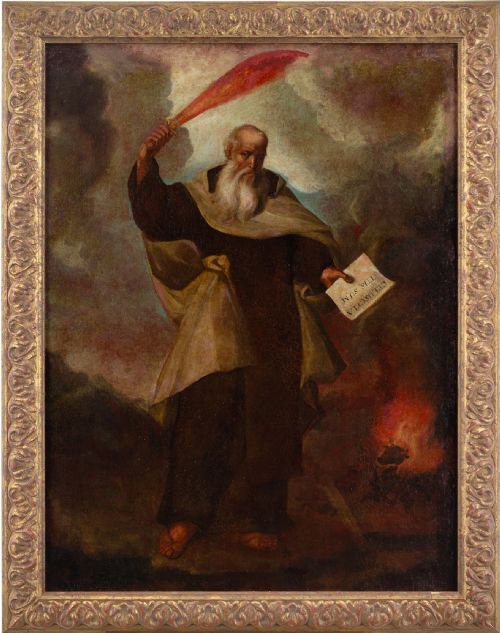
You are most likely to meet seventeenth-century and eighteenth-century oil paintings on canvas, often set in period frames such as carved giltwood. Subjects range from large narrative scenes like the Massacre of the Innocents to intimate portraits of Mary and various saints.
Regional schools shape the character of these pieces significantly, moving from the rich chiaroscuro of Italian masters to the distinct devotional iconography of Spanish and colonial workshops. The imagery draws heavily on Counter-Reformation themes designed to move the viewer.
Materials and Technique
Painters applied oil paint directly onto stretched canvas substrates, utilising rich pigments to build deep shadows and luminous highlights through layered glazes. This medium allowed artists to achieve the intense chiaroscuro characteristic of the period.
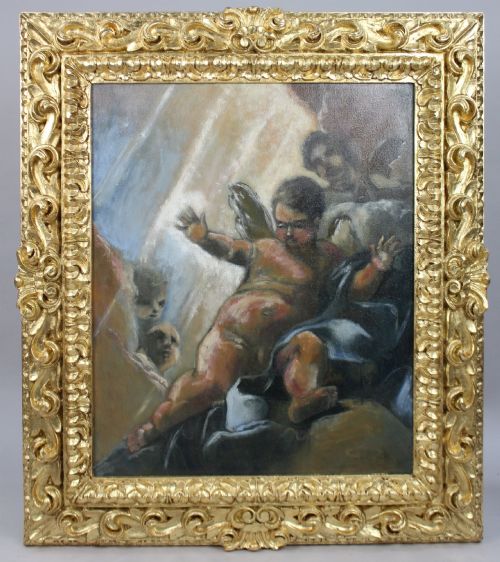
Surviving canvases are frequently housed within wooden frames, notably carved giltwood, which complement the theatrical presence of the religious subject matter.
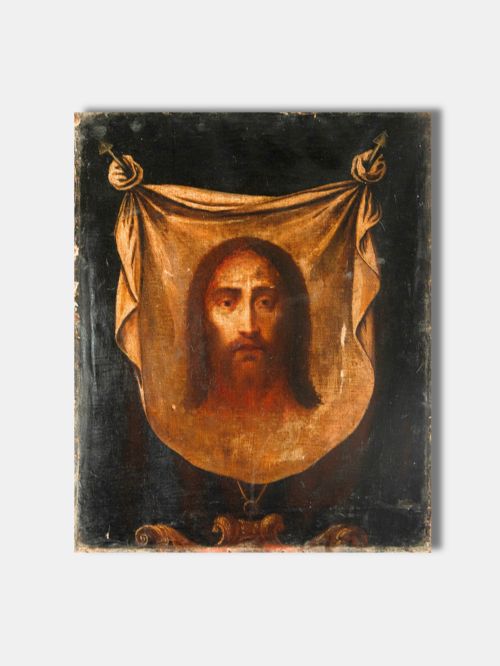
Cherries, lambs, and veiled faces occasionally share the canvas with saints.
Assessing Quality
The distinction between masterworks and lesser studio output lies in the confidence of the brushwork and the psychological depth given to the figures. Top-tier pieces handle light and shadow with striking theatricality, whereas weaker examples rely on stiffer, formulaic gestures.
The integrity of the canvas and the preservation of the original pigment layers determine the visual power of the piece. Subtle gradations in tone and expressive anatomy separate works by named masters or skilled circles from routine copies.
Francesco Solimena·Juan Ruiz Soriano·Gaspar de Figueroa·Gian Lorenzo Bertolotto·Guido Reni·Antonio Tempesta·Pietro D'Asaro·Orsola Maddalena Caccia·Pompeo Batoni·Reynard Le Vieux
The Baroque Religious Canvas Art Glossary
- Chiaroscuro
- Strong contrasts between light and dark, usually bold contrasts affecting a whole composition. This technique creates dramatic depth and emotional intensity in religious scenes.
- Old Master
- A European painter of skill born before about eighteen hundred. These artists worked within established regional traditions and schools.
- Giltwood
- Wood that has been covered with a thin layer of gold leaf or powder. It frequently frames devotional paintings of this era.
- Emilian School
- Painters originating from the Emilia region of Italy who shared stylistic traits. Their output heavily influenced baroque religious composition.
- Ex-Voto
- A votive offering presented to a saint or a divinity in fulfilment of a vow. These works often record miraculous interventions or expressions of gratitude.
Baroque Religious Canvas Art: Frequently Asked Questions
What subjects appear in baroque religious art?
These paintings typically show biblical scenes, saints, and holy figures in moments of intense devotion or dramatic action. Common subjects include the Virgin Mary, Saint John the Baptist, and narrative episodes from the gospels.
Artists drew inspiration from Counter-Reformation ideals to engage the viewer emotionally and spiritually through striking visual storytelling.
How do I identify seventeenth-century paintings?
Seventeenth-century works often display heavy chiaroscuro, theatrical compositions, and dynamic movement influenced by the baroque style. Pigment choices and canvas characteristics provide further clues to their age.
Attributions to specific regional schools, such as the Madrid or Venetian traditions, also help date the execution.
Where were these devotional paintings displayed?
Originally, large canvases hung in churches, convents, and chapels to inspire the faithful during services and private prayer. Smaller works served private devotion in domestic interiors and monastic cells.
Owners often placed them within elaborate wooden frames to enhance their presence in sacred spaces.
How should I care for old canvas art?
Keep oil paintings away from direct sunlight and steady fluctuations in temperature and humidity to protect the canvas and paint layers. Professional conservation helps maintain the stability of the wood frame and paint surface.
Dust the surface gently with a soft, dry brush without applying pressure to the pigment.