

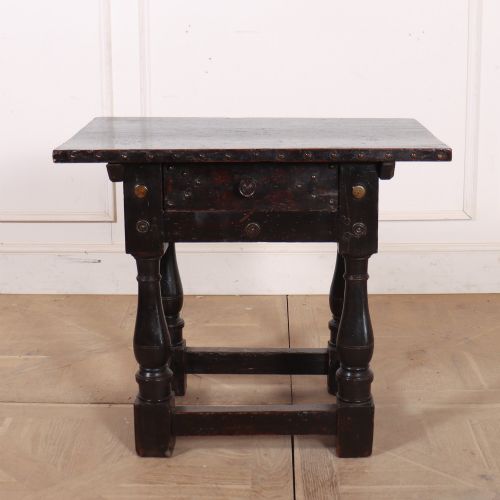
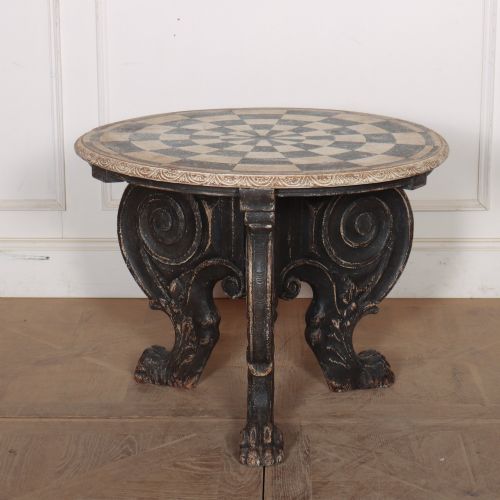
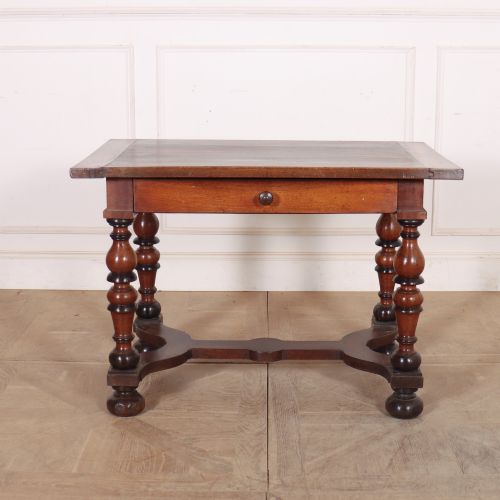


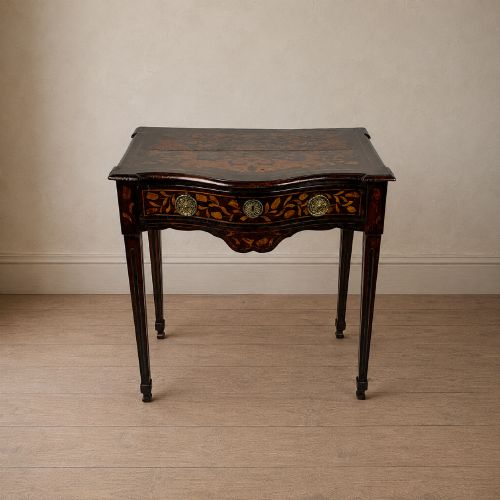
Baroque Occasional Table
A baroque occasional table brings dramatic carved detail and rich timber to a room, offering a functional surface with striking historical presence.
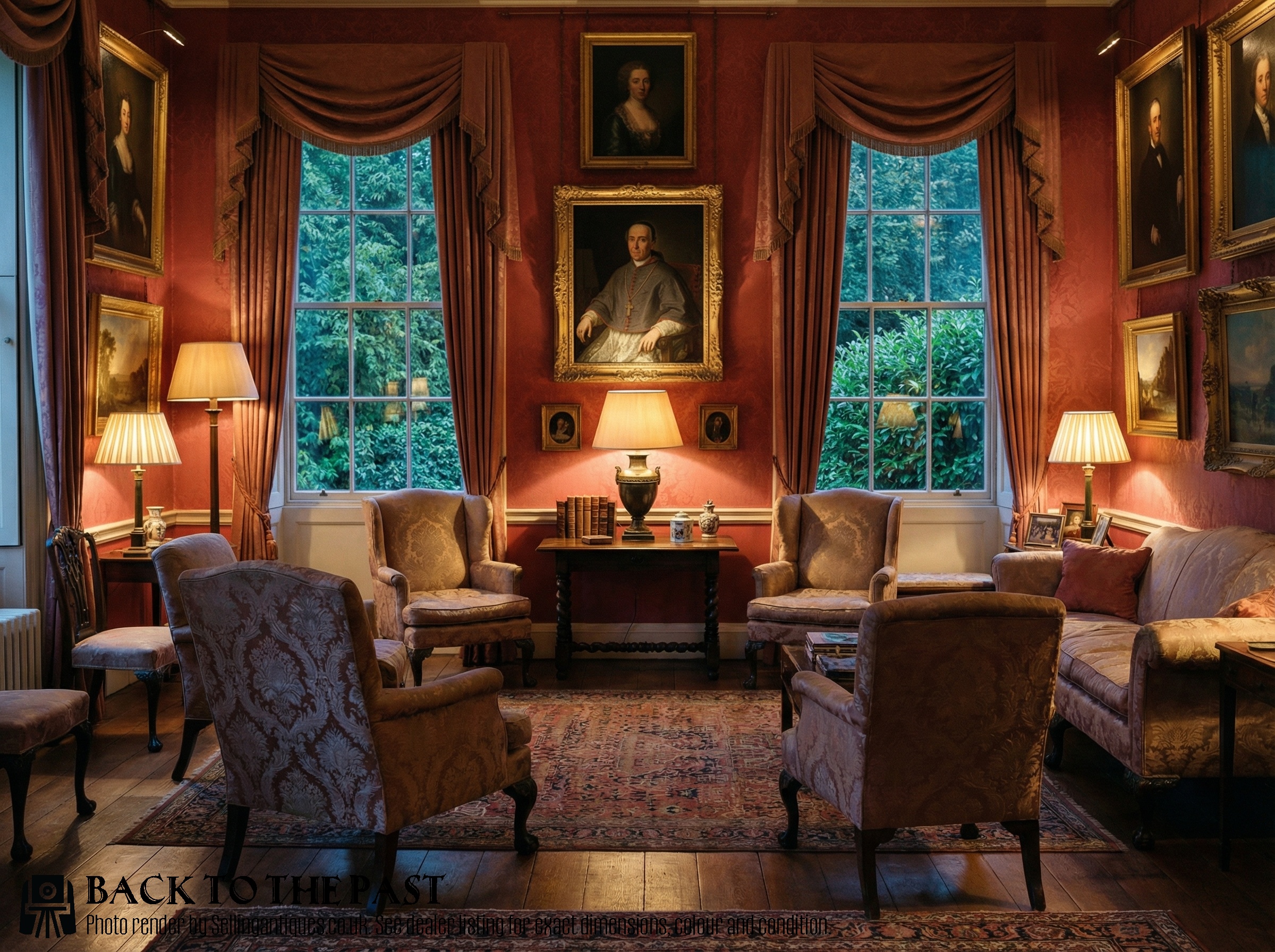
Baroque Occasional Table
A baroque occasional table encompasses side tables, centre tables, lamp tables and desks created across several centuries, drawing on Italian, Spanish, Portuguese, French, German and Dutch traditions. When searching for a baroque occasional table, buyers encounter diverse forms ranging from late seventeenth-century parquetry pieces to twentieth-century revivals.
How they were made
Cabinetmakers constructed these tables using dense timbers such as walnut, oak, yew wood, fruitwood, rosewood, olive wood and hard hardwoods, frequently applying marquetry and parquetry patterns. Surfaces often display intricate carving in walnut or oak, alongside specialised treatments including ebonisation and parcel gilding.
Construction techniques evolved from seventeenth-century oyster veneer and parquetry arrangements to later carved interpretations in the nineteenth and twentieth centuries. Brass hardware and structural iron components appear where appropriate for support and decoration.
Baroque Occasional Table Retail Price Guide 2026
Typical asking prices for baroque occasional table among the pieces listed under this phrase on Sellingantiques today, from the lower quarter to the upper quarter. They describe what is for sale here now, not the wider market.
Olive wood branches were sliced like tiny rustic coins to make the mesmerizing oyster patterns on seventeenth century tops.
What varies in quality
Quality rests in the crispness of the timber carving and the precision of the parquetry or marquetry inlay across the top and sides. Finer examples display meticulous selection of figured grain, such as oyster cut veneers or richly patterned walnut and rosewood.
Construction integrity distinguishes master workshops from later provincial interpretations, seen in the seamless joining of timbers and the sophistication of surface treatments like parcel gilding on ebonised grounds.
The Baroque Occasional Table Glossary
- Parquetry
- Geometric wood inlay forming a patterned surface on a table top. It creates decorative visual rhythm through contrasting timber tones.
- Marquetry
- Detailed pictorial or floral wood veneer work applied to furniture surfaces. Craftsmen assemble various coloured woods to form complex decorative scenes.
- Oyster veneer
- Cross-section slices of branch wood arranged in patterns resembling oyster shells. This technique creates distinctive circular and oval grain repeats.
- Parcel gilded
- Partially covered with gold leaf to highlight specific carved details. The technique contrasts gilded elements against dark wood or ebonised surfaces.
- Serpentine
- A gently curved line curving inward and outward across a table front or edge. It adds fluid motion to the heavy baroque silhouette.
Baroque Occasional Table: Frequently Asked Questions
Where should I place a baroque occasional table?
These tables suit hallways, living rooms or studies where a compact surface with strong historical character is required. Their decorative tops and carved bases make them effective focal points against plain walls.
Ensure the timber is kept away from direct heat sources and strong sunlight to protect finishes like polish, gilding and delicate veneer work.
How do I identify a seventeenth century piece?
Seventeenth century examples often feature distinct techniques like oyster veneers, intricate parquetry and heavier structural framing in walnut or olive wood. Regional origins such as Dutch or Italian workshops dictate the specific carving style and proportion.
Later nineteenth and twentieth century revivals imitate these early forms but generally exhibit different internal timber construction and less oxidised surfaces.
What is the difference between a centre table and a side table?
A centre table is finished on all four sides so it can stand free in the middle of a room. Side tables are traditionally designed to sit flush against a wall.
Both serve as occasional surfaces, though centre tables in this style often display more elaborate ornamentation across the entire framework.
How do I care for antique walnut and oak?
Maintain the timber by dusting gently with a dry, soft cloth and applying a microcrystalline wax periodically to nourish the wood. Avoid liquid polishes that build up residue and harm historic finishes.
Keep indoor humidity stable to prevent the solid woods and delicate veneers from splitting or warping over time.