
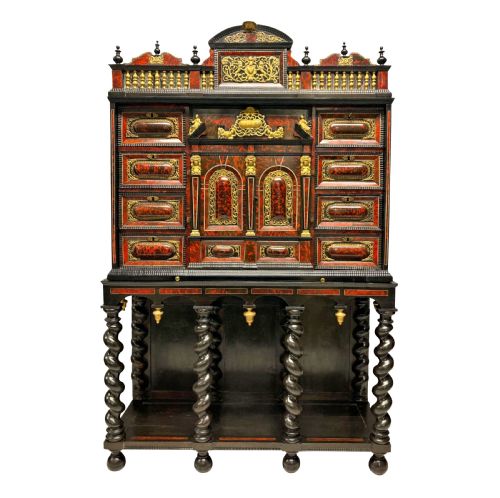
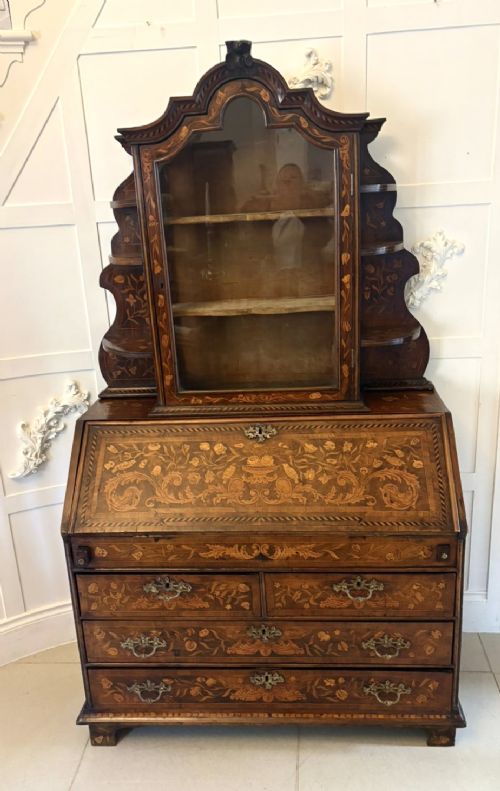
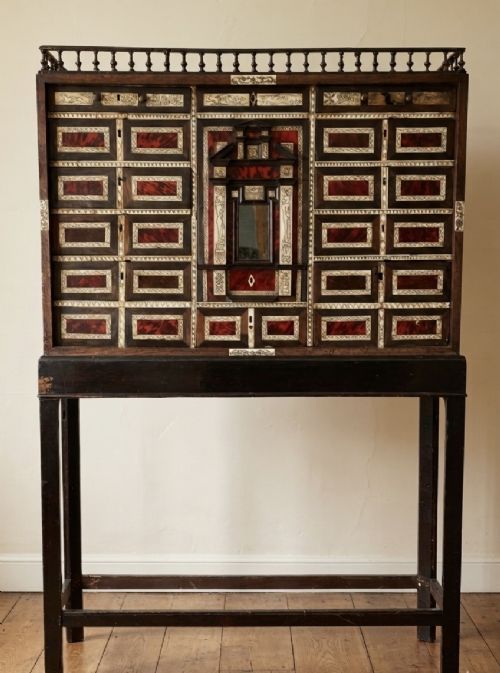

Baroque Chest of Drawers
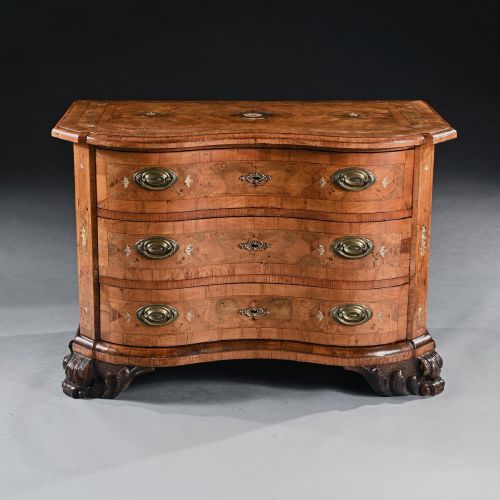
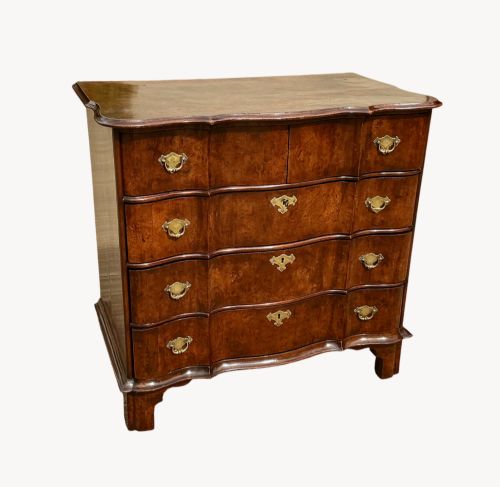
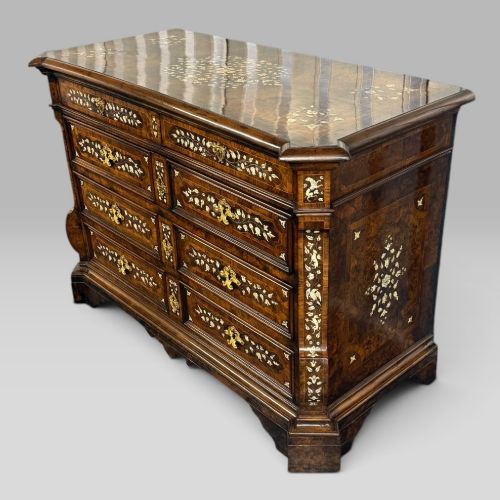
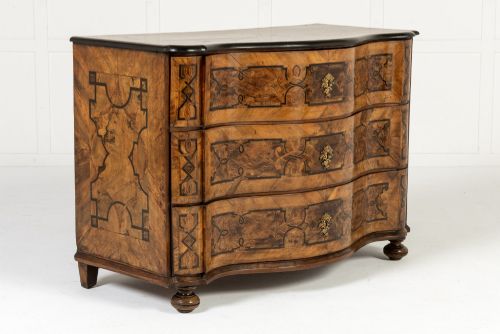
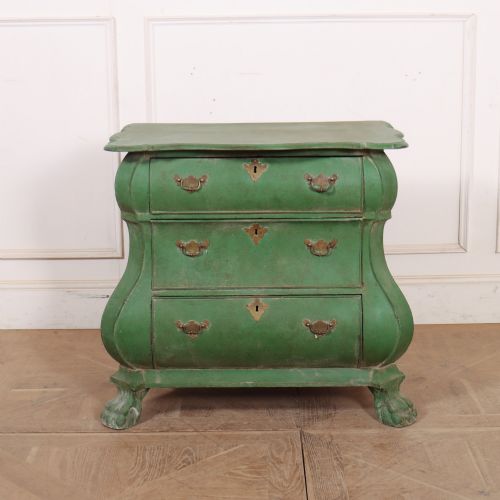
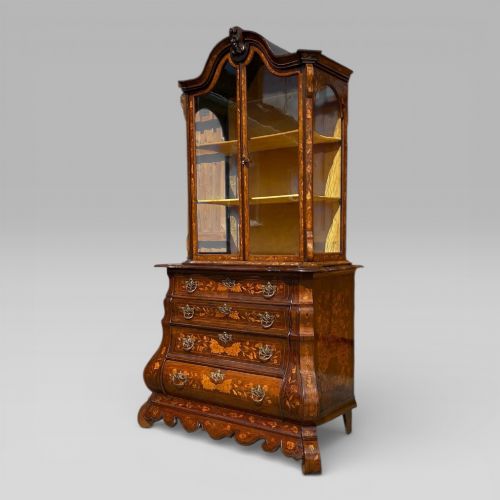
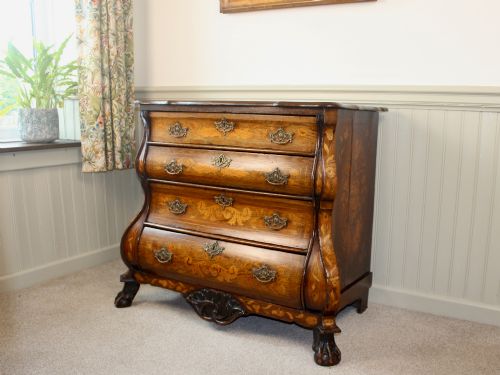
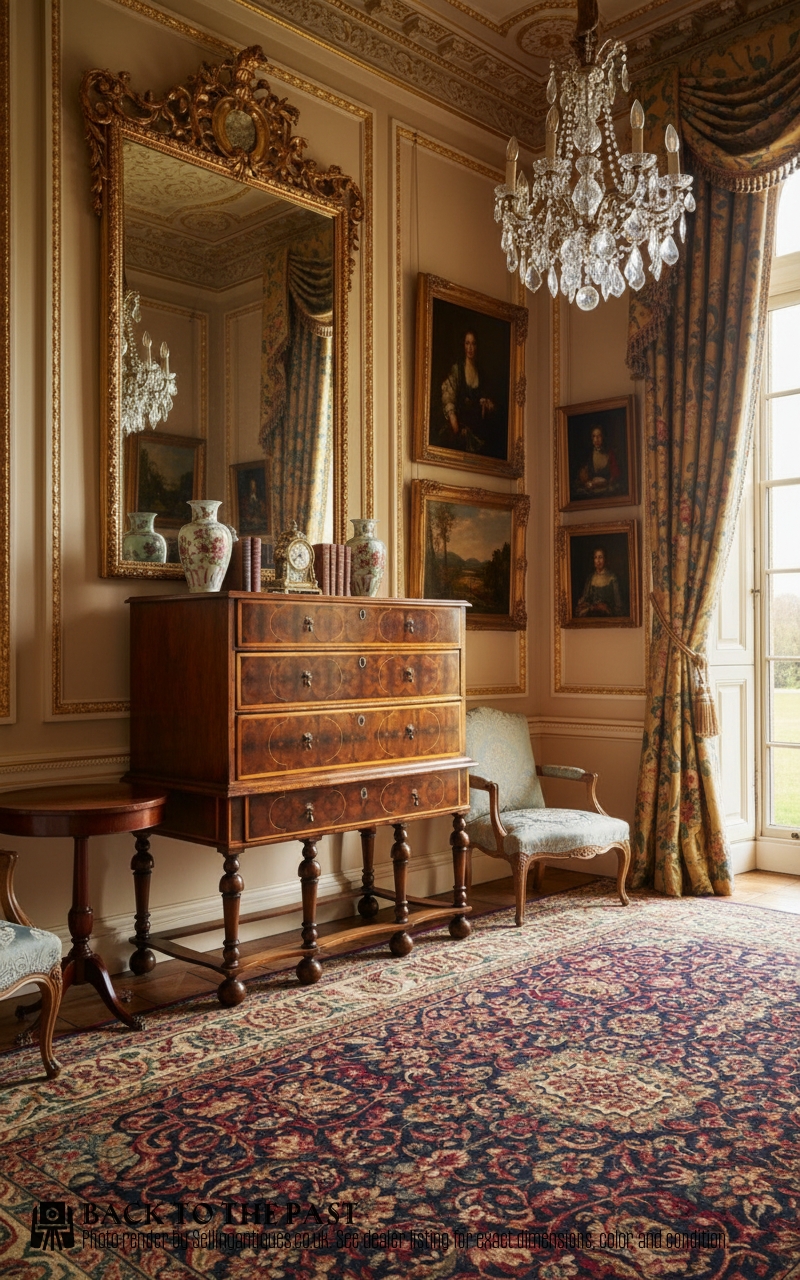
A baroque chest of drawers brings monumental presence to a room through dramatic timber figures, swelling serpentine fronts and intricate floral marquetry.
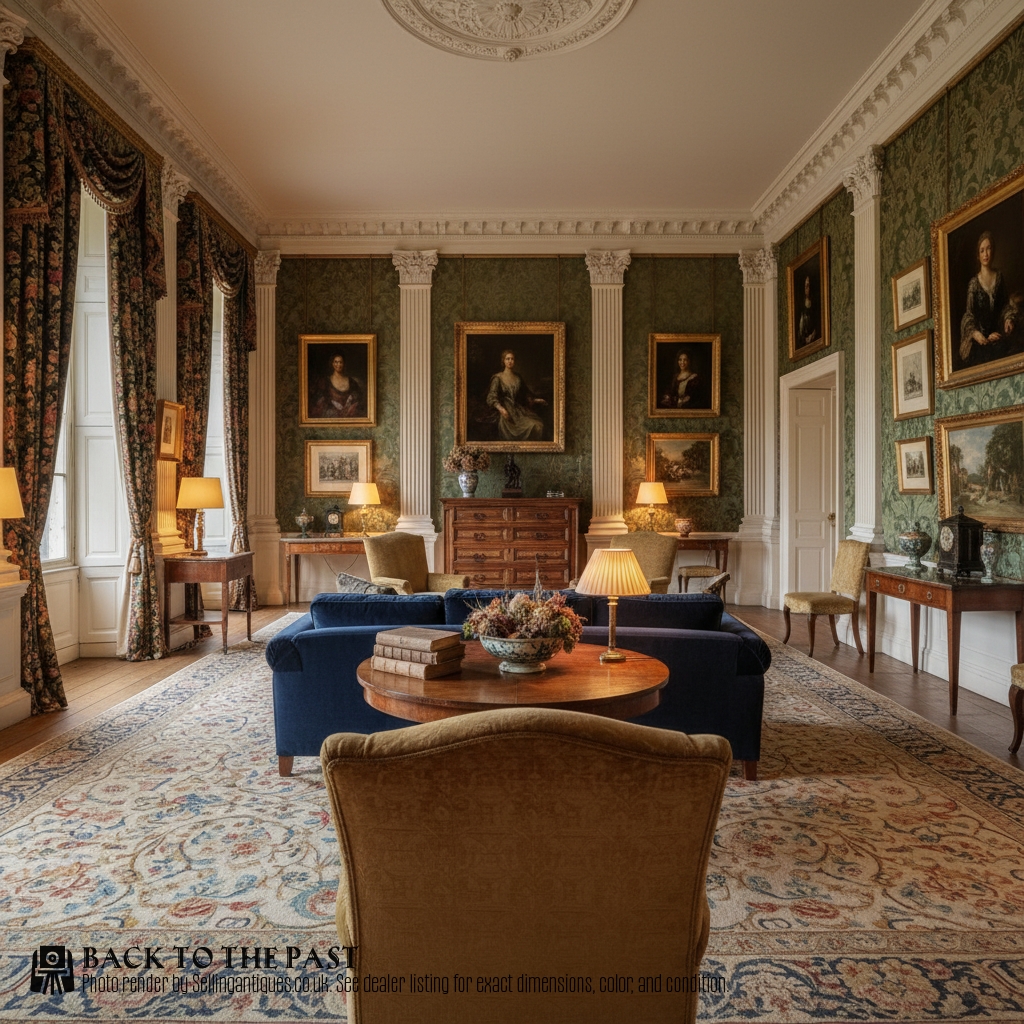
Baroque Chest of Drawers
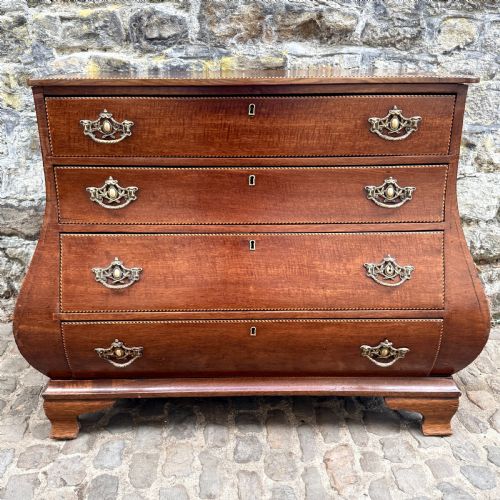
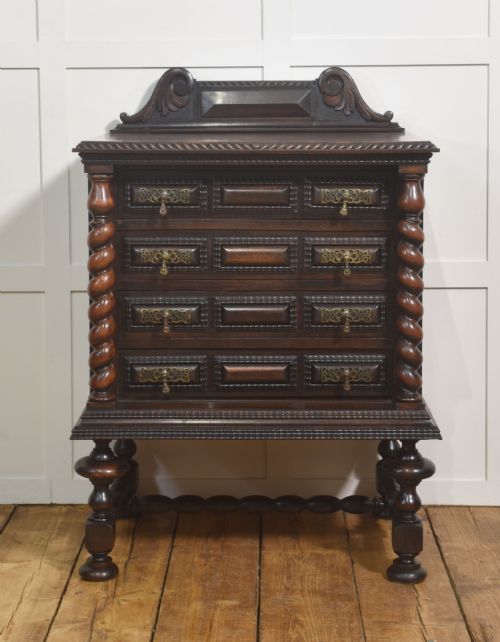
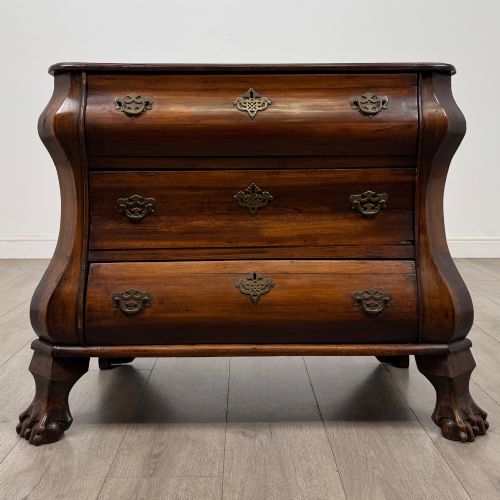
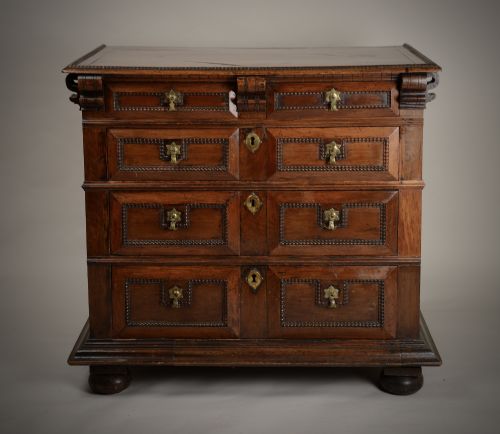
When searching for a baroque chest of drawers, collectors encounter robust case furniture spanning from the seventeenth century through to nineteenth-century revivals. The form appears across regional styles including Dutch, Italian, German, Flemish and Portuguese origins, frequently manifesting as bombé profiles, commodes or cabinets on stands.
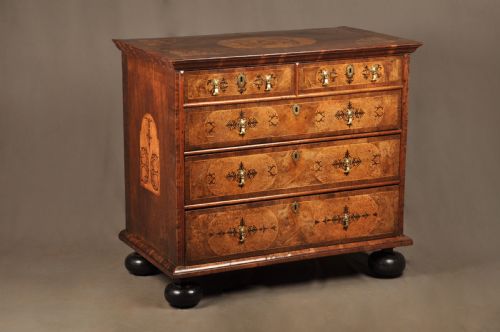
The most common examples on this page are eighteenth-century Dutch and Italian pieces executed in walnut or burr walnut. These functional storage items combine deep drawer capacities with elaborate decorative schemes such as floral marquetry, serpentine shaping and painted surfaces.
Beyond standard chests, the selection includes related forms like bureau bookcases, display cabinets and bedside tables sharing the same heavy ornamentation and regional craftsmanship. Each piece reflects the architectural weight and theatrical lines characteristic of the period.
What varies in quality
The calibre of a baroque chest of drawers rests primarily on the ambition of its design and the precision of its marquetry. Examples featuring finely cut pewter and ivory inlays or elaborate figurative compositions represent a higher tier of workshop output than simpler geometric banding.
Timber selection dictates visual impact, with choice burr walnut, highly figured rosewood or dense oyster cuts setting superior pieces apart from plain regional walnut or oak carcases. The fluidity of the serpentine or bombe shaping demonstrates the sculptor's control over complex curves.
The integrity of the construction, including the survival of original brass drawer pulls, hinges and internal framework, determines the historical standing of the piece. Subtle details such as hand-cut dovetails and clean joins separate masterwork commissions from standard provincial production.
Baroque Chest of Drawers Retail Price Guide 2026
Typical asking prices for baroque chest of drawers among the pieces listed under this phrase on Sellingantiques today, from the lower quarter to the upper quarter. They describe what is for sale here now, not the wider market.
Materials recur in walnut, burr walnut, oak, fruitwood, rosewood, mahogany, tortoiseshell, bone, ivory and brass.
Edwards & Roberts·Grand Ducal Workshops
The Baroque Chest of Drawers Glossary
- Bombe
- A swelling, bulging chest shape with convex curves that taper inward toward the feet. This profile requires advanced carpentry to negotiate compound angles.
- Marquetry
- The art of applying small pieces of veneer to a structure to form decorative patterns or pictures. Craftsmen utilise woods, bone and metal to build elaborate scenes.
- Serpentine
- A front contour characterised by a convex central section flanked by concave curves. This undulating line typifies much continental case furniture.
- Oyster Veneer
- Cross-sections sliced transversely from small branches to produce circular or oval patterns resembling oyster shells. The technique gained prominence during the William and Mary period.
- Commode
- A low chest of drawers or cabinet developed in France and adopted across Europe. They typically stand on short legs and serve both decorative and storage functions.
Baroque Chest of Drawers: Frequently Asked Questions
How do I clean a walnut chest?
Dust surfaces regularly with a soft, dry cloth to prevent particulate accumulation. Avoid silicone sprays or modern domestic polishes that can degrade aged finishes.
Apply a microcrystalline wax sparingly once or twice a year to nourish the timber. Buff gently with a clean cloth to maintain a natural, soft sheen.
Where should I place a bombe chest?
Position the piece against a flat interior wall with stable ambient humidity and temperature. Keep the furniture away from direct sunlight and active heating vents to protect the veneer.
Allow sufficient clearance around the swelling sides to appreciate the three-dimensional silhouette. Ensure the floor is level so the heavy carcase rests evenly.
How do I date a marquetry chest?
Examine the underlying secondary timbers like oak or pine visible inside the drawer linings and carcase backs. Regional working methods and tool marks often indicate the period of construction.
Compare the floral motifs and inlay materials, such as pewter or ivory, with documented pieces from specific workshops. Seventeenth-century work tends toward geometric arabesques, while mid-eighteenth pieces favour naturalistic floral sprays.
What is a cabinet on stand?
A cabinet on stand consists of a large enclosed storage box resting upon a distinct supporting table frame. This two-part form elevates decorative surfaces to eye level.
Earlier examples feature turned legs joined by stretchers, while later iterations incorporate drawers within the base. They were designed to display luxury goods and showcase exceptional cabinetmaking.