

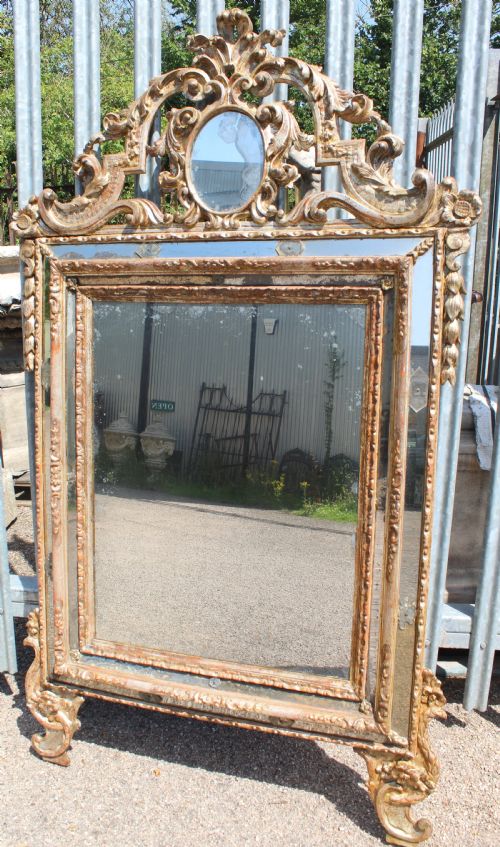
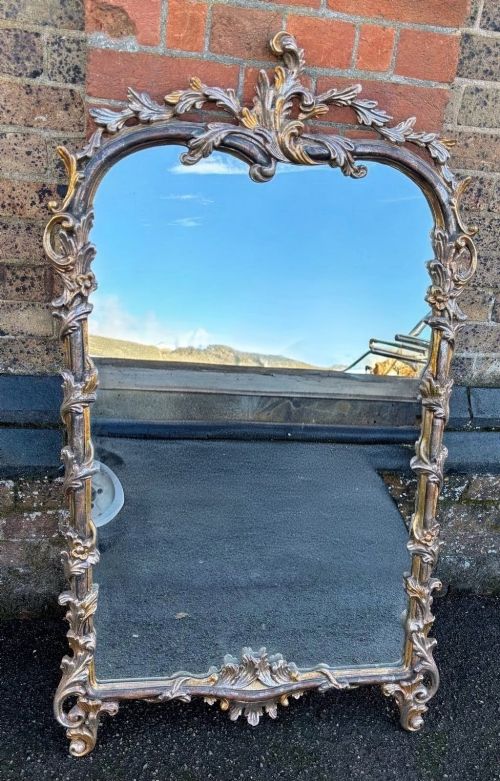
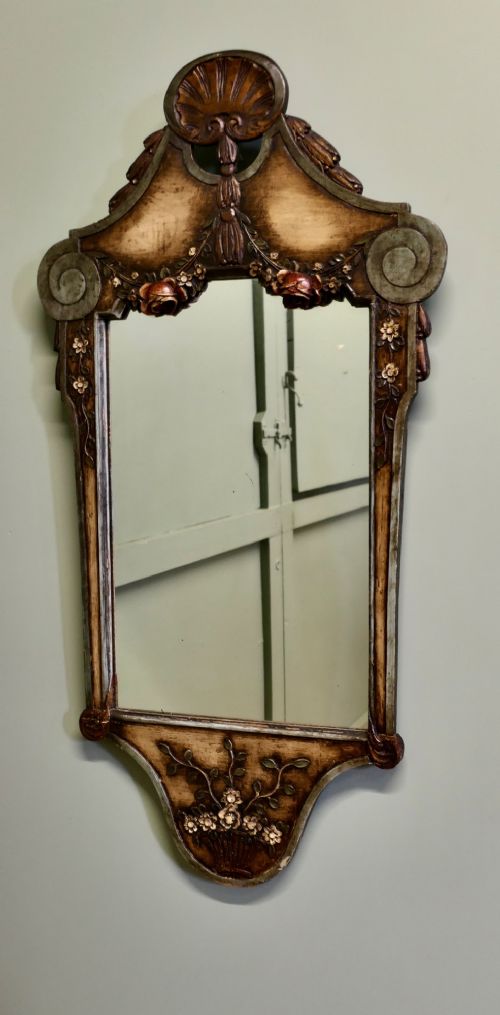
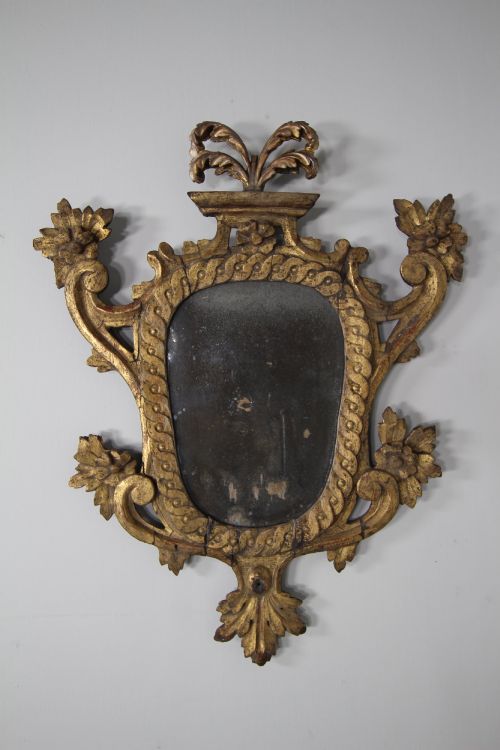
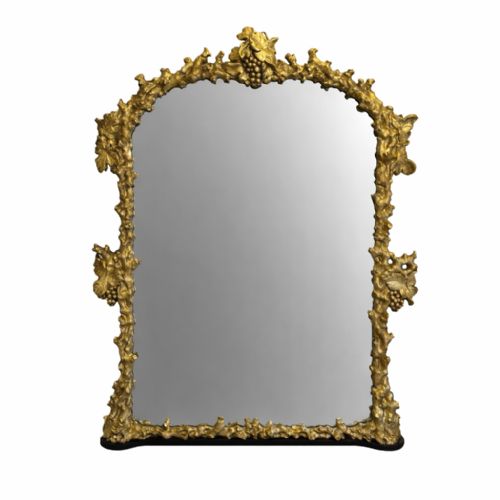

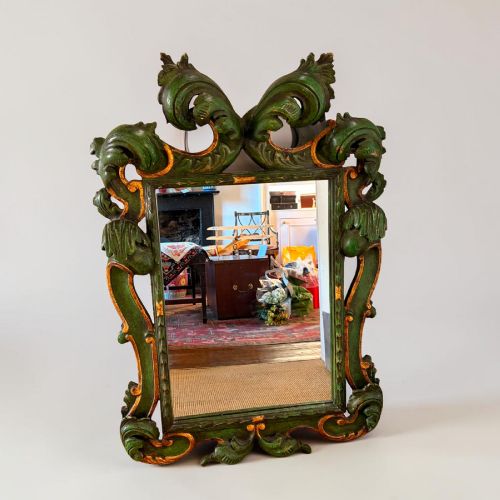
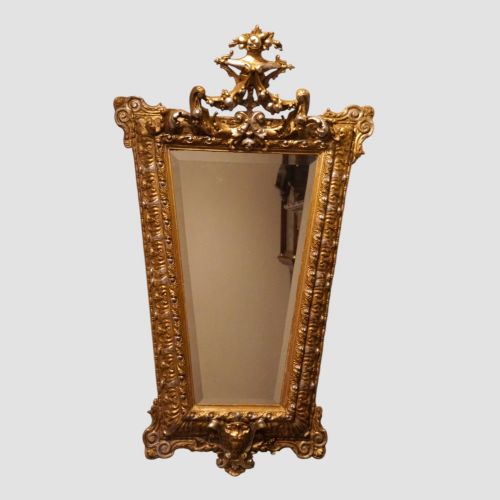
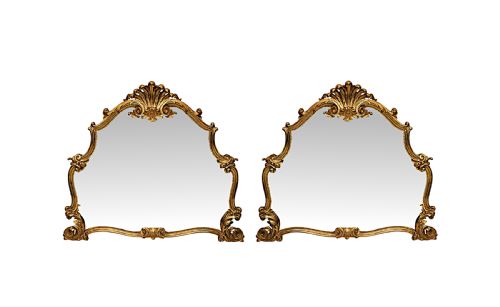
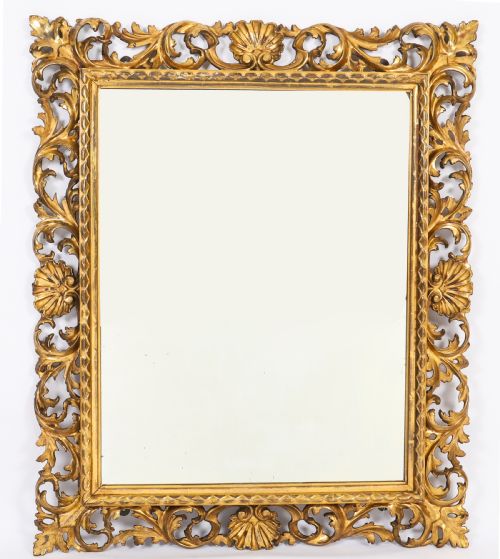


Baroque Carved Wall Mirror
A baroque carved wall mirror brings a heavy sense of theatre into a room through deep relief work and reflective depth.
Materials and construction
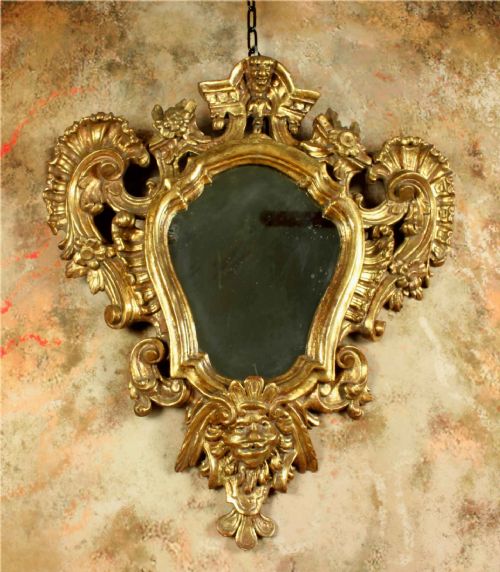
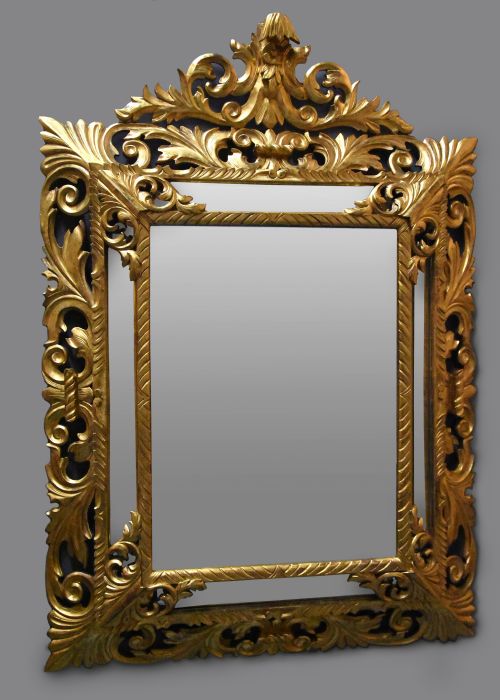
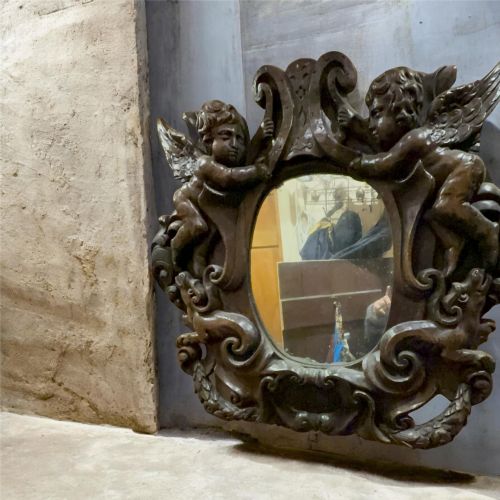
Carvers shaped solid timber, limewood, and oak before applying layers of gesso to build up high-relief ornament. Artisans then gilded these surfaces using gold leaf, silver leaf, or applied gold paint.
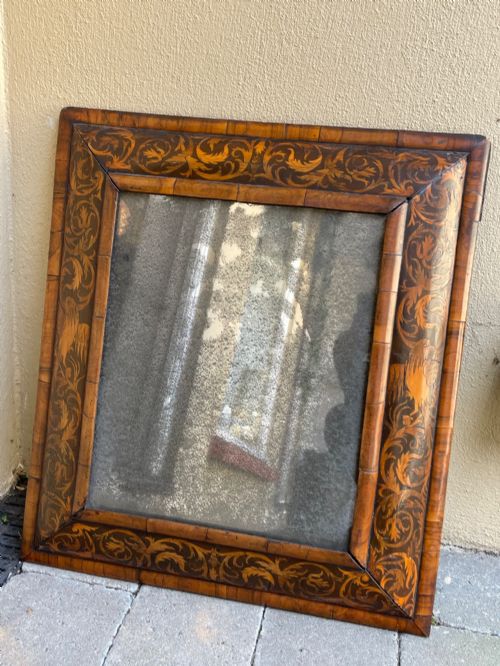
Early examples frequently retain original mercury glass plates, which display characteristic dark spots and soft, uneven reflection. Frames combine pegged joinery with applied composition or hand-carved detailing.
Assessing quality
The depth and crispness of the hand carving separate standard production from superior examples, particularly in the rendering of acanthus leaves, masks, and scrolls. Sharper undercuts and fluid movement indicate a more skilled hand at the bench.
The preservation of the original gilt surface and the character of the mirror plate itself determine the visual weight of the piece. Intact original gilding retains a warm, layered tone that newer layers cannot replicate.
Baroque Carved Wall Mirror Retail Price Guide 2026
Typical asking prices for baroque carved wall mirror among the pieces listed under this phrase on Sellingantiques today, from the lower quarter to the upper quarter. They describe what is for sale here now, not the wider market.
Listings feature pieces spanning the seventeenth to the twentieth centuries, utilising giltwood, gesso, and original mercury glass.
The Baroque Carved Wall Mirror Glossary
- Giltwood
- Timber coated with gold leaf over a prepared gesso ground. This material defines the luxurious finish of most formal antique mirrors.
- Gesso
- A plaster mixture applied to wood frames to create a smooth base for carving or gilding. It allows for sharp, intricate decorative relief.
- Pier glass
- A tall mirror designed to hang on the wall space between windows. These pieces often work in tandem with console tables.
- Mercury plate
- An early mirror glass produced using a tin and mercury amalgam. It produces a mottled, atmospheric reflection distinct from modern float glass.
Baroque Carved Wall Mirror: Frequently Asked Questions
How do I hang a heavy antique mirror safely?
Substantial frames require professional wall anchors fixed directly into masonry or solid timber studs rather than standard plasterboard fittings. Weight is distributed through heavy brass mirror plates screwed securely to the back frame.
Ensure the hanging wire or chain is rated well above the actual weight of the timber and glass. Professional installers use split battens for large overmantel pieces to lock the frame flush against the wall.
Are these mirrors suitable for bathrooms?
High humidity and fluctuating temperatures can damage traditional gesso and cause the historic gilding to flake off the wood. The original mercury or silver backing on antique glass is also vulnerable to moisture penetration.
Dry reception rooms, hallways, and bedrooms provide a stable environment that preserves both the wooden structure and the delicate surface finish. Placing them away from direct heat sources prevents the timber from warping.
How can I tell an 18th-century frame from a 19th-century revival?
Earlier frames display hand-cut joinery, oxidized gesso grounds, and timber shrinkage appropriate to age. Revival pieces from the Victorian era often use standardised machine-sawn components and brighter, more uniform gilding.
The tool marks left by the carver differ significantly, with eighteenth-century work showing greater irregularity in the depth and execution of the foliage.