


Baroque Candle Stands
These baroque candle stands bring sculptural presence to a room, spanning centuries of carved wood, brass, and gilt finishes.
Baroque Candle Stands
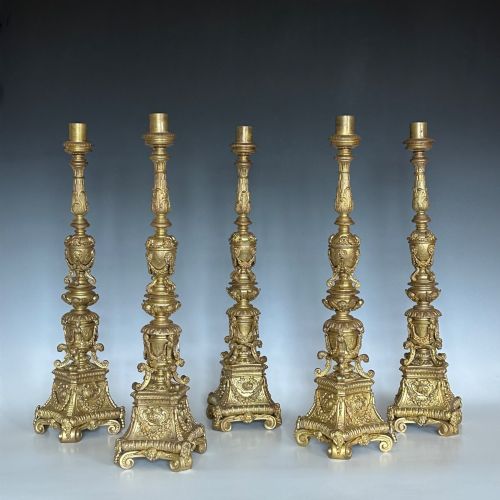
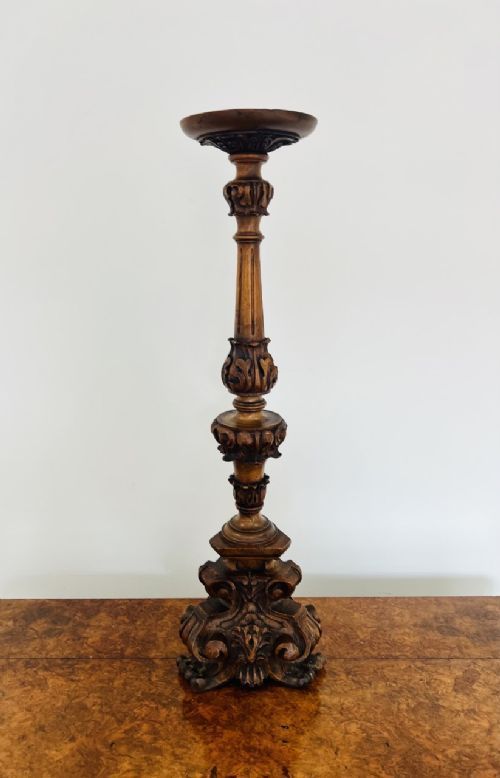
Italian workshops feature strongly, particularly Venetian and Florentine pieces in carved walnut and giltwood. You will also find Flemish, Dutch, French, and German brass work alongside painted and silvered wooden standards.
How they were made
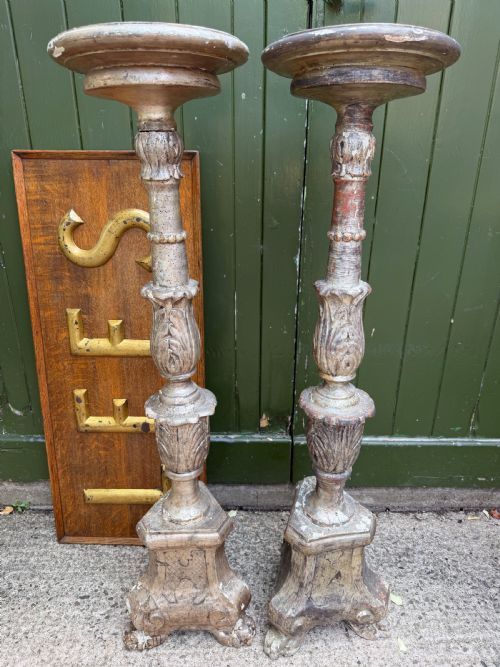
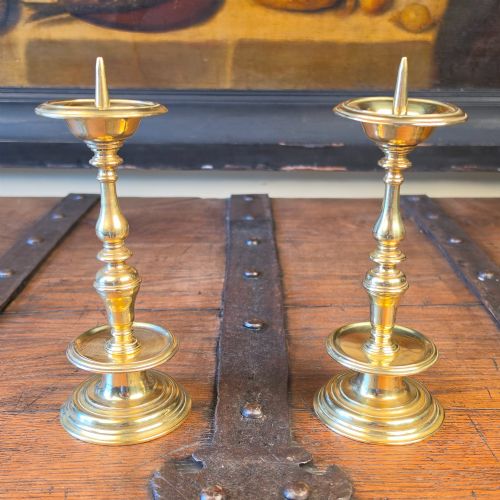
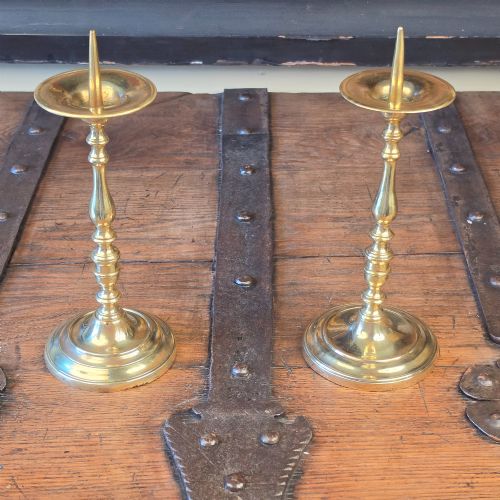
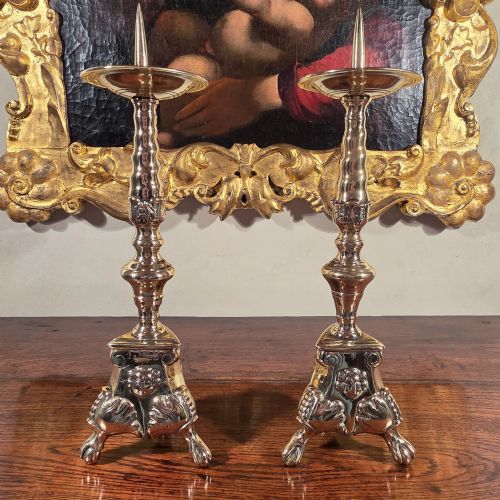
Woodworkers carved walnut, pinewood, and gesso into complex forms, applying gold leaf, silver, or polychrome paint to the surfaces. Metal examples utilised brass and copper alloy, cast with knops and bell shapes.
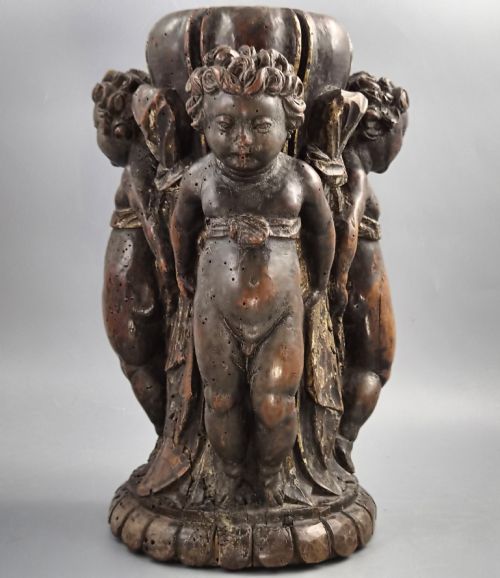
The construction of floor torcheres and candlesticks combined turned shafts with intricate figural carving, such as putti and angels, supporting pricket or socket tops.
Several pieces feature carved putti and angels holding up the light, keeping an eternal, wooden watch over the room.
What varies in quality
Depth and sharpness of the carving separate standard items from finer works, particularly where figures like putti or acanthus scrolls are rendered in wood. The survival of original gilding, silvering, or painted surfaces also dictates the distinction.
Proportion and structural integrity matter in tall standards and torcheres, where original bases must support heavy upper sections safely without excessive alteration.
The Baroque Candle Stands Glossary
- Torchere
- A tall stand designed to support a light source or candle. These pieces often feature elaborate carved wooden shafts.
- Pricket
- A sharp metal spike on a candlestick designed to secure a wax candle from the base. This form is common on altar sticks.
- Giltwood
- Wood that has been coated with a thin layer of gold leaf. It appears frequently on Italian and revival pieces.
- Gesso
- A plaster-like material applied to wood surfaces as a base for gilding or painting. It allows for crisp moulded detail.
- Knop
- A decorative knob or protuberance on the shaft of a candlestick. These are typical of brass examples from various regions.
Baroque Candle Stands: Frequently Asked Questions
How do I spot a revival piece?
Revival pieces often date from the nineteenth century or later, imitating seventeenth or eighteenth-century forms. They rely on stylistic clues and wood analysis rather than period wear.
Examine the construction methods and surface patination carefully to understand the true age of the object.
Where were these stands made?
Production centres span Italy, particularly Venice and Florence, alongside northern European regions like Flanders, Holland, Germany, and France.
Each region developed distinct preferences for materials, choosing between cast brass alloys and carved, gilded wood.
What is a pricket candlestick?
A pricket candlestick uses an upright metal spike to hold the candle in place rather than a socket. This form originates from traditional altar lighting.
You will encounter them on seventeenth and eighteenth-century examples in both metal and wood.
How should I care for giltwood?
Giltwood surfaces require gentle dusting with a soft brush to protect the delicate gold leaf layer. Avoid moisture and chemical cleaning agents.
Stable indoor humidity prevents the underlying gesso and wood from cracking or separating over time.