




Barley Twist Tea Table
A barley twist tea table brings turning to domestic timber, offering a surface raised on spiralled legs that suits period and traditional interiors.
Barley Twist Tea Table
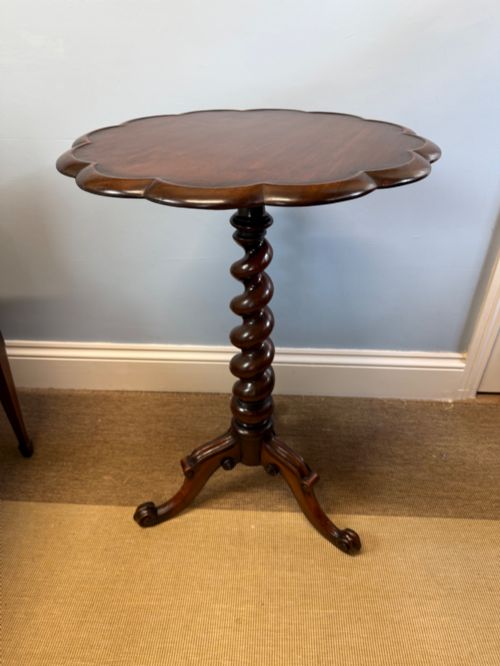
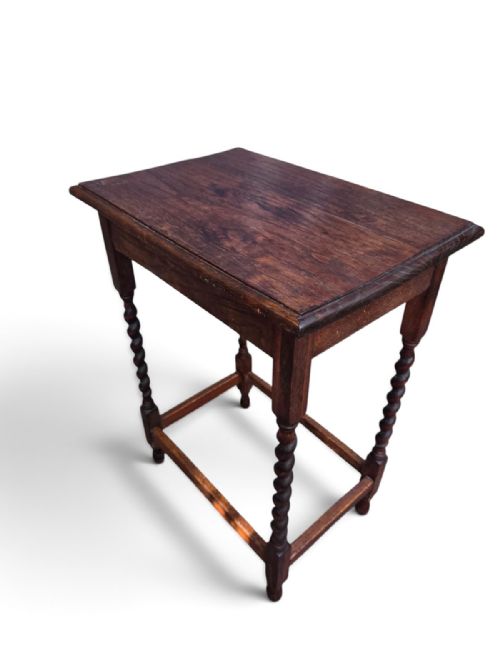
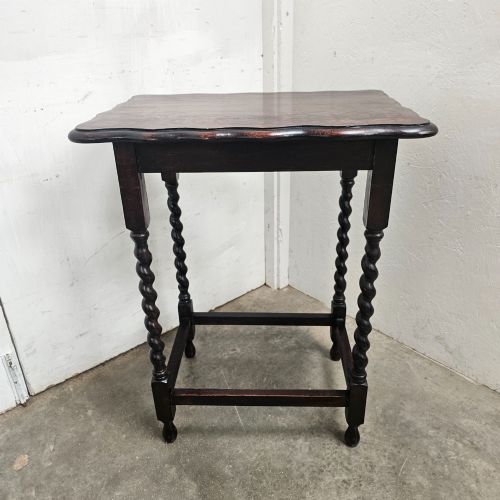
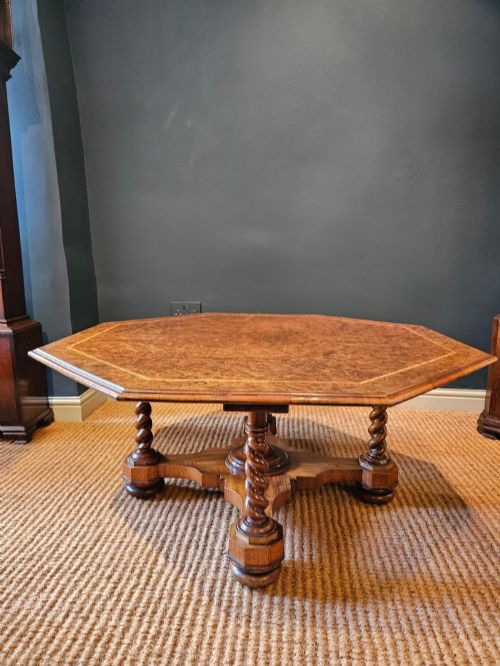
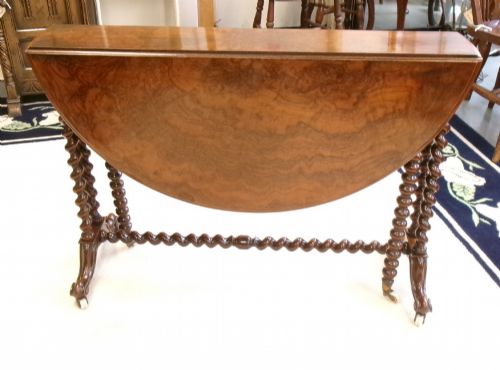
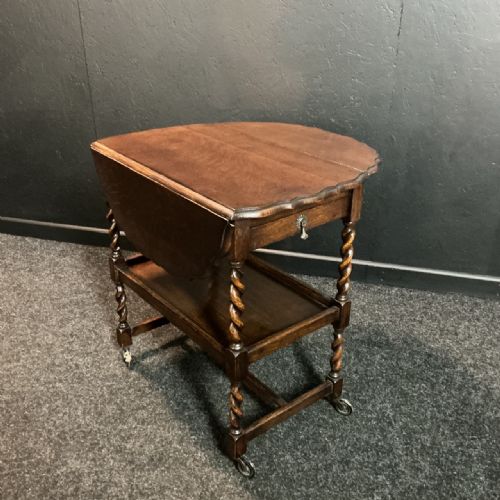
A barley twist tea table combines a serving surface with turned spiral supports, appearing across the Victorian and Edwardian periods in various domestic forms. These tables include occasional tables, side tables, and drop-leaf variations designed for entertaining and social rituals.
The version most commonly met on this page is the Edwardian or Victorian oak or walnut occasional table, frequently featuring the characteristic spiral leg alongside circular, oval, or octagonal tops. Makers also produced tea trolleys, Sutherland tables, and teapoys that utilise this distinct turned style.
Materials and construction
Cabinet makers utilised timber such as oak, mahogany, and burr walnut, selecting woods that responded well to turning and shaping. Surfaces often display figuration, marquetry inlay, or marble inserts.
The spiral profile of the legs requires lathe work, cutting uniform twists that provide structural support and decorative rhythm to the base of the table.
Barley Twist Tea Table Retail Price Guide 2026
Typical asking prices for barley twist tea table among the pieces listed under this phrase on Sellingantiques today, from the lower quarter to the upper quarter. They describe what is for sale here now, not the wider market.
Assessing quality and finish
Quality rests in the precision of the timber turning and the selection of veneer, where burr walnut or figured mahogany exhibits depth and grain movement. Better examples demonstrate crisp detailing in the twist and secure joints in drop-leaf mechanisms.
Proportion and stability separate standard production from superior pieces, with well-balanced tripod bases or sturdy gateleg frames maintaining proper alignment under everyday use.
The Barley Twist Tea Table Glossary
- Barley twist
- A decorative turning style resembling a spiralling rope or barley sugar stick, popular on furniture legs and supports.
- Sutherland table
- A narrow drop-leaf table with hinged flaps that drop nearly vertically, supported by swinging gatelegs.
- Teapoy
- A small box or table originally designed to hold tea canisters, often elevated on a central pillar or legs.
- Marquetry
- The art of applying pieces of veneer to a structure to form decorative patterns and floral motifs.
- Pie crust table
- A small table featuring a raised, carved rim shaped in gentle curves reminiscent of pastry crust.
Barley Twist Tea Table: Frequently Asked Questions
What is a barley twist tea table?
A barley twist tea table is a small domestic table featuring spirally turned legs, produced primarily during the nineteenth and early twentieth centuries for serving tea and displaying decorative objects.
These pieces range from simple occasional tables to drop-leaf Sutherland tables and tea trolleys constructed from oak, walnut, and mahogany.
Where should I place a tea table?
A tea table fits comfortably beside seating in a living room or study, functioning as an occasional surface for lamps, books, or drinks. Drop-leaf versions offer flexibility, allowing the flaps to fold down when floor space is limited.
The turned legs and figured timber tops provide a visual focal point in traditional interiors without dominating the room.
What woods were used for these tables?
Cabinet makers predominantly selected oak and walnut, including burr walnut veneers that showcase intricate grain patterns. Mahogany and rosewood also appear across the nineteenth-century examples.
Occasional highlights include boxwood inlay or marble inserts set into the table top.