


Barley Twist Plant Pedestal
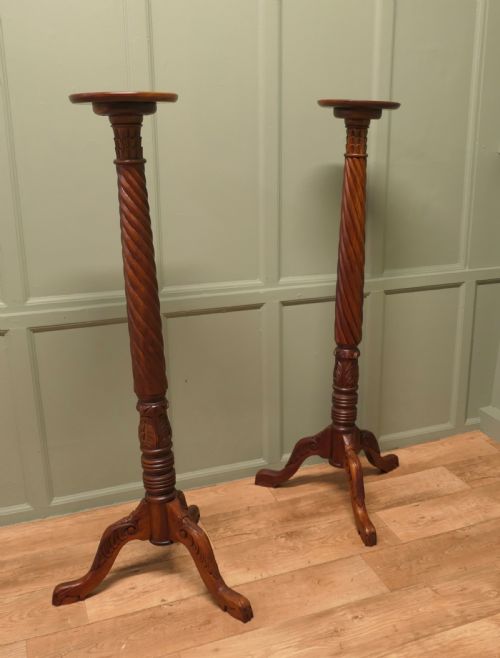
These barley twist plant pedestals bring architectural height and warm timber grain to a room, holding vases and planters with steady grace.
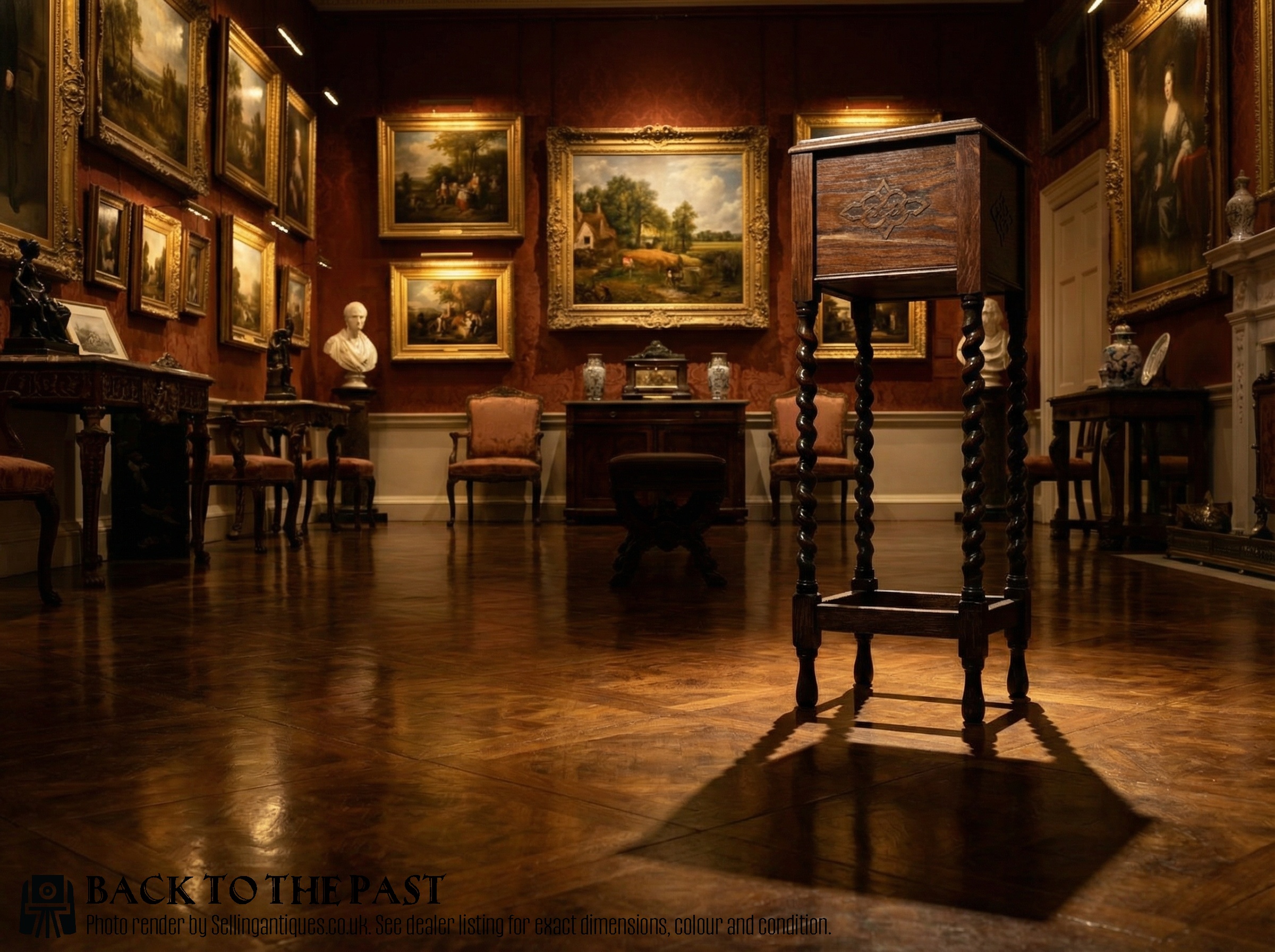
Barley Twist Plant Pedestal
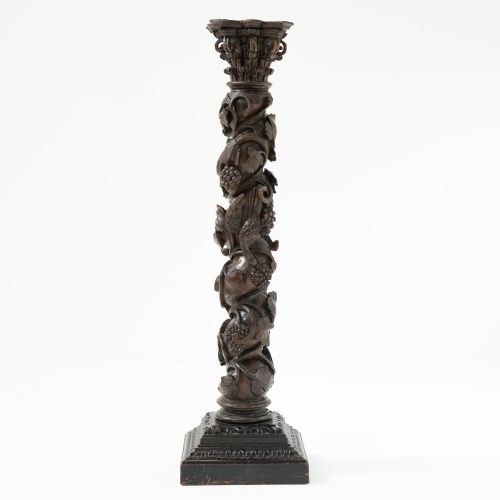
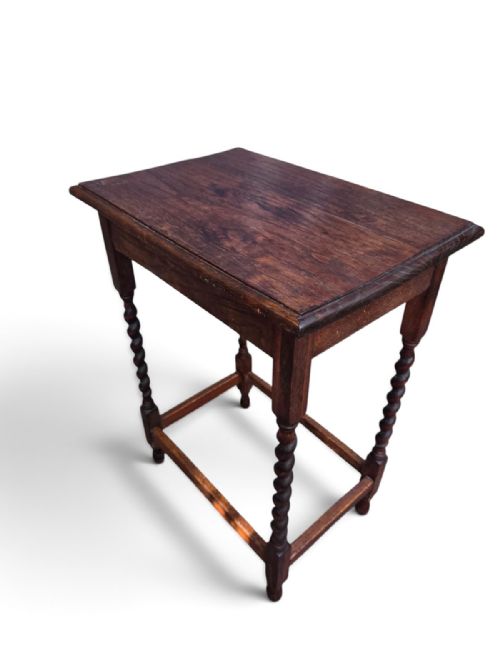
A barley twist plant pedestal provides a raised platform for foliage, sculpture, and decorative items, drawing the eye upward with its distinctive vertical presence. The pieces listed here span centuries of design, appearing as slender torchere stands, sturdy occasional tables, and carved columns.
Victorian and Edwardian examples dominate the selection, often rendered in rich oak, walnut, or mahogany with deep spiral turnings. Alongside these British tables, collectors find Italian ebonised pieces, French marble columns, and Anglo-Indian jardinières.
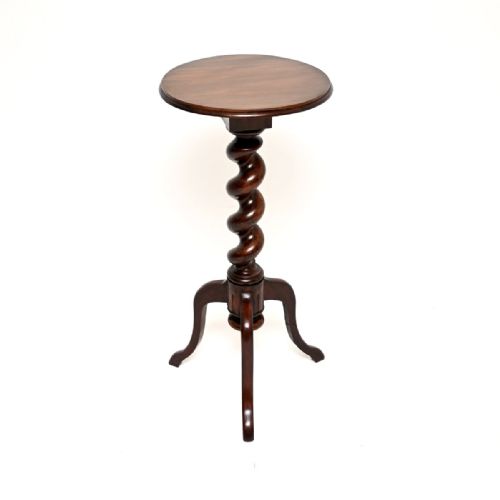
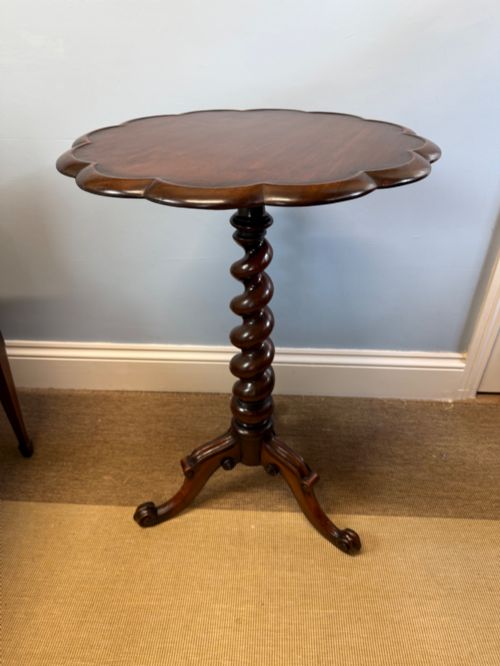
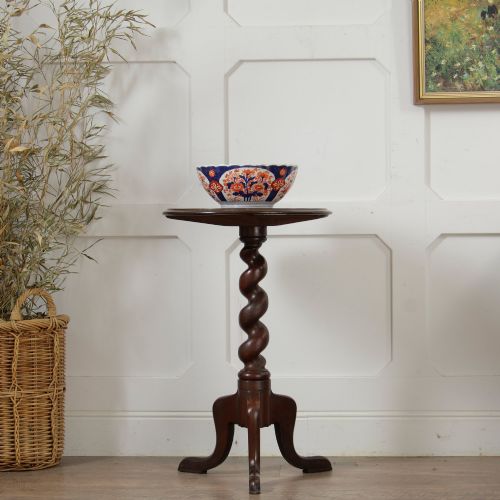
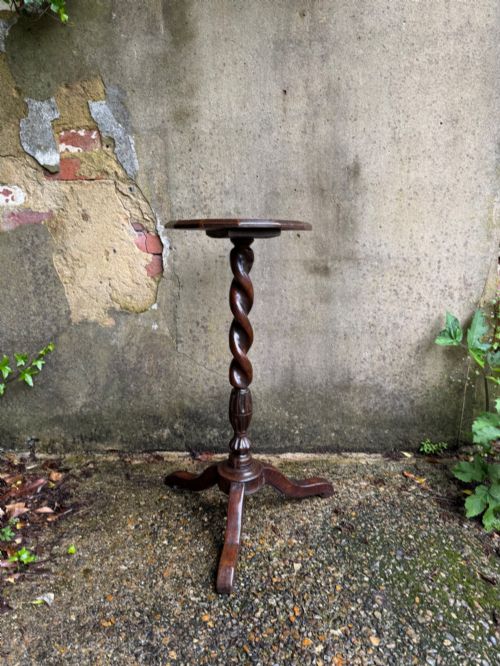
The primary forms range from tripod bases supporting circular tops to robust square plinths and spiral pillars designed to carry heavier planters. These versatile items function equally well as lamp tables, wine stands, or dedicated plant holders.
Materials and construction
Cabinet makers utilised dense hardwoods such as oak, walnut, and mahogany, selecting timber capable of holding fine spiral cuts without splitting. Ebonised wood and exotic inlays of bone or marquetry appear on specialised regional examples.
The distinctive twist relies on precise lathe turning or hand-carving to create smooth, continuous helical rhythms down the central column. Additional stability is achieved through tripod legs, heavy brass fittings, and inset marble tops.
Some nineteenth-century plant stands doubled as clandestine wine tables, keeping spirits safely elevated above inquisitive pets and spilled earth.
Quality and craftsmanship
The refinement of the spiral turning dictates the visual success of the piece, with crisp, deeply undercut twists demonstrating superior hand-tool work over mechanical replication. Timber selection also defines the tier, as well-figured walnut and richly patinated oak command greater appreciation.
Structural integrity depends on the joinery connecting the column to the base and top plate, where hidden pins and solid pegging prevent wobbling under heavy loads. Surface finishes that retain a warm, historic sheen without over-polishing separate well-preserved examples from tired ones.
The Barley Twist Plant Pedestal Glossary
- Barley twist
- A spiral turning resembling the stalk of barley, popular in furniture design from the seventeenth century onward. This helical motif creates strong vertical movement and catches the light.
- Torchere
- A tall, slender stand designed originally to hold a candle or torch, later adapted for lamps, busts, and plants. These stands emphasise height over surface area.
- Jardiniere
- An ornamental pot or stand intended for holding plants and flowers. They frequently incorporate waterproof linings or recessed trays.
- Solomonic
- A column characterised by a helical twist, originating in classical and baroque architecture. The term is often applied to exceptionally carved early wooden pillars.
- Marquetry
- Decorative patterns formed by the insertion of contrasting pieces of wood, bone, or metal into a veneer. This technique adds intricate detail to table tops and pedestals.
Barley Twist Plant Pedestal: Frequently Asked Questions
What is a barley twist plant pedestal?
It is a raised stand featuring a spiral-turned wooden column, designed to elevate plants, lamps, or decorative objects.
These pieces range from compact occasional tables to tall torchere columns dating from the seventeenth century to the early twentieth century.
How were these stands originally used?
They served as practical furniture for displaying potted plants, lighting, and sculptural ornaments in grand houses and parlours.
Their elevated design protected floor surfaces from moisture while bringing greenery into the line of sight.
How do I date a barley twist pedestal?
Dating relies on timber choice, construction methods, and stylistic cues such as tripod base designs or the crispness of the turning.
Early pieces often feature solid carved oak with hand-cut joints, while later Victorian and Edwardian examples utilise machine lathes and factory-prepared veneers.
Are these pedestals sturdy enough for heavy plants?
Most are engineered with substantial tripod bases or weighted columns to support heavy planters and marble urns safely.
Checking the stability of the central joint and the breadth of the foot ensures the stand remains secure under load.