



Victorian Gothic Plant Stand
A victorian gothic plant stand brings architectural weight and pointed character to a corner, combining sturdy structural iron or carved timber with medieval ornamentation.
Victorian Gothic Plant Stand
A victorian gothic plant stand draws on nineteenth century medievalism, presenting pointed arches, trefoil motifs and heavy timber or cast metal forms. These pieces serve to elevate greenery, lanterns or decorative jardinieres within domestic interiors and sheltered gardens.
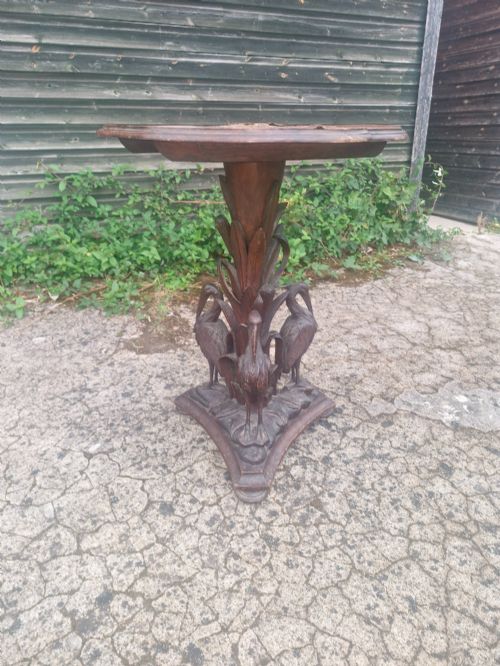
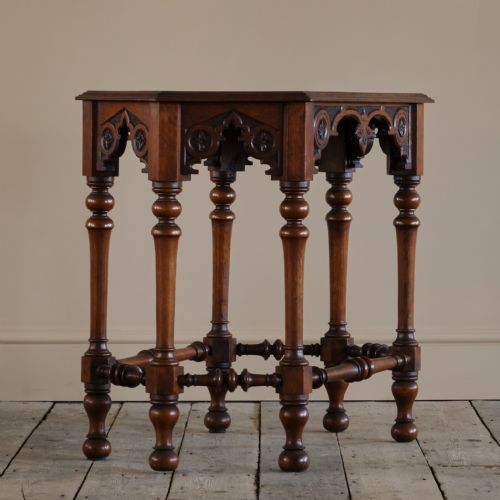
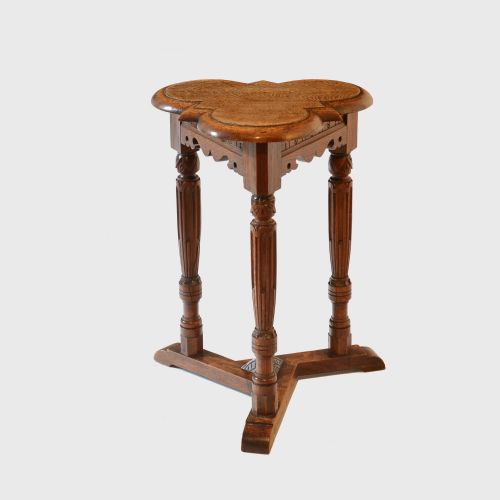
You will most commonly encounter carved oak and wrought iron examples dating from the later nineteenth century, alongside occasional cast brass and ebonised hardwood variants. Forms range from three tier stands and torchere pedestals to clover leaf occasional tables.
Originating across the Victorian era into the Edwardian period, these stands reflect diverse stylistic influences including Arts and Crafts, Aesthetic Movement and Renaissance Revival alongside strict Gothic Revival.
Materials and Methods
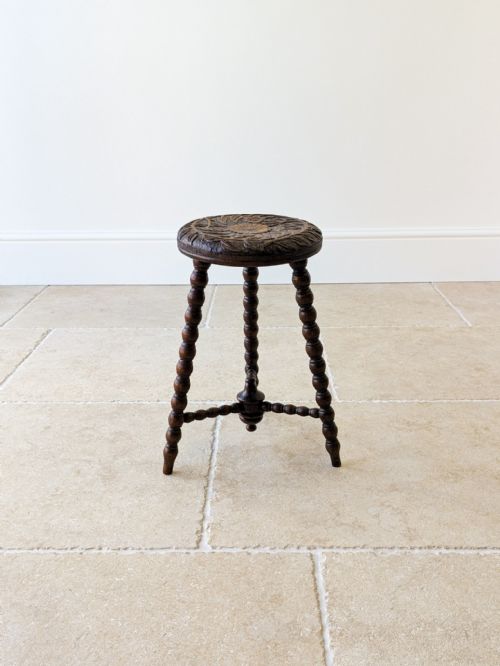
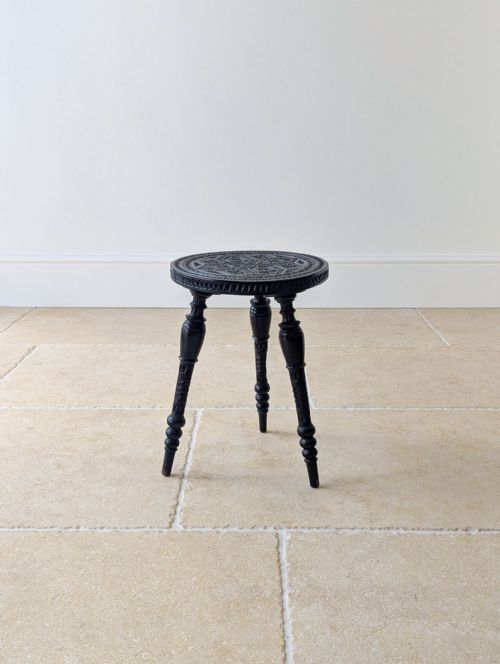
Makers utilised solid oak, walnut and ebonised hardwood, employing deep chip-carving and turning techniques to create spiral columns and caryatid supports. Timber surfaces often display natural grain finishes or dark painted treatments.
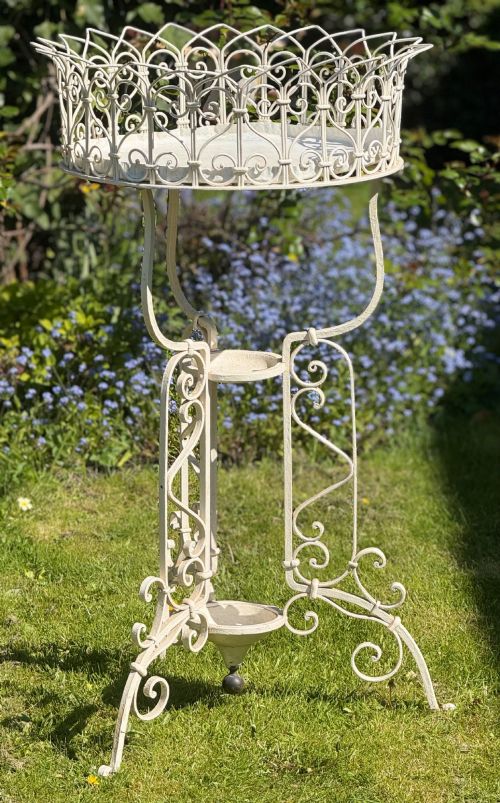
Metal structures rely on cast iron, wrought iron and brass, formed through foundational casting and hand forging. Wirework construction appears in garden variants, while brass elements often accompany cast urns.
Object forms documented here include occasional tables, garden jardinieres, lantern stands, caryatid pedestals, and multi-tier plant stands.
Distinctions in Quality
The distinction between ordinary production and superior work lies in the depth and sharpness of the carving, particularly around trefoils, mouldings and winged figures. Crisp chisel work on solid oak or rosewood separates workshop pieces from simpler output.
Structural integrity in heavier cast iron or multi-tier stands depends on the precision of the joints and the weight of the metal. Higher quality examples maintain balanced proportions and secure fixings across tiers.
The Victorian Gothic Plant Stand Glossary
- Torchere
- A tall ornamental stand designed to support a lamp or candle, often adapted for plants and jardinieres. These slender pedestals lift displays to eye level.
- Trefoil
- A three lobed decorative ornament resembling clover leaves, frequently pierced through table tops or carved into panels. This motif defines much Gothic Revival joinery.
- Caryatid
- A sculpted female figure serving as an architectural support in place of a column. They appear beneath table tops and pedestals.
- Ebonised
- Timber treated with a chemical stain or black finish to imitate ebony. This technique was popular in nineteenth-century decorative arts for dramatic contrast.
- Jardiniere
- An ornamental pot or stand for holding plants and flowers, manufactured in cast iron, brass or earthenware. They form the functional partner to plant stands.
Victorian Gothic Plant Stand: Frequently Asked Questions
What is a Victorian Gothic plant stand?
A Victorian Gothic plant stand is a nineteenth-century pedestal, table or tiered rack designed to hold plants, incorporating medieval architectural elements like pointed arches and trefoils.
They were produced in timber, cast iron and wrought iron to bring architectural drama to domestic plant displays.
Where were these stands used?
These stands sat in Victorian parlours, halls and conservatories to display potted ferns and floral arrangements.
Outdoor versions in cast iron or wirework stood on terraces and in garden settings.
How do I date a Gothic stand?
Dating relies on material combinations, construction marks and stylistic shifts from heavy mid-century oak to lighter aesthetic or Edwardian forms.
Nineteenth-century pieces often show hand-forged iron or deep chip-carving typical of the Gothic Revival.
Can these stands hold heavy plants?
Solid oak, cast iron and multi-tier metal stands offer substantial weight-bearing capacity for large pots.
Lighter occasional tables and wirework pieces suit smaller ferns and trailing foliage.