


Vintage Oak Display Pedestal
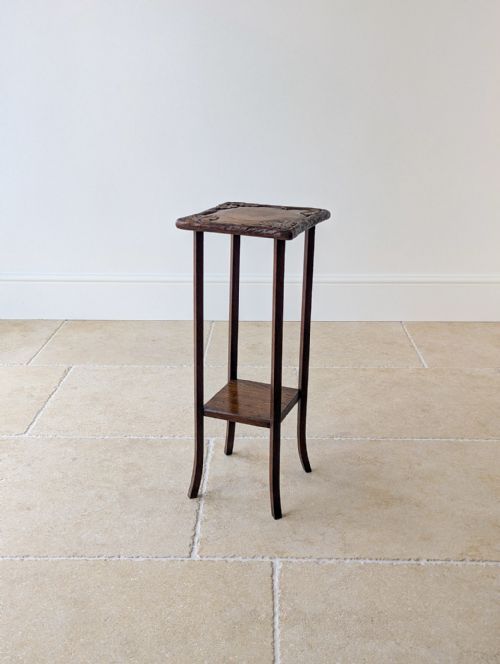
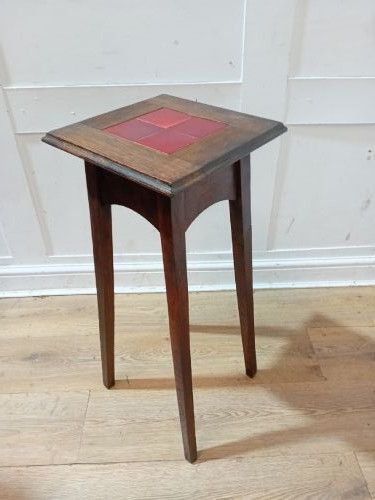
These vintage oak display pedestal pieces offer robust wooden columns and stands for displaying plants and decorative objects in domestic interiors.
Vintage Oak Display Pedestal
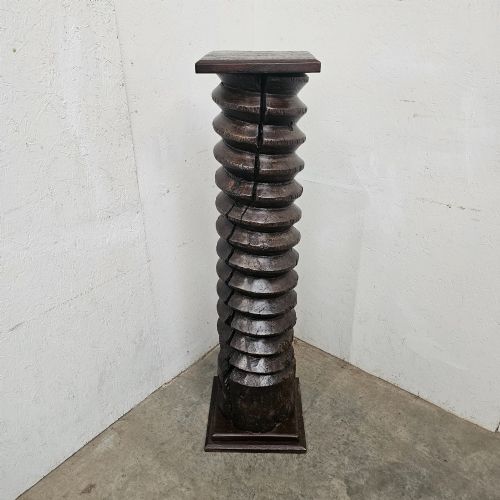
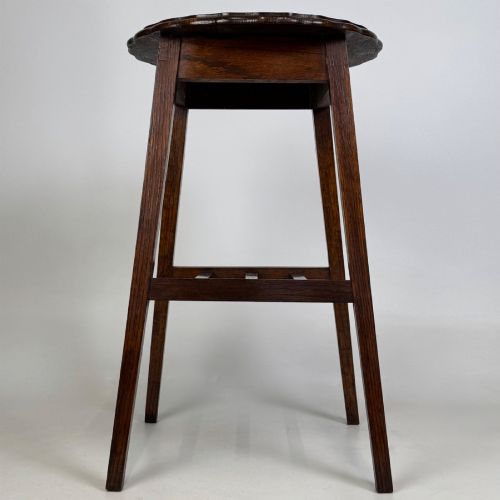
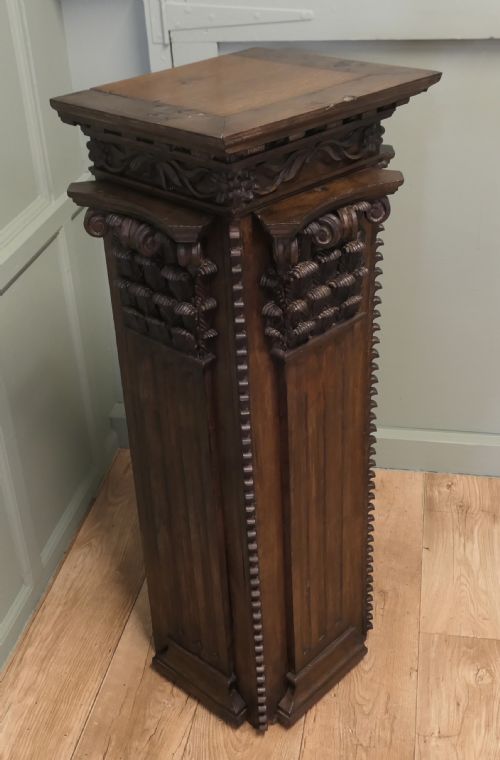
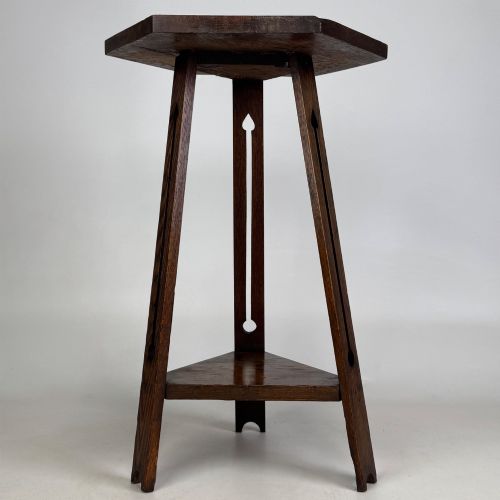
A vintage oak display pedestal serves as a sturdy vertical platform to elevate plants, jardinieres, and decorative items within a room. When exploring this selection, buyers encounter various forms including plant stands, side tables, torcheres, and spiral pillars originating from periods such as the Victorian era, the Edwardian years, and the wider nineteenth and twentieth centuries.
The prevailing style on this page draws heavily from the Arts and Crafts movement alongside revival aesthetics, incorporating turned woodwork and carved details. These items function primarily to display foliage or sculpture, functioning in domestic spaces as both practical supports and decorative architectural accents.
How these pieces were made
Construction relies predominantly on solid oak timbers, shaped and joined using traditional woodworking techniques suited to load-bearing columns and stands. Artisans turned timber on lathes to produce spiral pillars and barley twist legs, while other examples incorporate carved decoration or secondary materials like ceramic, walnut, ebonised wood, metal, and beech.
Makers fashioned these stands with attention to structural stability, balancing narrow column profiles with weighted bases or sturdy multi-tiered platforms. Surface finishes highlight the natural grain of the wood, ranging from golden oak tones to darker antique polishes.
Several stands double as impromptu podiums for very ambitious houseplants attempting to take over the corner of the room.
What varies in quality
Quality in these pedestals rests upon the crispness of the turned woodwork, the depth of hand-carved details, and the architectural proportions of the column. Superior examples display refined joinery and well-figured timber that remain stable under weight.
Variations also emerge in the distinctness of revival styles, where pieces adhering closely to Arts and Crafts or French Renaissance traditions show greater sculptural ambition than plain utility items.
The Vintage Oak Display Pedestal Glossary
- Barley twist
- A type of turned wooden leg resembling the shape of a twisted rope or barley stalk, commonly found on nineteenth and twentieth-century stands.
- Jardiniere stand
- A specialised piece of furniture designed specifically to hold a plant container or flower pot.
- Torchere
- A tall ornamental stand originally intended to support a candelabrum or lamp, later adapted for displaying decorative objects.
- Arts and Crafts
- A design movement prioritising traditional craftsmanship, visible construction, and simple forms using natural materials like oak.
Vintage Oak Display Pedestal: Frequently Asked Questions
What is a vintage oak display pedestal used for?
These pieces function as elevated platforms to showcase potted plants, floral arrangements, small sculptures, or decorative vases within a room. Their vertical profile draws the eye upward and adds architectural interest to corners or empty spaces.
They serve both decorative and practical roles in interior arrangement, holding items safely at a convenient height for viewing.
How do I identify an Arts and Crafts oak stand?
Arts and Crafts pieces emphasise honest construction, simple geometric forms, and natural materials like solid oak without excessive ornamentation. They often feature exposed joinery, hand-finished surfaces, and utilitarian strength suited to domestic daily life.
This aesthetic developed in the late nineteenth century and continued into the Edwardian period, valuing traditional hand woodworking over mass production.
What is a barley twist leg?
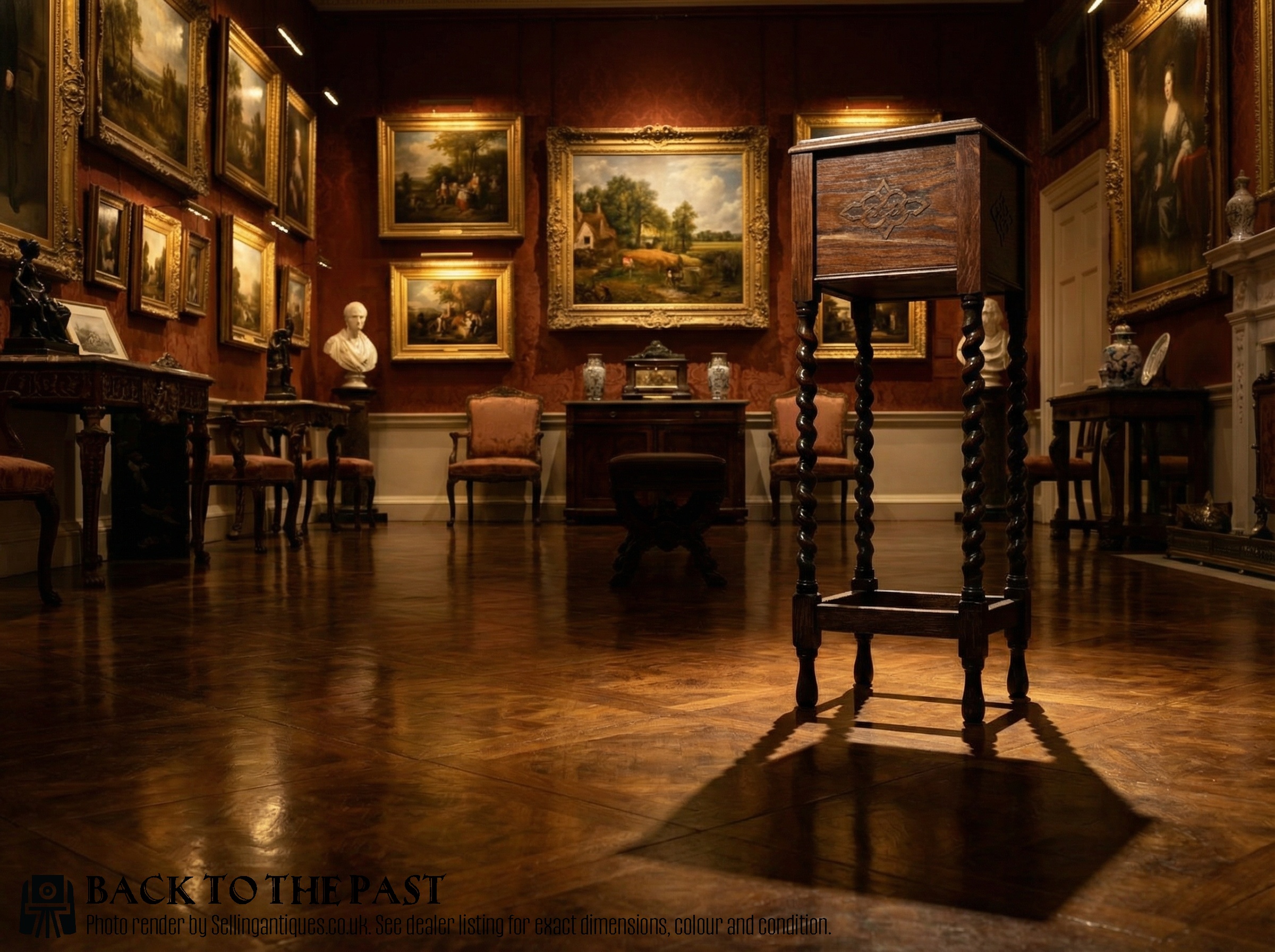
A barley twist is a decorative column or leg formed by cutting a helical spiral into the wood, creating a sense of movement and texture. This technique appeared frequently on furniture and plant stands during the nineteenth and early twentieth centuries.
Craftsmen turned the timber on a lathe to achieve the uniform winding pattern seen on many oak columns.