
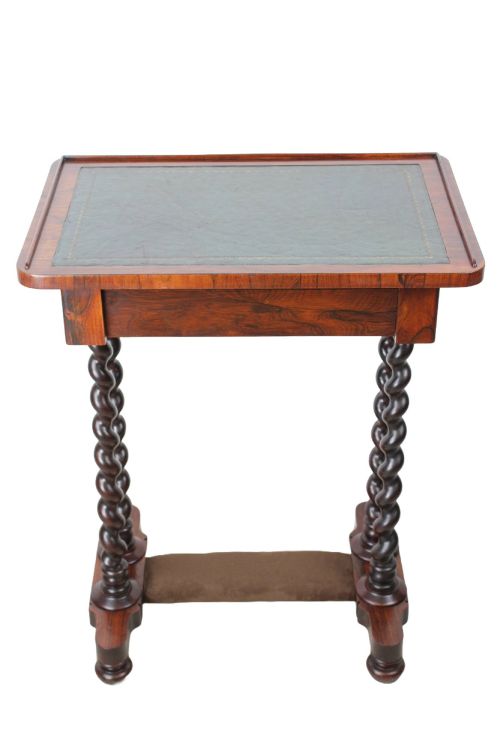
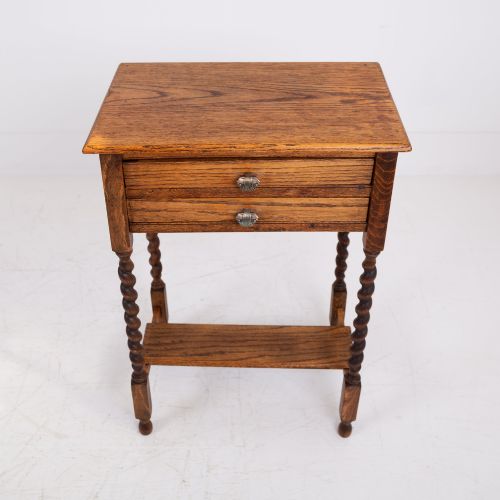
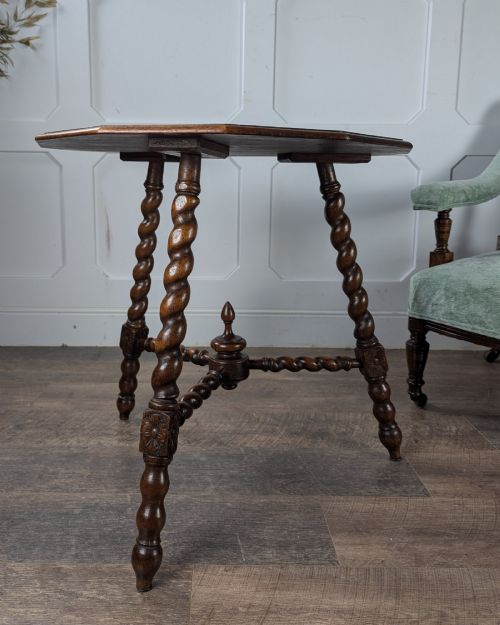
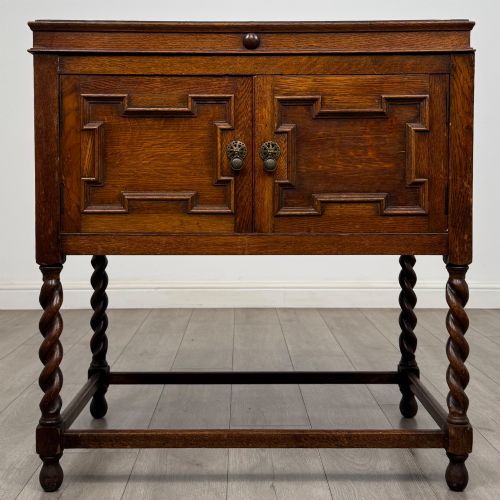
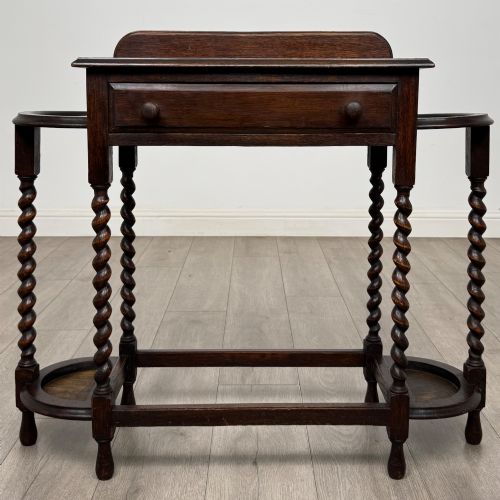
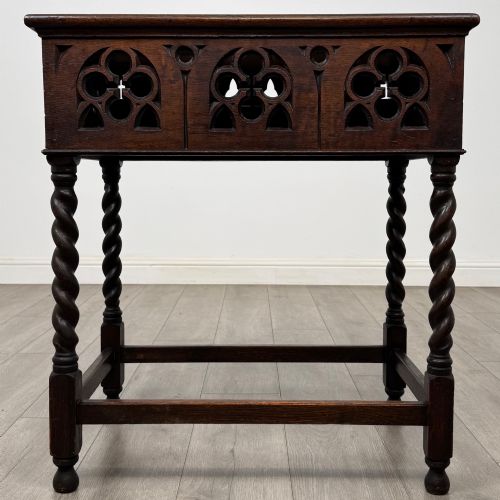
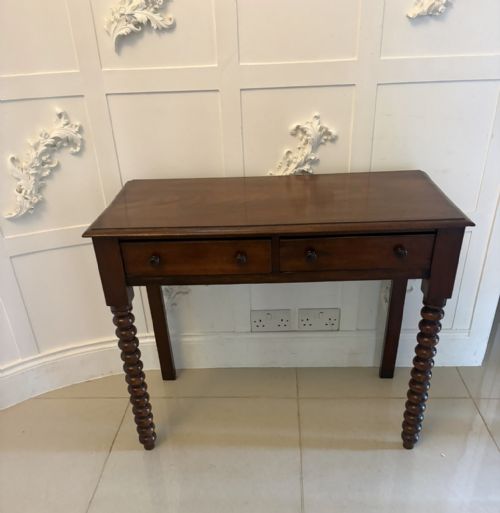
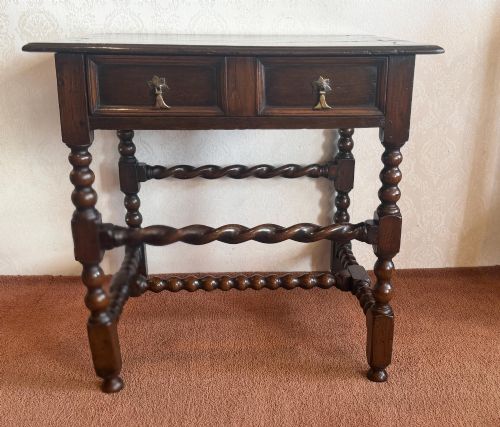



Barley Twist Hall Table
A barley twist hall table brings sculptural turned woodwork to an entryway, offering a practical surface for post and keys.
Barley Twist Hall Table
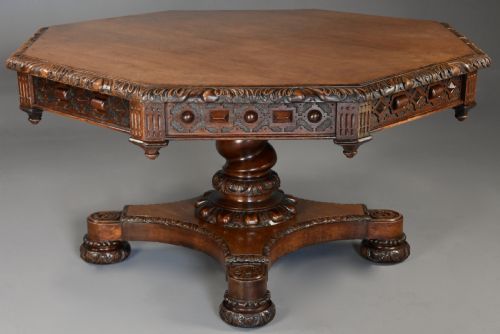
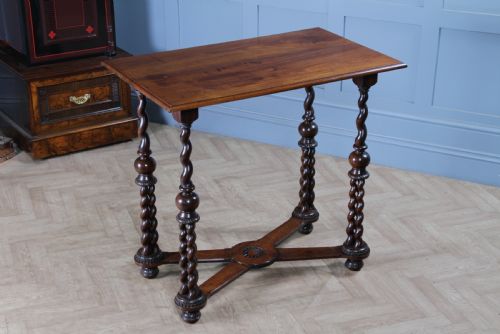
A barley twist hall table is a compact surface designed for narrow spaces such as corridors and entryways. The form frequently appears in oak and walnut, spanning periods from the seventeenth century through the twentieth century with revival movements like Jacobean and Gothic.
Buyers most commonly encounter Victorian and early twentieth-century oak examples featuring sturdy turned legs and occasional drawers. These tables serve utility and display, functioning as side stands, console tables, or occasional surfaces.
Origin variations include English regional workshops alongside continental pieces in rosewood and ebonised wood. The defining characteristic remains the spiralling leg turning that supports the top.
How they were made
Cabinet makers utilised solid timbers like oak, walnut, and mahogany, constructing tops with pegged joints or frame-and-panel methods. Woodturning lathes shaped the characteristic helical twist of the legs, often finished with hand-planed mouldings.
Surface treatments included wax polishing, French polish, and oil finishes to highlight the natural grain of the timber. Brass hardware, such as handles and cast sabots, appears on select refined examples.
Some nineteenth-century tables arrive with secret drawers deep enough only for love letters.
What varies in quality
Quality rests on timber selection, such as figured walnut or quarter-sawn oak, and the crispness of the hand-turned spirals. Pieces exhibiting balanced proportions and tight joinery distinguish themselves from utilitarian production.
The integrity of the original surface finish and the retention of period hardware influence the character of each piece. Later adaptations or replaced components alter the standing of a table within its period.
Cottier and Co·James Winter
The Barley Twist Hall Table Glossary
- Barley twist
- A spiralling decorative turning resembling a twisted rope, carved or shaped on furniture legs and supports.
- Oyster veneer
- Slices of branch wood laid in patterns to resemble oyster shells, seen on seventeenth and eighteenth-century surfaces.
- Console table
- A narrow table designed to stand against a wall, frequently anchored or placed in a hallway.
- Parquetry
- Geometric wood mosaic work used for surface decoration on table tops.
- Ebonised wood
- Timber stained or treated to imitate ebony, providing a dark glossy finish popular in the nineteenth century.
Barley Twist Hall Table: Frequently Asked Questions
Where should I place a barley twist hall table?
These tables fit well in narrow corridors, entryways, or landings where depth is limited. Their slender profiles allow them to sit flat against walls without blocking movement.
They function practically for holding correspondence or keys while adding architectural interest to plain circulation spaces.
How do I care for an antique oak table?
Maintain the wood by applying a quality beeswax periodically and buffing it with a soft cloth. Keep the timber away from direct heat sources and strong sunlight to prevent drying.
Avoid using liquid household cleaners or silicone polishes, which can damage the aged patina of the surface.
Are these tables suitable for daily use?
Solid oak and walnut construction provides robust durability for everyday tasks like writing or placing daily items. The sturdy turned legs offer stable support under normal domestic loads.
Care should be taken with moisture and hot cups, utilising coasters to protect antique polished finishes.
How can I tell the age of the turning?
Earlier turnings from the seventeenth century often show hand-chiselled tool marks and irregular geometry compared to uniform Victorian machine lathe work. The colour and oxidation of the timber deepens over centuries of exposure.
Examining the construction joints underneath reveals whether screws, handmade nails, or pegs were used by the maker.