



Barley Twist Candle Stand
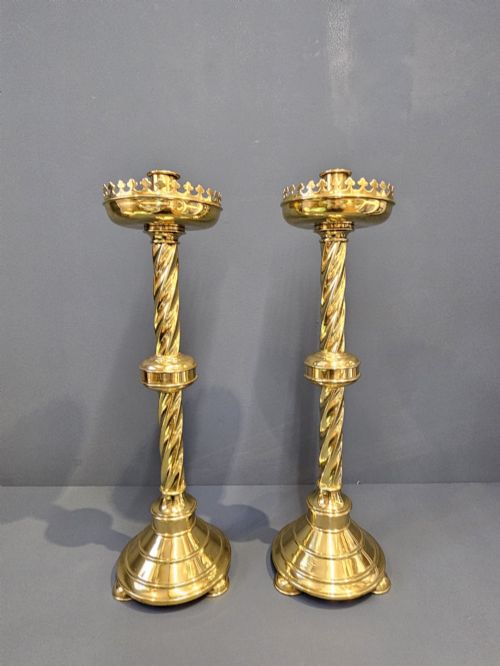
These barley twist candle stand pieces bring sculptural turned timber and gleaming brass into rooms that need height and texture.
Barley Twist Candle Stand
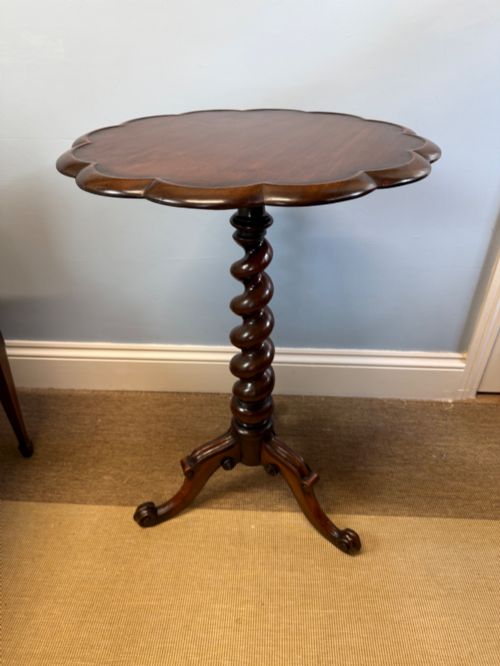
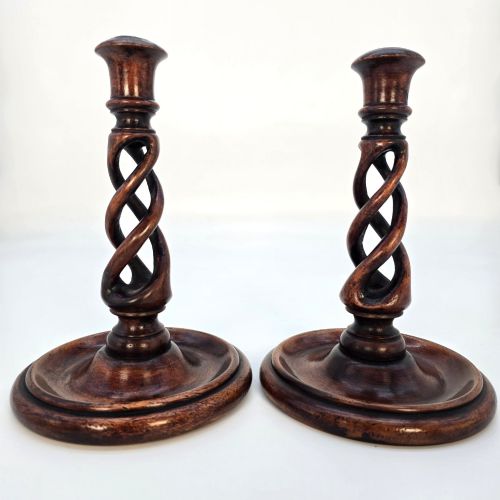
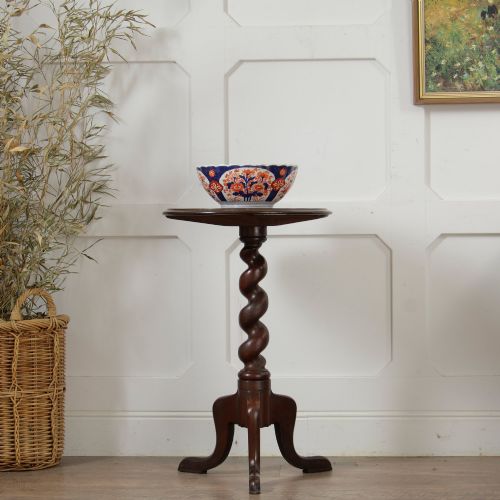
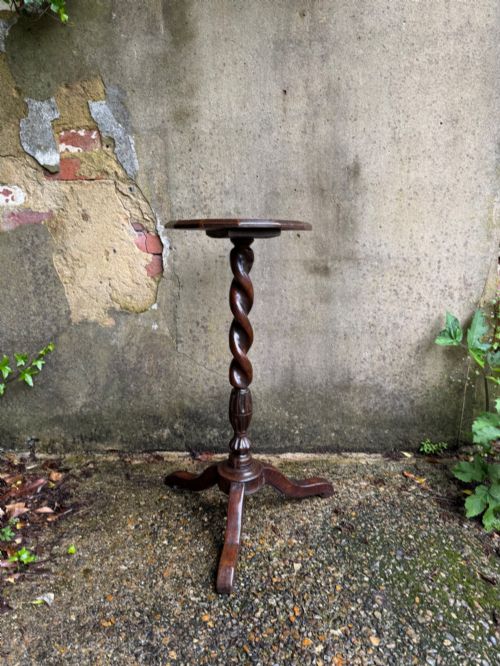
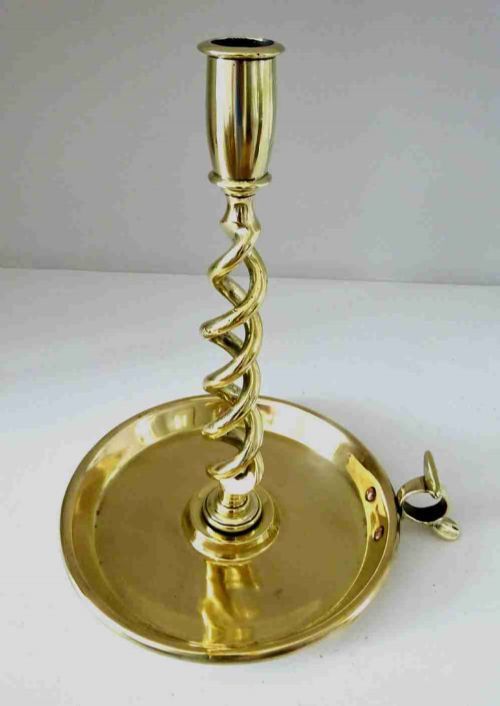
A barley twist candle stand takes several distinct physical forms across the inventory, ranging from tall floor torcheres and pedestals to small tabletop candlesticks and occasional tables. The buyer seeking this specific silhouette encounters pieces intended both for direct illumination and for displaying decorative objects at eye level.
Victorian examples in mahogany, walnut, and oak dominate the selection, often featuring tripod bases or stepped brass feet. Alongside these, 18th century fruitwood variants and early oak items provide a glimpse into earlier domestic lighting furniture.
Materials and construction
The timber sections rely on traditional turning techniques to achieve the helical twist, executed primarily in hardwoods such as mahogany, walnut, oak, and fruitwood. Craftsmen worked the grain carefully to ensure the spiral maintains structural integrity while catching the light along its curved edges.
Metal components, particularly cast and turned brass, frequently pair with the wood to form weighted bases, drip pans, or column capitals. Other variations incorporate marquetry, ebonising, and crystal glass elements to add visual contrast.
Design styles span Georgian, Victorian, Jacobean Revival, Edwardian, and Scandinavian Country.
Distinguishing quality
Quality rests upon the crispness of the turned spiral and the harmony of proportions between the stem and the supporting base. Sharply defined twists reflect skilled hand-working, whereas softer contours indicate simpler production methods or heavy wear over time.
The selection of timber grain and the integrity of joints on tripod or pedestal feet dictate the overall stability and presence of the piece. Premium examples demonstrate careful matching of brass elements to timber shafts without loose fittings or misaligned turnings.
Holland and Son·T Thomason and Co
The Barley Twist Candle Stand Glossary
- Barley twist
- A spiral turning resembling the stalk of barley, popular in furniture and decorative objects from the 17th century onwards. This carved or turned helix adds depth and movement to vertical columns.
- Torchere
- A tall stand designed to hold a light source or decorative object. These slender pieces elevate lamps, candles, or plants above floor level.
- Tripod base
- A three-legged support structure commonly found beneath small tables and stands. This configuration ensures stability on uneven floor surfaces.
- Fruitwood
- Timber sourced from fruit-bearing trees such as pear or apple, prized for its fine grain and warm tone. Artisans utilised it for turned items requiring precise detail.
Barley Twist Candle Stand: Frequently Asked Questions
How were barley twist candle stands used?
These stands functioned primarily to elevate light sources or display prized ornaments in domestic interiors. Tall torcheres placed in corners cast illumination upward, while smaller table versions held candles for evening tasks.
Over time, many of these supports transitioned into general display furniture for vases or pocket watches. Their narrow footprints allowed them to fit into tight spaces beside seating or in hallways.
What periods do these stands come from?
The pieces span from the late 17th century through to the early 20th century, encompassing several distinct revival movements. Victorian and Edwardian examples appear frequently alongside Georgian and earlier designs.
Each period imparts subtle differences in timber selection, base geometry, and turning depth. Late 19th-century production often mirrors earlier Jacobean and William and Mary styles.
Are the stands made of solid wood?
The structural columns and turned shafts generally consist of solid hardwoods like mahogany, oak, walnut, or fruitwood. Certain tabletop surfaces and decorative panels incorporate veneers or marquetry inlay over secondary woods.
Brass components appear as structural mounts, weighted bases, or drip pans on the candlestick forms. Glass elements also feature in specific 20th-century table candlesticks.
How do I style a barley twist stand?
A tall torchere stands well in an empty corner to add vertical interest and architectural detail to a room. Tabletop versions suit sideboards, desks, or mantels where they introduce traditional texture.
Pairing the dark timbers with simple surroundings allows the spiral turning to catch natural light. They mix readily with both period interiors and modern minimalist spaces.