




Bamboo Umbrella Stand
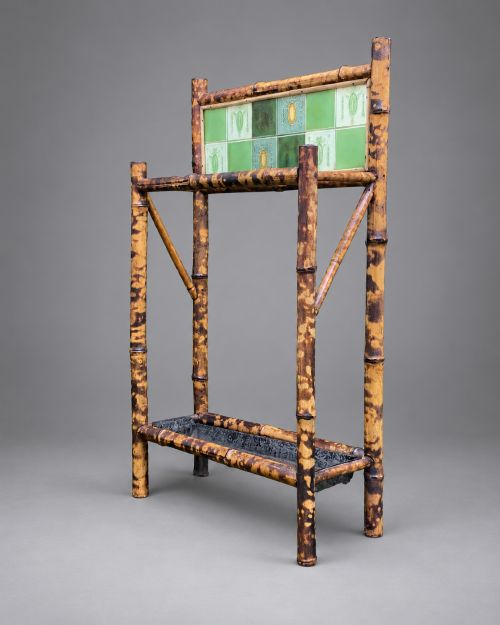
A bamboo umbrella stand brings natural texture and upright utility to an entryway, combining botanical stems or metal castings with practical drip trays.
Bamboo Umbrella Stand
A bamboo umbrella stand serves as a dedicated hallway piece designed to hold wet walking sticks and wet weather gear while introducing organic lines to the interior. Buyers searching this phrase will find a mix of specialised stick holders and larger multi-functional hall stands that incorporate umbrella storage.
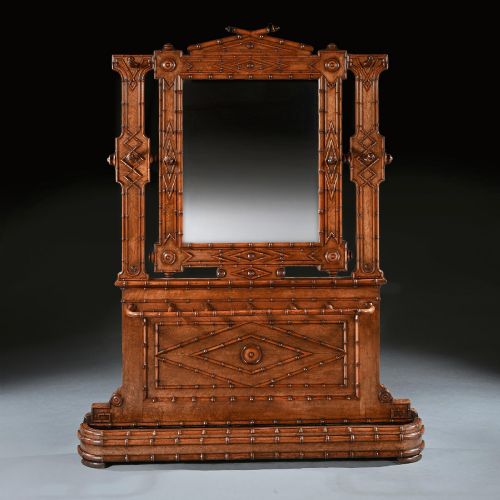
The selection ranges from lightweight natural cane structures to sturdy metal castings shaped to mimic plant stems. Many examples hail from the Victorian and Edwardian eras, often reflecting the period fascination with Aesthetic Movement design and Japanese export goods.
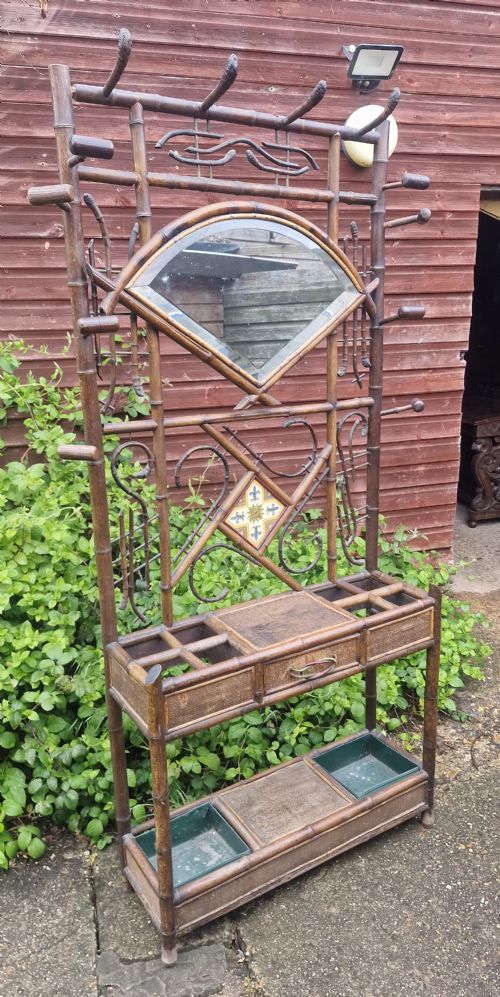
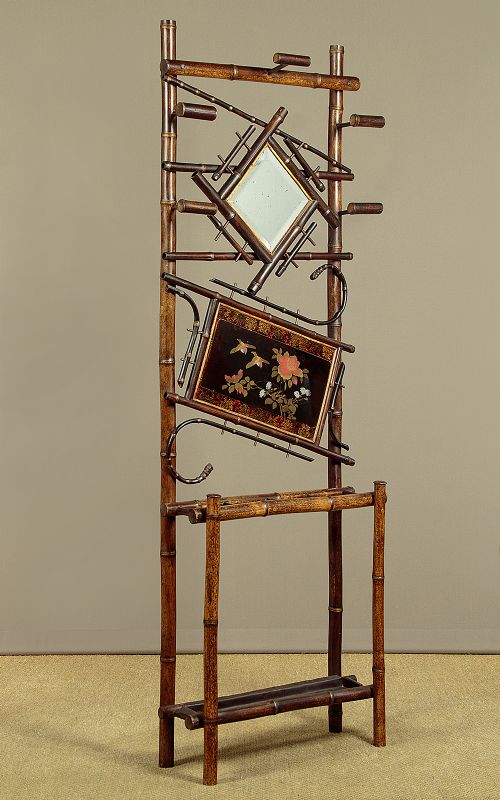
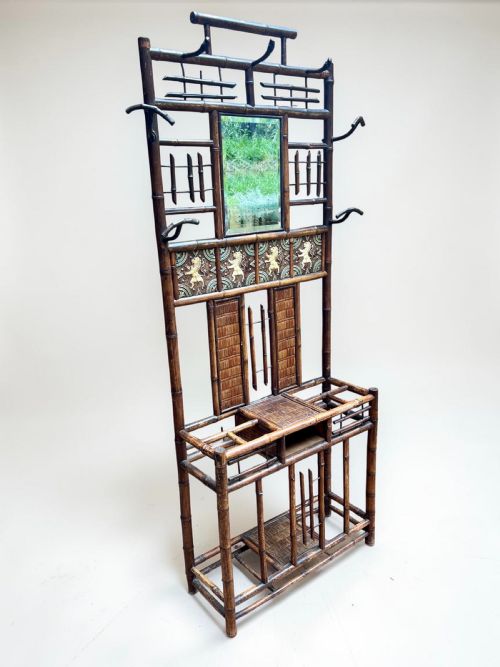
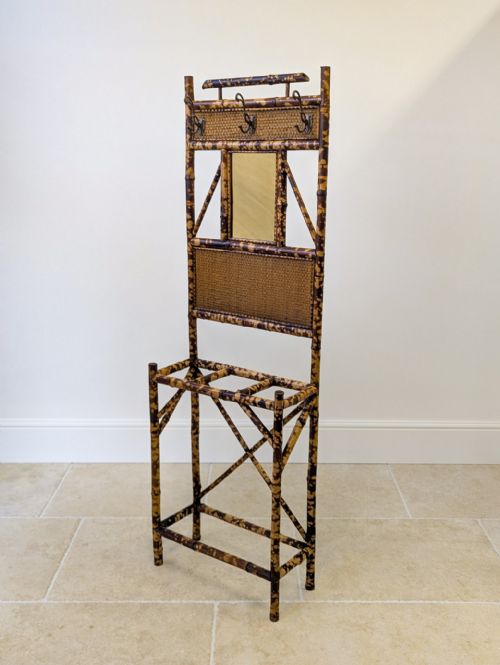
Beyond simple tubular holders, surviving pieces frequently integrate mirrors, coat hooks, and lacquered panels into their framework. Others combine the organic material with ceramic tile inserts or glass components to handle moisture at the base.
Materials and construction methods
Natural cane construction relies on steam-bending and secure joinery using pinned or wrapped bindings to shape the cylindrical stalks into rigid frames. Artisans often paired this vegetal material with inset lacquer panels or mirrored glass sections.
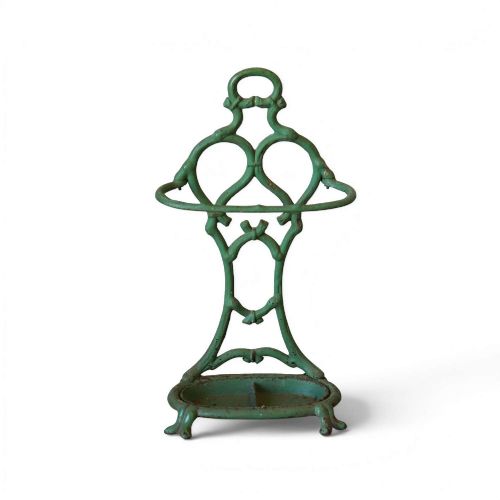
Alternative interpretations utilise cast iron, shaped and moulded to replicate the segmented joints and textures of real plant growth. These metal versions frequently incorporate integrated drip trays made of metal or ceramic tile to protect flooring from damp tips.
Bamboo Umbrella Stand Retail Price Guide 2026
Typical asking prices for bamboo umbrella stand among the pieces listed under this phrase on Sellingantiques today, from the lower quarter to the upper quarter. They describe what is for sale here now, not the wider market.
Listings for this phrase frequently span the Victorian era, incorporating materials such as cast iron, rattan, mirror glass, and ceramic tiles.
Distinguishing quality and craftsmanship
Superior examples demonstrate tight, uniform joinery and secure bindings that prevent the natural cane from splitting or wobbling under weight. The integrity of secondary elements, such as intact mirror silvering and firmly seated ceramic tiles or drip trays, elevates the piece.
Artistic execution distinguishes standard utility items from finer decorative works, particularly in cast iron iterations where crisp plant detailing matters. Pieces featuring specialised ornamentation like hand-painted lacquer or specific maker attributions display a higher tier of workshop output.
The Bamboo Umbrella Stand Glossary
- Faux bamboo
- Metalwork or woodwork carved, moulded, or painted to imitate the segmented stems and nodes of natural bamboo. This technique was popular in nineteenth-century furniture production.
- Hall stand
- A multi-functional hallway furniture piece combining umbrella storage with hooks for coats and hats, frequently incorporating a central mirror. Many items matching this search take this broader form.
- Aesthetic Movement
- A late nineteenth-century design current emphasising visual beauty over narrative content, drawing heavily on Japanese artistic motifs. It heavily influenced the creation of bamboo furnishings.
- Meiji Period
- The era of Japanese history spanning from 1868 to 1912, characterised by opening trade with the West and the export of decorative arts. Ceramic works from this time often appear in stick stands.
- Chinoiserie
- European artistic interpretation and imitation of Chinese and East Asian artistic traditions. This style frequently manifests in decorated panels applied to hall furniture.
Bamboo Umbrella Stand: Frequently Asked Questions
How do I protect natural bamboo from damp umbrellas?
Most antique stands feature a metal or ceramic tray at the base designed to catch runoff water from wet sticks.
Ensuring that umbrellas are reasonably dry before storage helps preserve the natural cane and prevents prolonged exposure to standing moisture.
Are metal faux bamboo stands heavy?
Cast iron versions possess substantial weight, providing a stable base that prevents tipping when heavy walking sticks are placed inside.
Natural cane stands are lighter and rely on a wide footprint or weighted base for stability.
Can these stands hold walking sticks as well?
The vertical compartments accommodate both umbrellas and walking canes interchangeably, as both share similar narrow cylindrical dimensions.
Many period pieces were marketed specifically for both stick and umbrella storage in domestic entryways.
How do I date a bamboo hall stand?
Dating relies on stylistic clues such as Aesthetic Movement motifs, mirror beveling techniques, and associated materials like Minton tiles.
Most surviving examples date from the Victorian and Edwardian periods, typically between the late nineteenth and early twentieth centuries.