


Bamboo Stick Stand
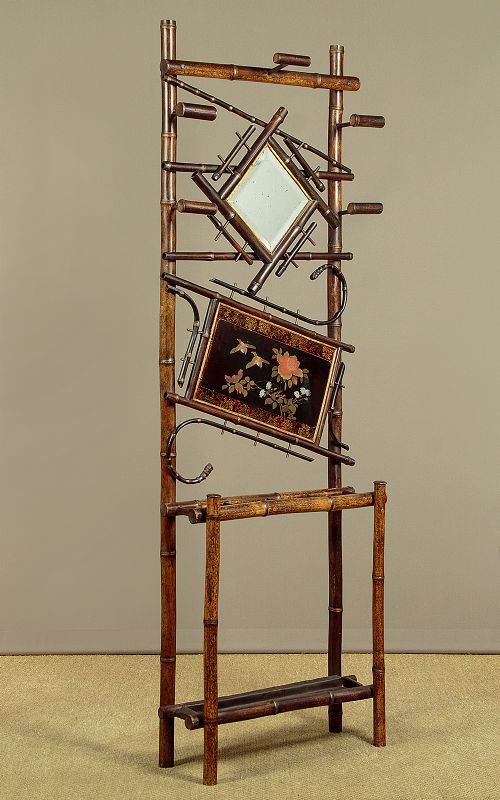
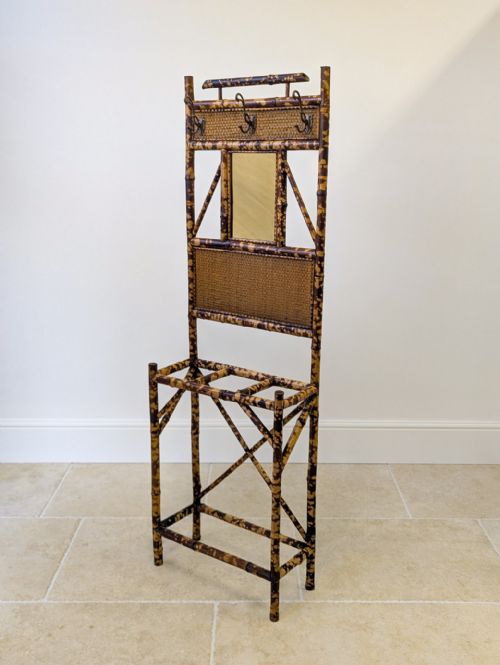
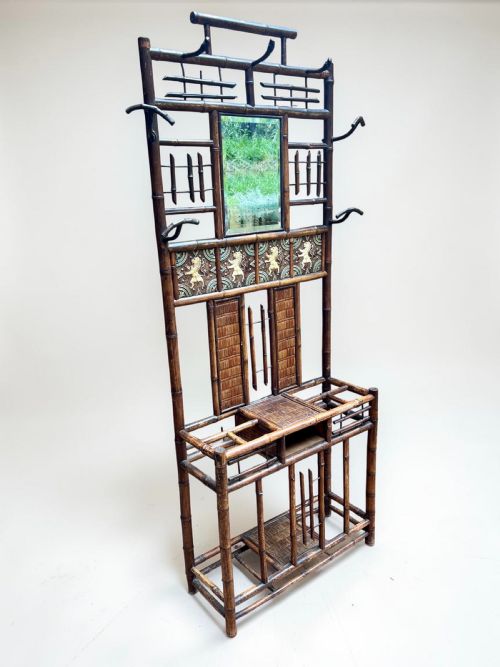
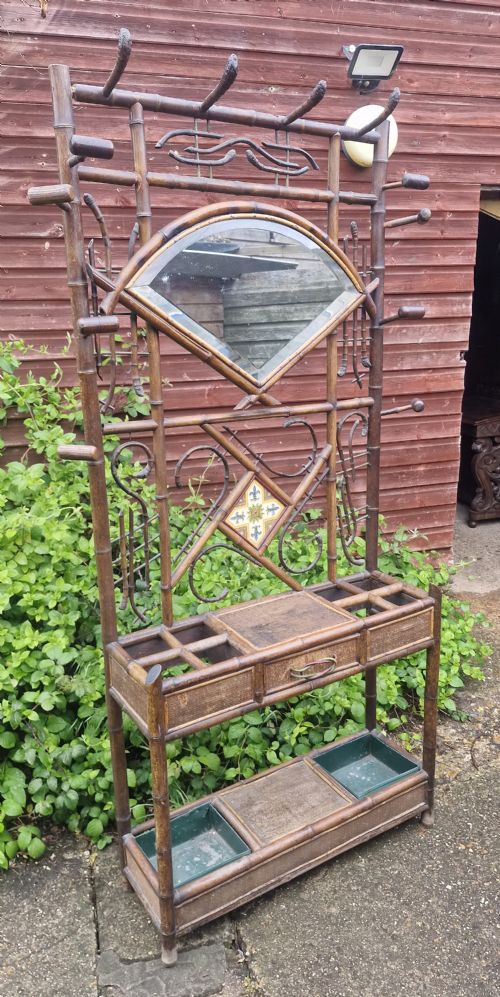
These bamboo stick stand examples bring functional utility and natural texture to an entryway, combining structural cane with cast metal or ceramic elements.
Bamboo Stick Stand
When you search for a bamboo stick stand, you are looking at hallway furniture designed to hold walking sticks, umbrellas, and occasionally hats or coats. The pieces appearing here span the Victorian era, the Aesthetic Movement, and the early twentieth century, originating from British, French, and Japanese workshops.
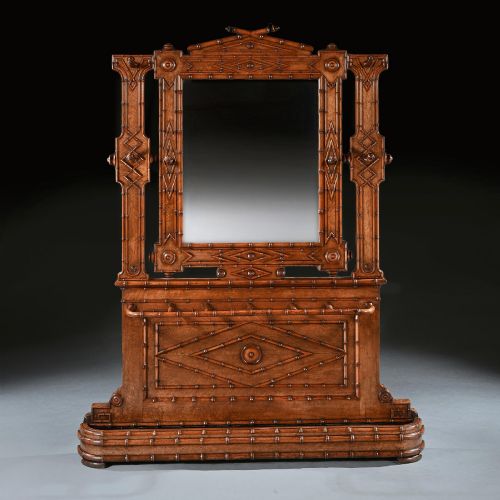
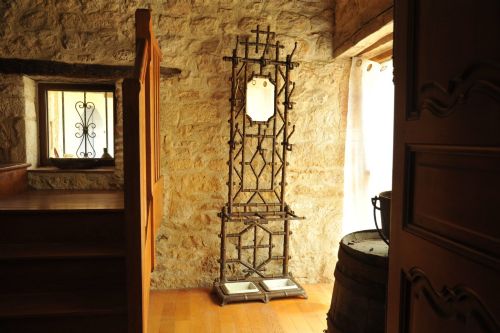
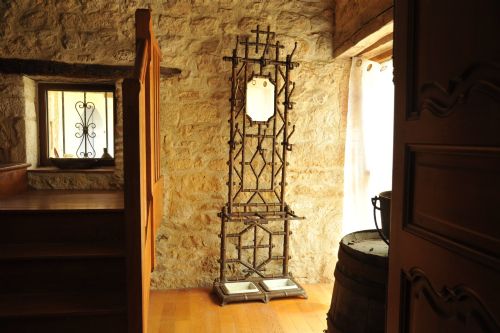
The most common version met on this page is the freestanding Victorian or French hallstand incorporating a bamboo or faux bamboo frame, frequently fitted with a mirror and a drip tray. These range from compact umbrella holders to larger hall furniture items that combine coat hooks and sporting paraphernalia storage.
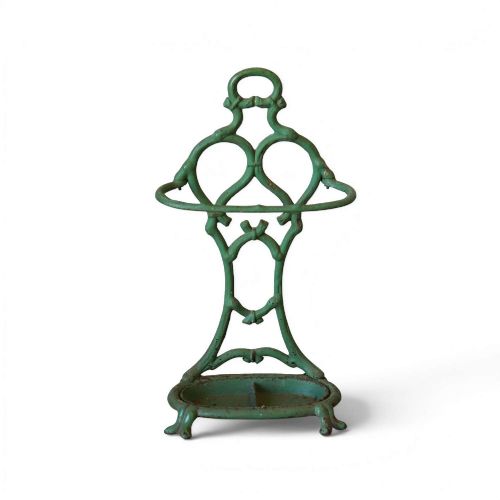
Makers utilised both genuine natural cane and cast iron shaped to imitate plant stems, often augmented by ceramic tiles, lacquered panels, or brass fittings. Their forms reflect late nineteenth-century tastes for exoticism, Japonisme, and practical hallway organisation.
What Varies in Quality
The sophistication of the joinery and the integrity of the natural cane separate standard examples from finer works. Superior pieces maintain tight, stable joints where individual bamboo stems intersect without splitting or loosening.
The inclusion of integrated decorative elements such as hand-painted ceramic tiles, Japanese lacquer panels, or bevelled mirror glass elevates the artistic ambition of the piece. Cast iron variations depend on the crispness of the moulding to successfully imitate organic bamboo textures.
Completeness dictates utility and desirability, particularly the presence of original metal or ceramic drip trays at the base and matching brass coat hooks. Altered frameworks or missing internal components reduce the historical cohesion of the object.
Some items double as fishing rod rests, proving Victorians took their angling accessories right into the hallway.
Fukagawa
The Bamboo Stick Stand Glossary
- Faux Bamboo
- Simulated bamboo carved or cast from another material such as cast iron, cherry wood, or maple. This technique allowed makers to achieve an exotic aesthetic using domestic hardwoods or durable metals.
- Aesthetic Movement
- A late nineteenth-century design style emphasising art for art's sake and drawing heavily on Japanese artistic motifs. Pieces from this period often display asymmetrical layouts and Japonisme influences.
- Japonisme
- The influence of Japanese art and design on Western decorative arts following the reopening of trade in the mid-nineteenth century. This style appears in lacquered panels and bamboo construction.
- Hall Stand
- A piece of hallway furniture combining storage for coats, hats, and umbrellas, frequently incorporating a central mirror. Many examples integrate stick stands into their lower framework.
- Drip Tray
- A metal or ceramic pan positioned at the base of a stick stand to catch rainwater from wet umbrellas. Original trays are a key indicator of completeness.
Bamboo Stick Stand: Frequently Asked Questions
What is a bamboo stick stand?
A bamboo stick stand is a piece of hallway furniture designed to store walking sticks, canes, and umbrellas using natural plant stems or simulated bamboo frames.
These items range from simple cylindrical holders to large hall furniture incorporating mirrors and coat hooks.
How do I care for bamboo furniture?
Keep bamboo stick stands away from excessive moisture and direct heat sources to prevent the natural cane from drying out or splitting. Dust regularly with a dry cloth and avoid harsh chemical cleaners.
Ensure that wet umbrellas are placed in the drip tray rather than resting directly against untreated plant material.
Are cast iron versions genuine bamboo?
Cast iron examples are not made of plant material, but are cast in moulds to imitate the segmented nodes and textures of natural bamboo. This technique was utilised to create heavy, durable umbrella stands that resisted tipping.
These metal pieces often date to the late nineteenth and early twentieth centuries under French and British manufacturing traditions.
Where were these pieces used?
These items were placed in the entrance halls and vestibules of Victorian and Edwardian homes to receive visitors' outdoor wear and walking equipment. They served both a utilitarian purpose and a decorative function in greeting guests.
Larger hallstands also provided storage for sporting paraphernalia and hats.