


Bamboo Mirror Hall Stand
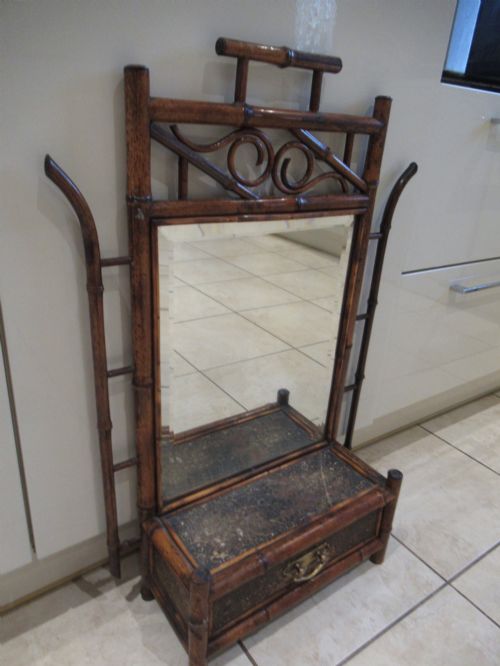
These bamboo mirror hall stand pieces bring botanical lightness and practical utility to an entryway, combining structural cane frames with reflective glass.
Bamboo Mirror Hall Stand
A bamboo mirror hall stand provides a dedicated place to check attire and store outerwear near the front door. These pieces emerge primarily from the Victorian era and the Edwardian period, spanning the late nineteenth century into the early twentieth century.
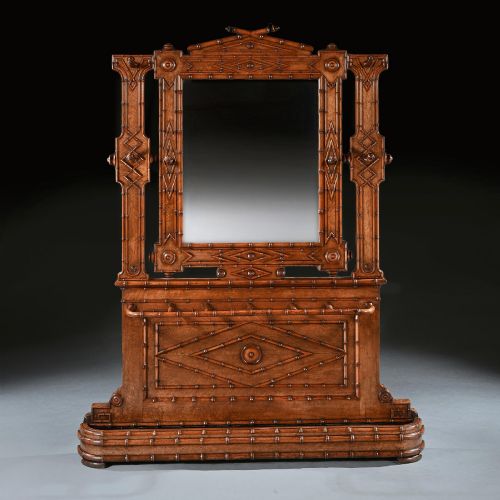
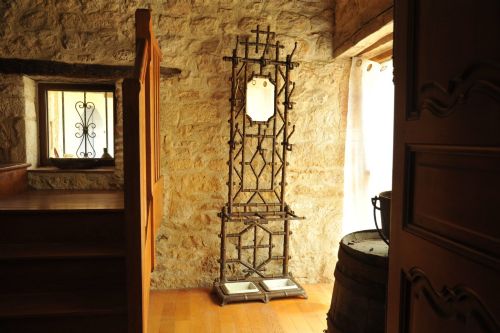
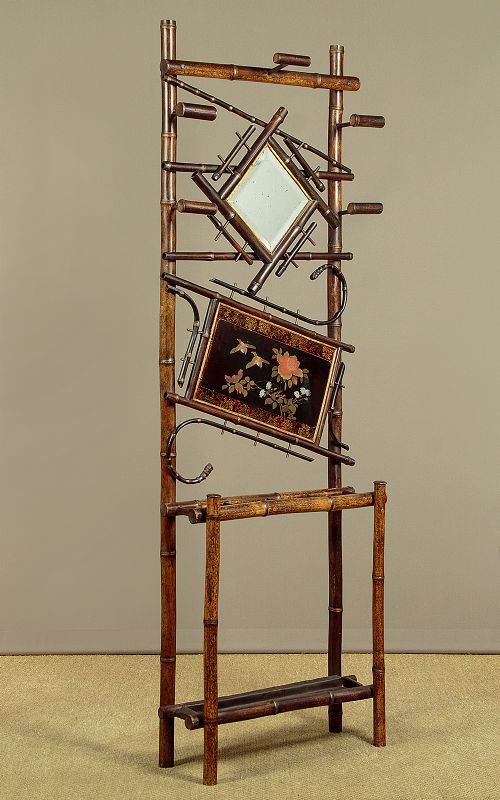
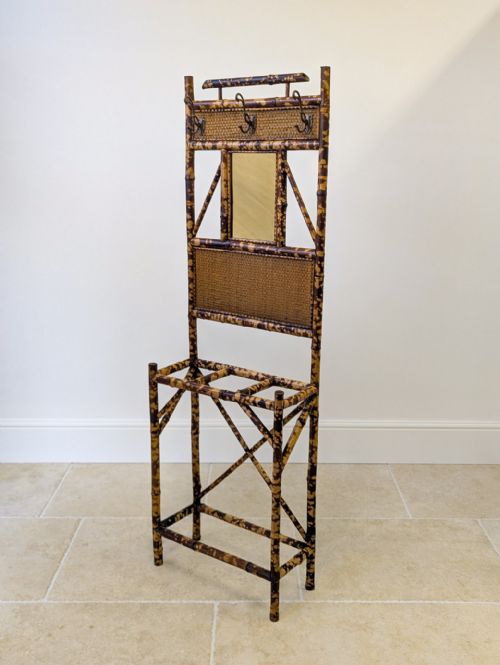
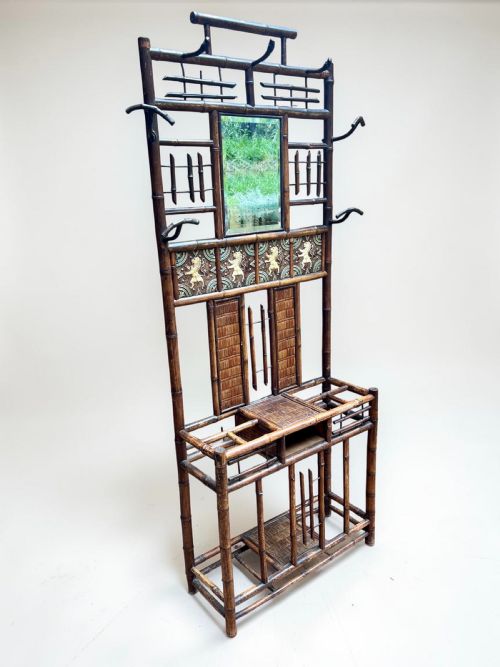
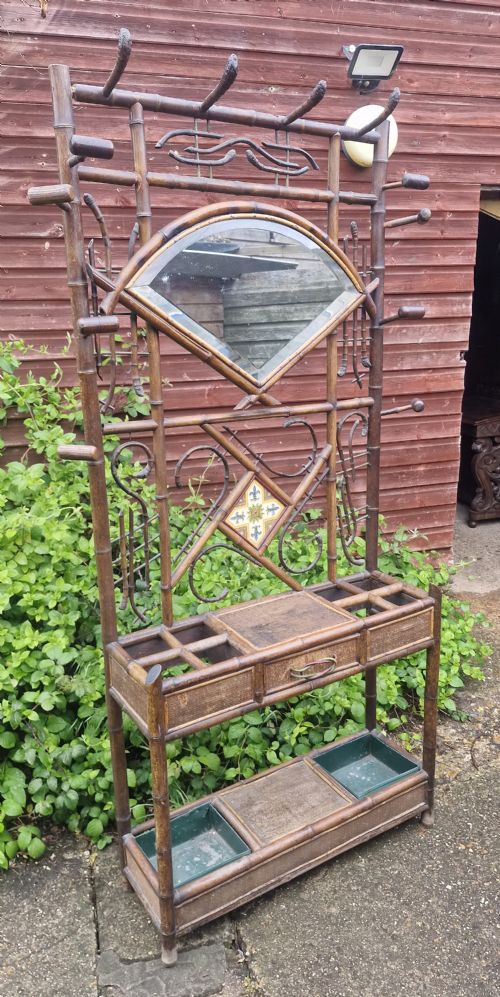
The common form combines a central mirror plate with upright cane frameworks, incorporating hooks for hats and coats alongside lower sections for umbrellas and walking sticks. Examples range from compact wall-mounted mirrors to substantial freestanding furniture items.
Stylistic influences lean heavily toward the Aesthetic Movement and Chinoiserie, alongside French interpretations utilising faux bamboo constructed from cast iron or birdseye maple.
How they were made
Construction relies on natural bamboo canes joined and pegged together to form rigid frameworks, often enhanced with woven rattan panels for texture and visual interest. Metal components appear in French pieces cast to mimic the segmented nodes of natural bamboo.
Mirrors are set into wooden or cane surrounds, frequently accompanied by ceramic tiles positioned near the base or backplate for decorative effect and moisture resistance.
Cast iron was painstakingly painted to impersonate hollow bamboo canes, fooling the eye until someone reaches out to touch the unexpectedly cold metal.
What varies in quality
Quality depends upon the structural integrity of the cane framework and the complexity of the secondary materials integrated into the design. Pieces featuring supplementary elements like ceramic tiles, metal drip pans, or birdseye maple display higher craftsmanship.
The crispness of the woven rattan panels and the preservation of the original mirror glass determine the overall refinement of the piece.
The Bamboo Mirror Hall Stand Glossary
- Bamboo
- A woody grass utilised for furniture frames, known for its hollow yet resilient stems featuring distinct growth nodes. It gained immense popularity during the Victorian era for exotic aesthetic furnishings.
- Faux bamboo
- Simulated cane carved from solid timbers such as maple or cast in metal, painted or finished to mimic natural bamboo nodes. This technique provided the exotic look with greater durability.
- Aesthetic Movement
- A late nineteenth-century design philosophy prioritising visual beauty over narrative or moral function. It embraced Japanese art influences and organic materials.
- Chinoiserie
- European artistic style reflecting Chinese motifs and decorative techniques. It often appears on hall stands through painted lacquer effects or characteristic silhouettes.
- Rattan
- A climbing palm used to weave panels and bindings on furniture. Its flexibility allows for intricate textural patterns across backing sections.
Bamboo Mirror Hall Stand: Frequently Asked Questions
How do I clean a bamboo mirror hall stand?
Dust the cane framework regularly using a soft brush or dry cloth to prevent dirt accumulation in the natural joints and nodes. Avoid excessive moisture on the bamboo and treat the mirror glass with standard glass cleaner applied to a cloth.
Condition the natural cane periodically with suitable oils to prevent drying and splitting. Ensure any metal drip pans near the base are emptied and wiped clean to prevent rust.
Are these pieces sturdy enough for heavy coats?
Most pieces handle daily outerwear comfortably, provided the structural joints remain secure and the frame stands level on the floor. Distributing weight evenly across the available hooks preserves the original cane bindings.
Freestanding versions rely on their wider bases for stability, while wall-mounted variants require secure fixings into solid masonry or studs.
How do I date a bamboo hall stand?
Dating relies on stylistic markers such as Aesthetic Movement influences, Japanese motifs, and construction methods typical of the Victorian period. Labels, registration marks, or specific hardware styles can narrow the production window.
Earlier examples from the late nineteenth century often feature denser cane work and hand-finished joints compared to later twentieth-century iterations.
Where should I place a hall stand at home?
Position the piece in an entryway or hallway where the mirror reflects light and provides immediate utility for coats and umbrellas. Ensure adequate clearance around the base for accessing umbrella wells and walking stick holders.
Keep the furniture away from direct heat sources and strong sunlight to protect the natural bamboo and rattan from drying out.