





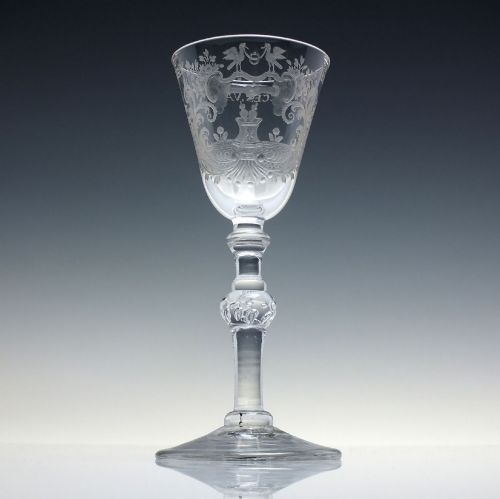


Baluster Stem Glass Goblet
These heavy, tactile vessels offer a direct connection to Georgian drinking customs through their solid, weighted stems.
Baluster Stem Glass Goblet
A baluster stem glass goblet is a drinking vessel defined by its sturdy, architectural stem, which developed in the late seventeenth century and dominated production through the Georgian era. When searching for this phrase, collectors encounter drinking glasses and dram glasses from the eighteenth century, alongside later Victorian interpretations.
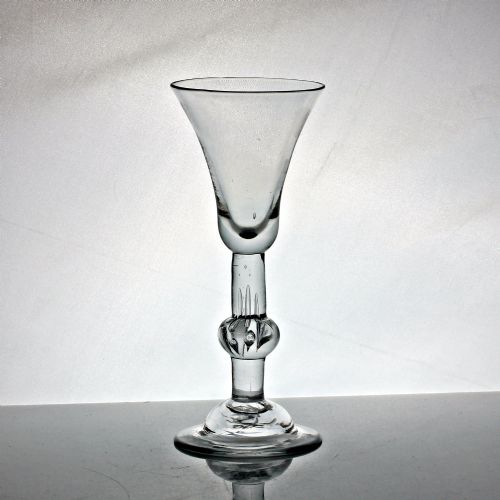
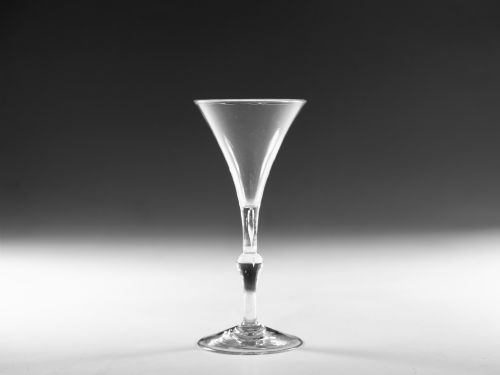
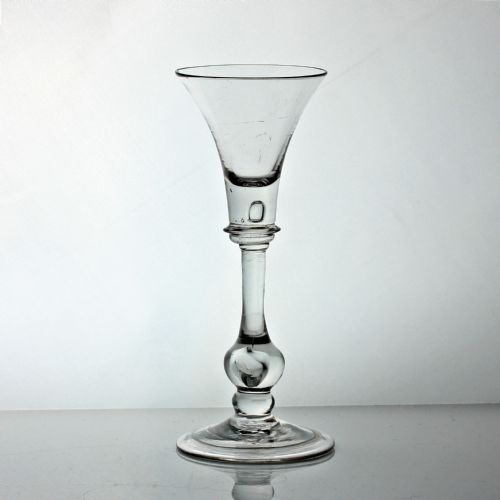
The form is most commonly represented on this page by eighteenth-century English examples featuring heavy lead glass and distinctive knopped stems. These pieces range from substantial marriage and friendship goblets to smaller dram glasses and wine glasses.
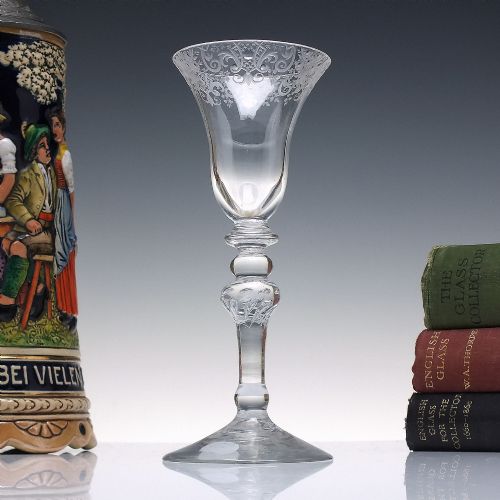
While the core of the selection remains firmly in the Georgian period, occasional variants such as seventeenth-century Bohemian engraved goblets and Victorian green wine glasses also appear. The unifying feature across these diverse objects is the characteristic baluster or balustroid stem supporting the bowl.
Materials and construction methods
The primary material underpinning these pieces is lead glass or clear lead crystal, which provided the substantial weight and refractive brilliance demanded by makers of the period. This formulation allowed craftsmen to shape robust stems and heavy feet while maintaining clarity in the bowl.
Objects were produced using traditional glassblowing techniques, often incorporating internal air bubbles known as teardrops within the stem structure. Artisans manipulated the molten metal to create complex baluster profiles, sometimes adding engraved decoration to the surface once cooled.
Baluster Stem Glass Goblet Retail Price Guide 2026
Typical asking prices for baluster stem glass goblet among the pieces listed under this phrase on Sellingantiques today, from the lower quarter to the upper quarter. They describe what is for sale here now, not the wider market.
Listings feature lead glass and clear crystal predominantly from the 18th century, with occasional 17th-century Bohemian and 19th-century Victorian examples.
Distinctions in execution and form
Quality in these vessels rests upon the proportion and ambition of the stem configuration, where complex multi-knopped profiles demonstrate greater technical skill than simpler forms. The crispness of wheel engraving and the balance of the bowl relative to a heavy foot further separate standard examples from finer pieces.
The Baluster Stem Glass Goblet Glossary
- Baluster
- A stout, architectural stem form inspired by stone balustrades, featuring prominent swelling nodes or knops. It provides both visual weight and a secure grip.
- Balustroid
- A lighter, more slender variation of the baluster stem, often displaying more delicate proportions while retaining the characteristic knopped silhouette.
- Teardrop
- An intentional enclosed air bubble trapped within the stem of a glass during manufacture. It acts as a subtle decorative element within the solid metal.
- Domed foot
- A raised, convex base that slopes upward toward the stem, frequently found on higher-status Georgian drinking vessels to improve stability and presence.
- Flint glass
- An early British term for heavy, high-clarity lead glass developed to increase brilliance and weight in tablewares.
Baluster Stem Glass Goblet: Frequently Asked Questions
How do I date a baluster stem glass?
Dating relies on observing the proportions of the bowl, the complexity of the stem knops, and the formation of the foot. Earlier examples tend to feature heavier lead metal and more pronounced baluster profiles.
Changes in manufacturing techniques, such as the introduction of domed feet or specific engraved motifs, help narrow the period of production within the broader eighteenth-century span.
What is the difference between a baluster and a balustroid stem?
A true baluster stem is typically heavier, wider, and displays distinct, bold swelling knops that anchor the overall weight of the goblet. These are characteristic of the earlier part of the eighteenth century.
Balustroid stems appear lighter and more restrained, offering a slender profile that bridges the transition toward later eighteenth-century glass styles.
Were these goblets used for everyday drinking?
Many of the smaller vessels and dram glasses served functional roles during eighteenth-century dining and social gatherings, handling strong spirits or wine. Larger goblets often commemorated specific events such as marriages or political loyalties.
Over time, the survival of these objects shifted their role from practical tablewares to preserved items of historical display.