

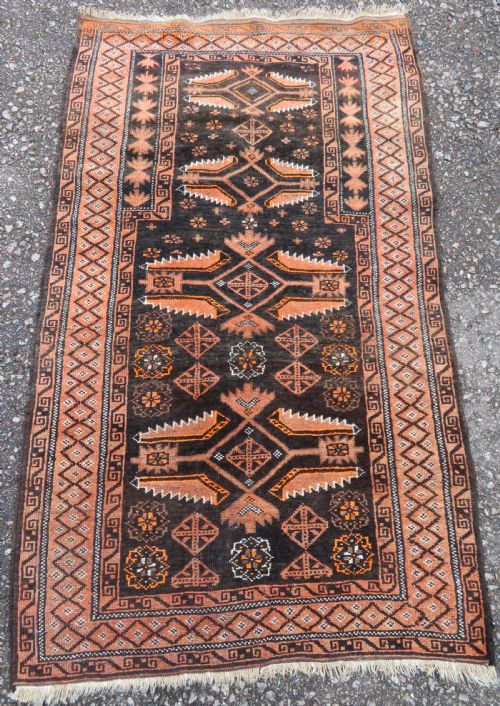
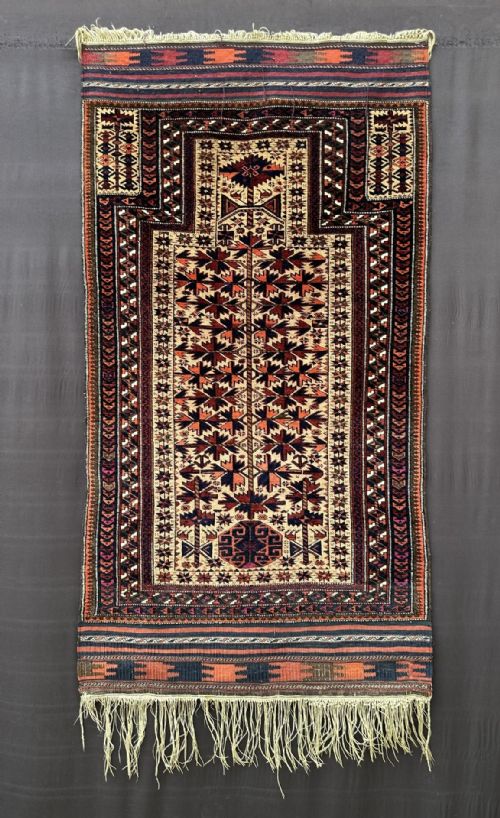
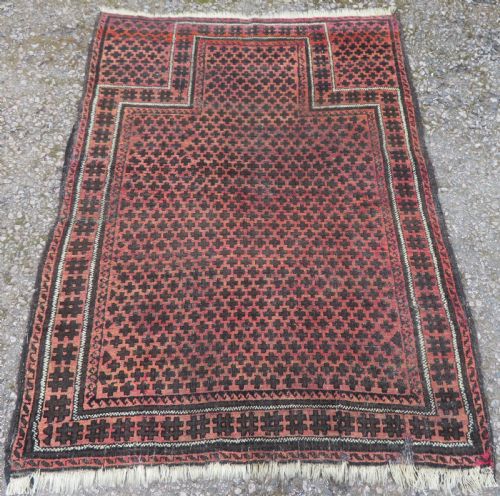


Baluch Prayer Mat
A baluch prayer mat brings tactile tribal history into a room through rich wool weaves and distinctive arched mihrab designs.
Baluch Prayer Mat
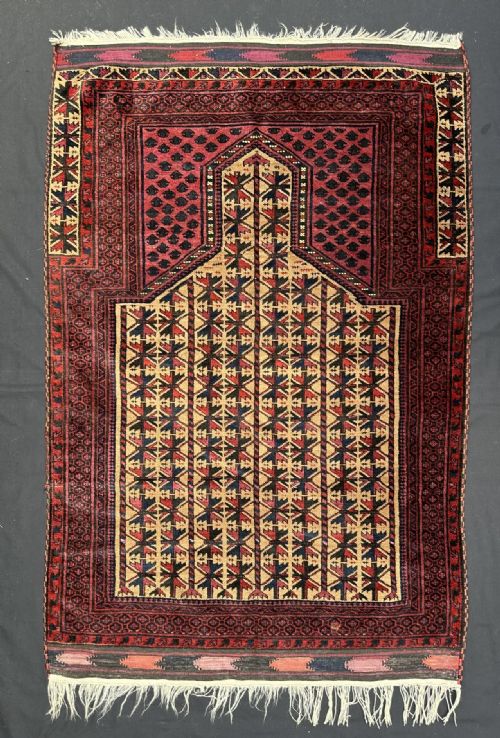
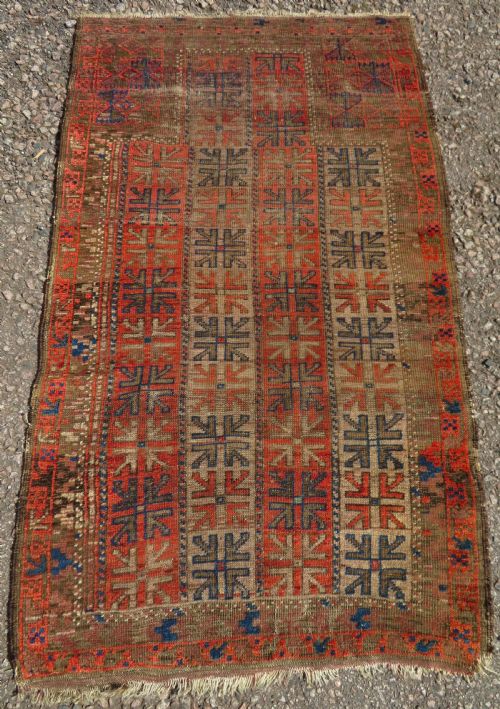
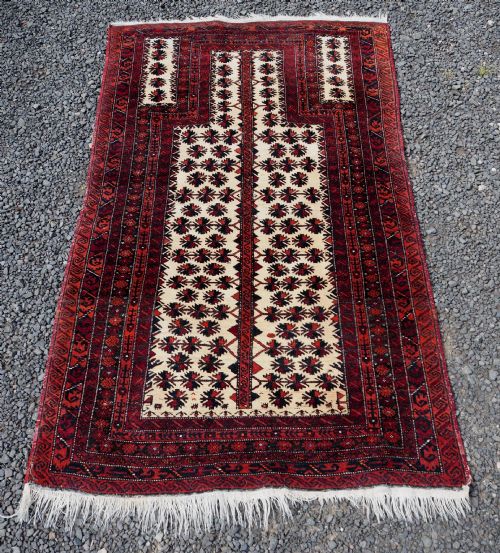
A baluch prayer mat is a nomadic or village textile woven by tribal groups across the borderlands of Persia and Afghanistan. These pieces typically display structured prayer arches, known as mihrabs, often repeating in single or multiple formats across the field.
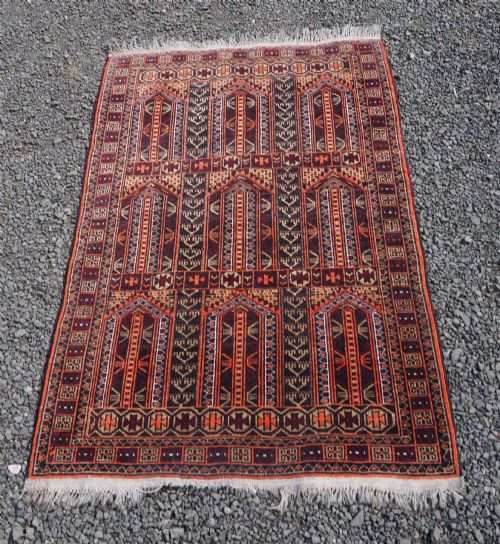
Most examples encountered on this page date from the late nineteenth century through to the early decades of the twentieth century. They manifest in formats such as the traditional seh mihrab, double mihrab, and distinctive lotus leaf or tree of life motifs.
Originating from tribal weavers in regions such as Khorassan, Sistan, and Herat, these rugs reflect the utilitarian and spiritual traditions of nomadic life. Collectors find them in formats varying from standard area rugs to smaller portable prayer rugs.
How They Were Made
These textiles rely principally on wool for the pile, frequently paired with cotton foundations and occasional inclusions of goat hair or camel wool for durable structure. Artisans utilised natural dyes to achieve deep earthy tones, indigo blues, and camel grounds across the woven surface.
Weavers employed traditional hand-knotting techniques, sometimes incorporating mixed techniques to create textured details like the distinctive camel hair highlights. The resulting pile provides a dense, sturdy fabric designed for regular practical use on nomadic floors.
Listings span the nineteenth century through the 1930s, featuring wool, cotton, and camel hair constructions with natural dyes.
What Varies in Quality
Quality in these tribal textiles rests upon the handle and resilience of the wool, alongside the complexity and clarity of the woven design. Finer examples display tightly packed knots and sophisticated structural variations such as multiple mihrab arches or scarce pictorial elements.
The integrity of the natural dye palette and the crispness of tribal motifs dictate the upper tier of these pieces. Lesser examples may show heavy wear or simpler field arrangements, while superior specimens retain deep secondary highlights and robust selvedges.
The Baluch Prayer Mat Glossary
- Mihrab
- The arched niche in a prayer rug that symbolises the direction of prayer. This architectural form often dictates the central layout of the textile.
- Seh Mihrab
- A design layout featuring three distinct prayer arches grouped across the upper field. This format is a defining characteristic of specific Afghan and tribal groups.
- Timuri
- A tribal grouping associated with nomadic weaving traditions in the borderlands of Persia and Afghanistan. Their output frequently shares techniques and motifs with broader baluch production.
- Tree of Life
- A symbolic motif depicting a floral or arboreal trunk rising through the central field. It represents spiritual growth and eternal life in traditional weaving.
- Camel Ground
- A background field woven from undyed camel hair, producing a warm, natural fawn or golden brown tone. This material adds a soft texture distinct from sheep wool.
Baluch Prayer Mat: Frequently Asked Questions
What is a baluch prayer mat?
A baluch prayer mat is a small tribal rug featuring an arched mihrab design, woven by nomadic and village communities in Persia and Afghanistan.
These textiles served functional prayer purposes while exhibiting the distinct cultural motifs and regional weaving traits of their makers.
How do I identify a seh mihrab design?
A seh mihrab design displays three distinct prayer arches set side by side across the upper portion of the rug field.
This specific multi-arch format helps attribute pieces to particular Afghan and regional tribal weaving traditions from the late nineteenth and early twentieth centuries.
What materials are used in these rugs?
The pile is predominantly wool, often complemented by cotton foundations and occasional additions of goat hair or camel wool.
Weavers relied on natural dyes to create the characteristic earthy palettes, deep blues, and warm camel grounds seen in these historical pieces.
How should I care for an antique prayer rug?
Protect the textile by placing it in low-traffic areas away from direct sunlight to preserve the natural dyes and wool pile.
Gentle vacuuming without a rotating brush and professional textile cleaning when necessary will maintain the structural integrity of the weave.