

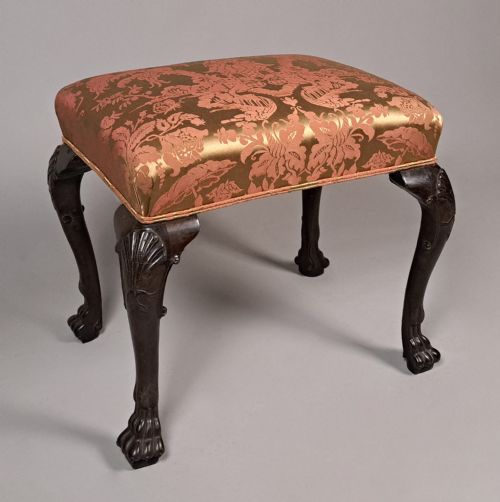
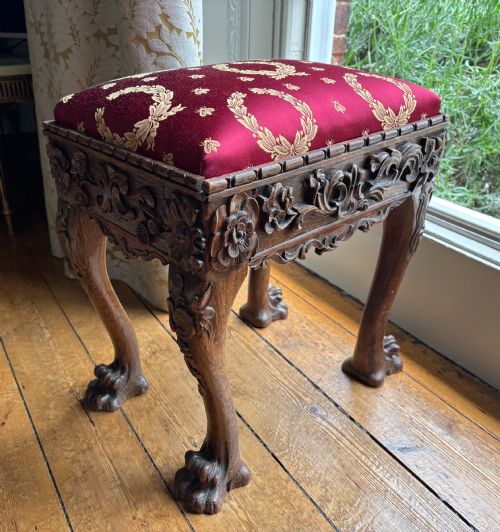
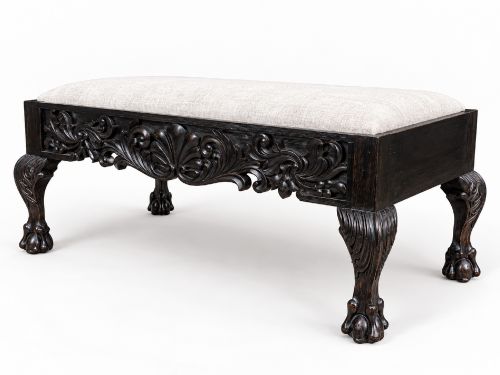
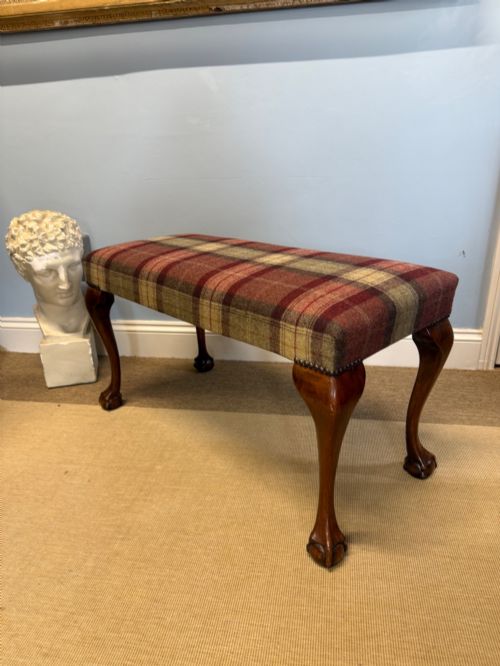
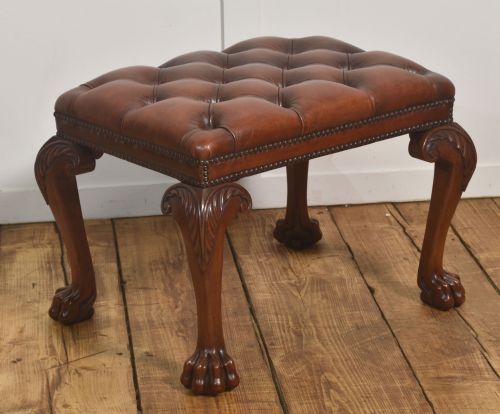
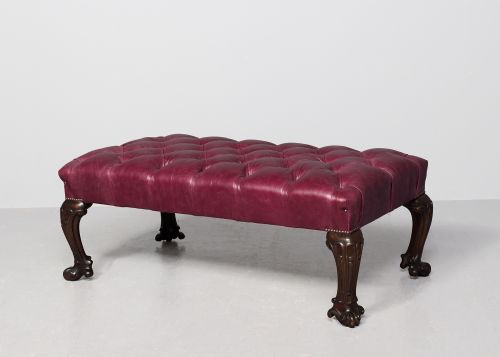
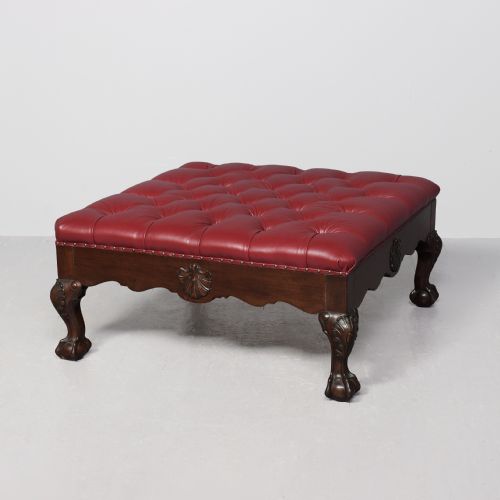
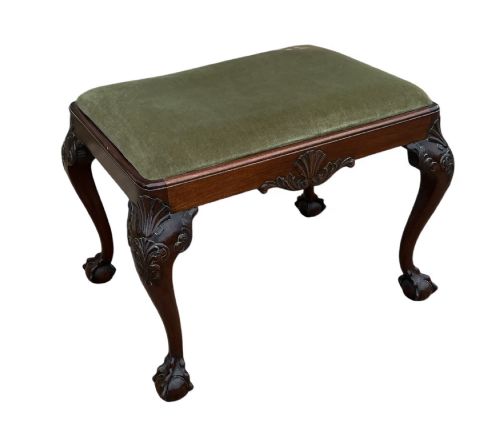



Ball and Claw Footstool
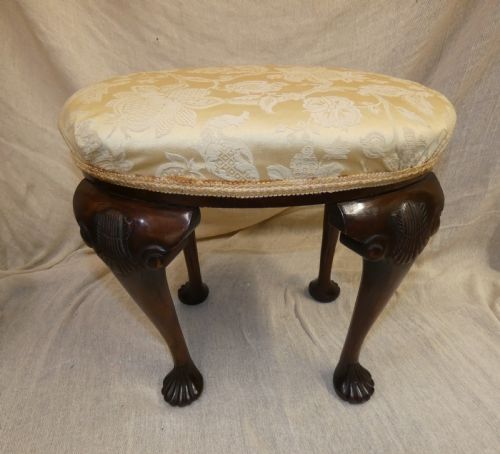
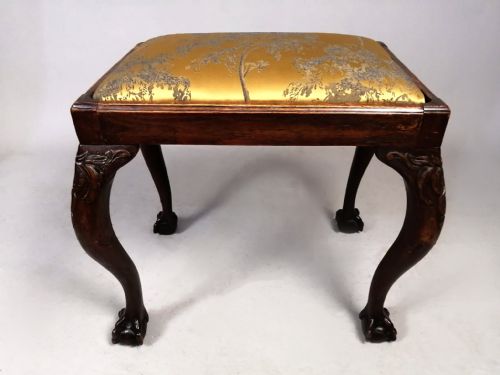
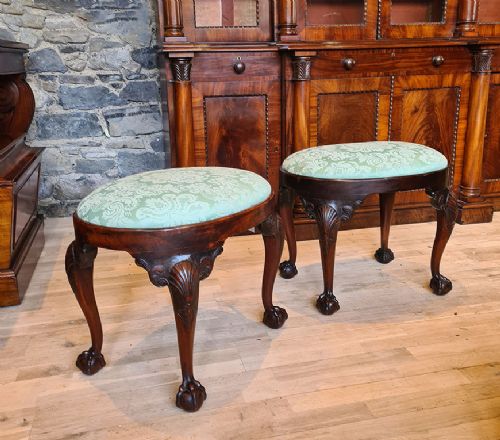
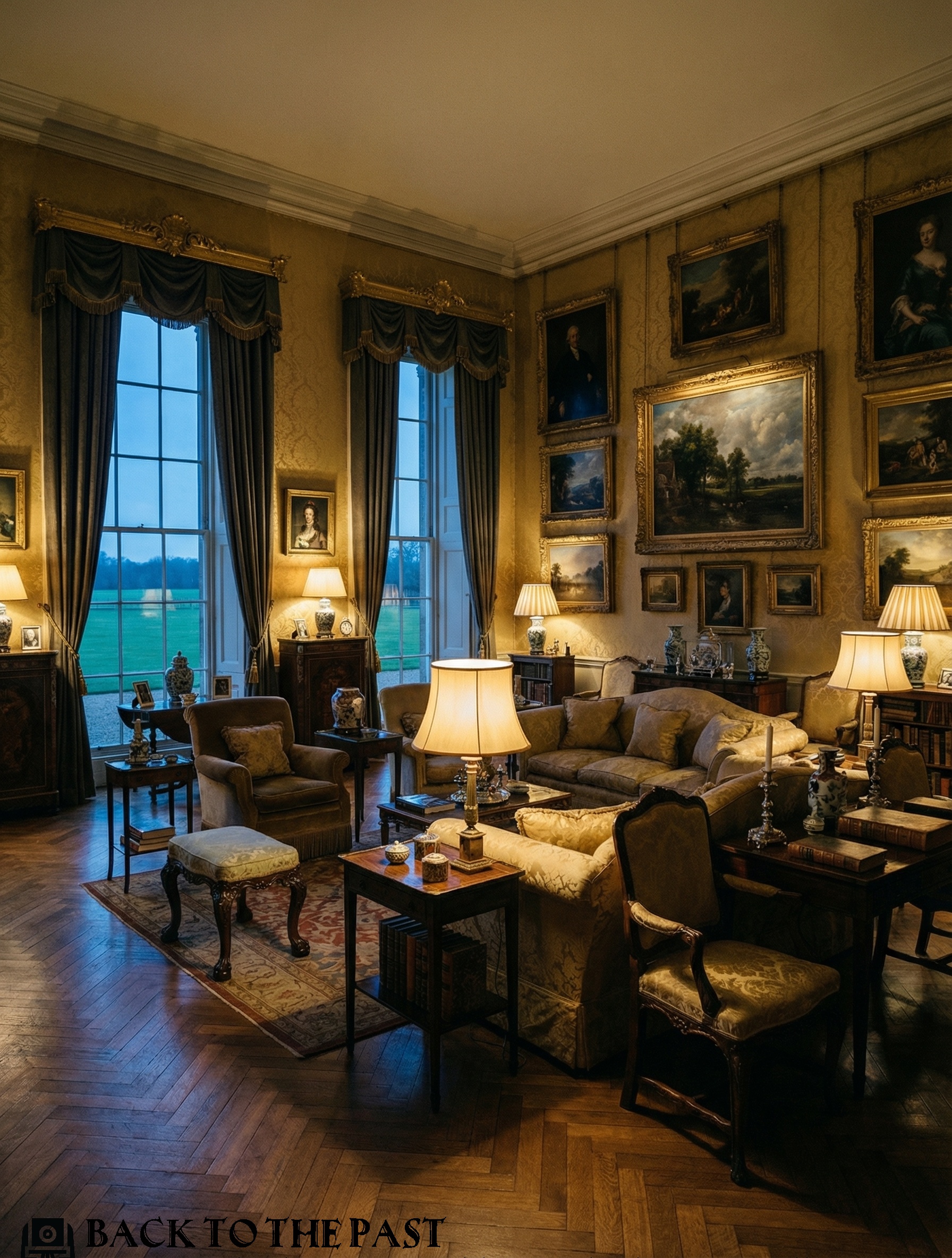
These ball and claw footstool examples bring period character and solid timber frames into a room, offering a practical seat with distinctive carved terminals.
Ball and Claw Footstool
A ball and claw footstool is a low seating piece supported on carved legs that grip a sphere, taking inspiration from earlier centuries. Buyers searching for a ball and claw footstool will find pieces ranging from eighteenth-century originals to later revival interpretations.
The most common examples on this page date from the nineteenth and early twentieth centuries, constructed in revival styles such as Chippendale and George II. These later interpretations adopt the vocabulary of earlier cabinet-making while serving domestic seating needs.
Forms vary from compact square footstools to long benches, window seats, and dressing stools. Their frames accommodate a range of coverings, from plain leather and hide to patterned textiles and needlework.
What varies in quality
Depth and precision of the timber carving set apart the finest examples. Crisp execution in the leg terminals and frame mouldings distinguishes skilled workshop production from simpler output.
The choice of primary timber and the selection of upholstery materials dictate the standing of a piece. High-grade hardwoods paired with quality leather or textile coverings elevate the presence of the footstool.
Ball and Claw Footstool Retail Price Guide 2026
Typical asking prices for ball and claw footstool among the pieces listed under this phrase on Sellingantiques today, from the lower quarter to the upper quarter. They describe what is for sale here now, not the wider market.
The selection includes Chippendale style, George II designs, and Victorian revival periods.
Morris and Co.·Whytock and Reid
The Ball and Claw Footstool Glossary
- Ball and claw
- A foot motif where a carved avian or beast talon grasps a spherical ball. This detail appears frequently on the legs of eighteenth-century and revival seating.
- Chippendale style
- A design manner drawing on the eighteenth-century pattern books of Thomas Chippendale. It typically employs carved mahogany frames and cabriole legs.
- George II period
- An architectural and furniture style spanning the mid-eighteenth century. Pieces from this era often feature substantial proportions and dark timbers like mahogany and walnut.
- Damask
- A reversible figured fabric woven on a jacquard loom. It provides a patterned textile surface frequently used for period upholstery.
- Window seat
- A long, narrow form of stool designed to fit within a window recess. These pieces often feature upholstered tops and decorative wooden frames.
Ball and Claw Footstool: Frequently Asked Questions
What is a ball and claw footstool?
A ball and claw footstool is a low seat defined by legs that terminate in a carved foot grasping a sphere. These pieces range from eighteenth-century works to later revival interpretations.
They serve as decorative and functional additions to a room, functioning as foot rests, dressing seats, or short benches.
How do I date a ball and claw footstool?
Dating relies on examining the timber species, construction joints, and the style of the carving. Revival pieces from the Victorian and Edwardian eras frequently replicate earlier eighteenth-century forms.
Secondary woods and hardware fastenings help distinguish older original pieces from twentieth-century revivals.
Are these footstools comfortable?
Comfort depends on the upholstery padding and the height of the frame. Many examples feature firm hide, leather, or textile tops designed for resting feet or short seating periods.
Long benches and window seats offer larger padded surfaces suited for extended sitting.
What woods were used for these stools?
Cabinet-makers predominantly used mahogany and walnut for their strength and suitability for carving. Oak and elm also appear in various regional and period examples.
Timbers were often polished to a dark finish to highlight the grain and complement the carved details.