



Ball and Claw Foot Chair
A ball and claw foot chair brings commanding presence to a room, uniting sculptural carved supports with generous seating.

Ball and Claw Foot Chair
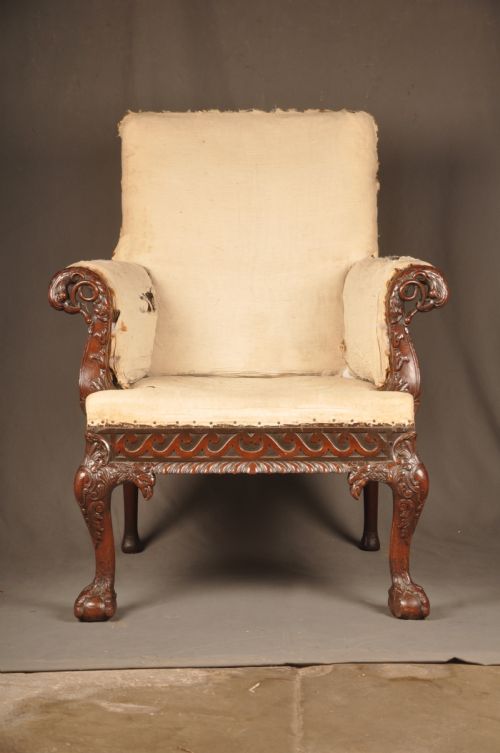
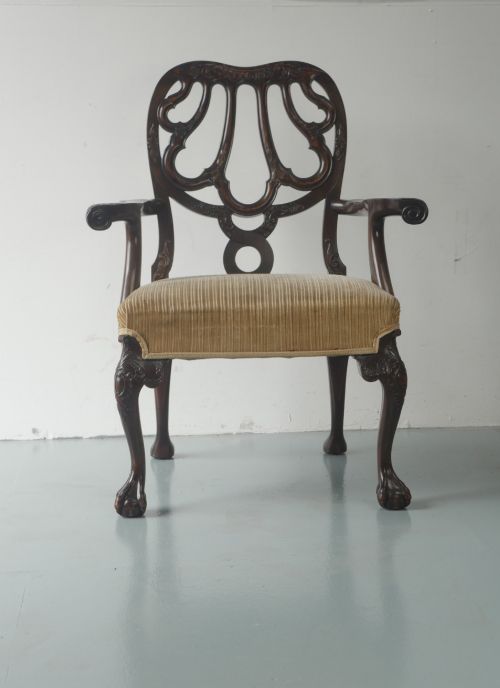
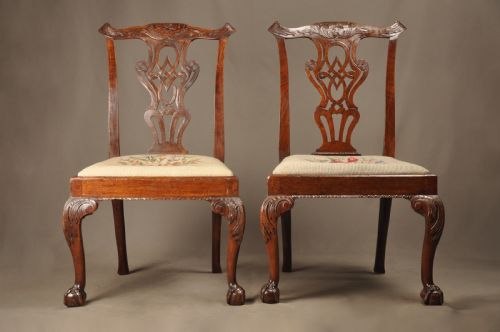
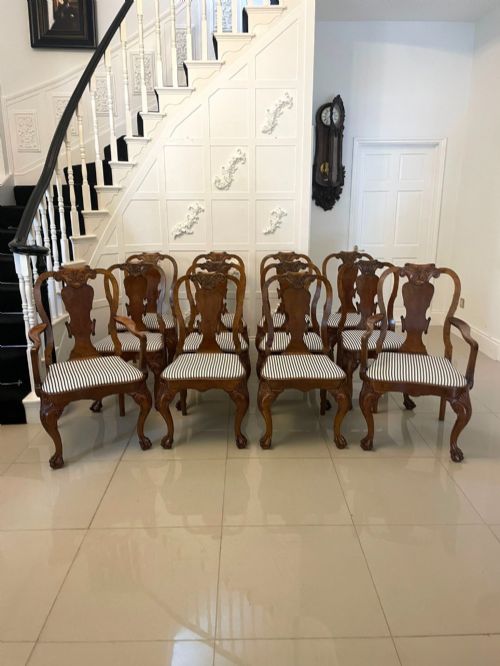
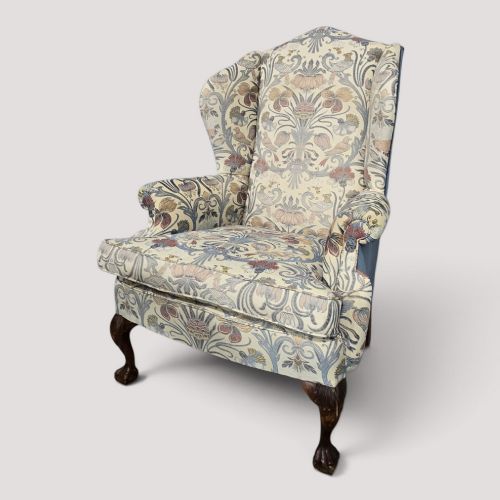
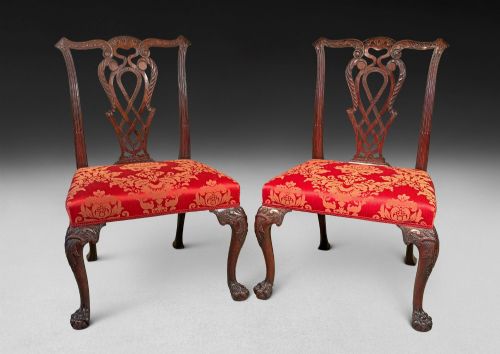
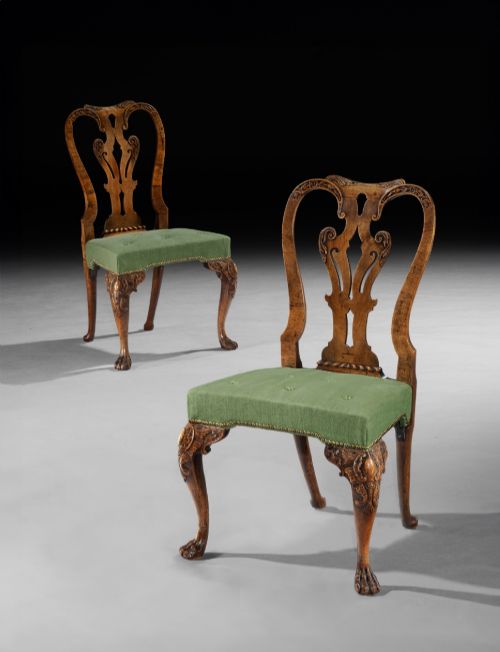
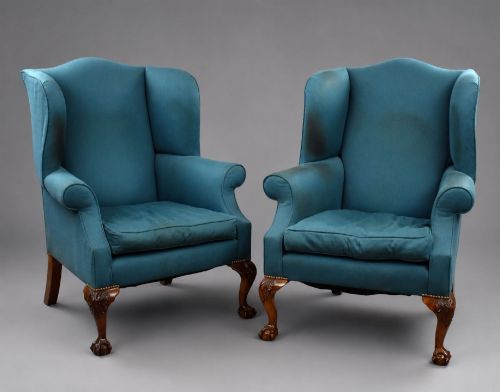
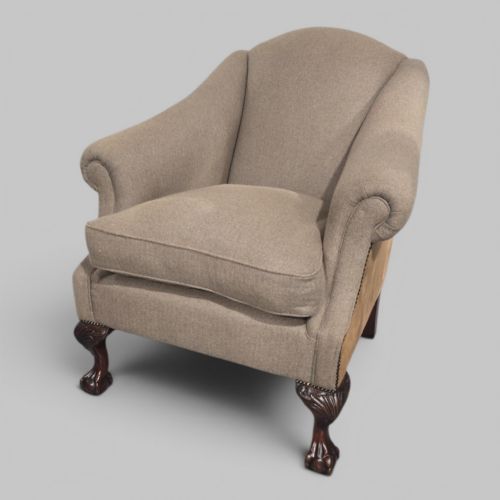
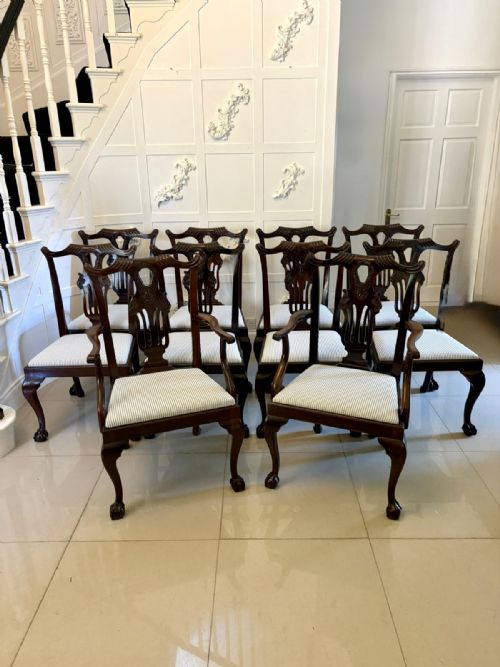
Buyers encounter numerous dining chairs, side chairs, and substantial armchairs fashioned in mahogany and walnut. The selection ranges from authentic eighteenth-century examples to later Edwardian and Victorian revivals adopting classical silhouettes.
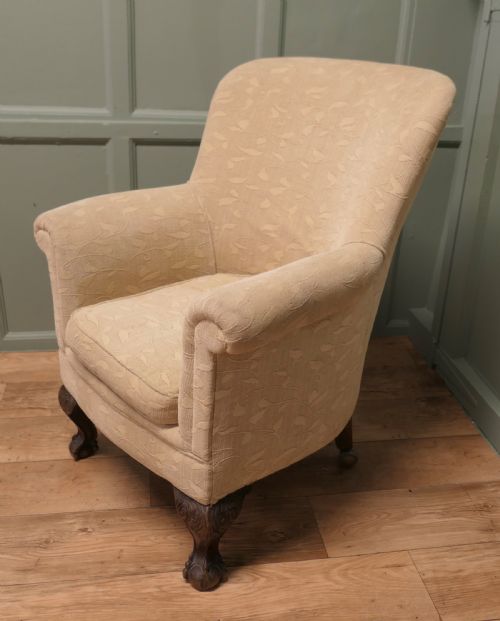
Formations include single library chairs, matching pairs, and extensive dining sets alongside occasional tub chairs and piano stools. The characteristic foot anchor works across diverse seating arrangements originating from English, Irish, and Dutch workshops.
Materials and construction
Cabinetmakers relied heavily on dense timbers such as mahogany and walnut to carve intricate details onto the legs and frames without compromising structural integrity. These woods took deep polish and permitted sharp relief work on the talons and knuckles of the feet.
Upholstered elements incorporate traditional stuffing covered in varied textiles including leather, velvet, fabric, and crewel work. Brass details occasionally appear on specific club chairs and armchairs to accent the heavy wooden frames.
Ball and Claw Foot Chair Retail Price Guide 2026
Typical asking prices for ball and claw foot chair among the pieces listed under this phrase on Sellingantiques today, from the lower quarter to the upper quarter. They describe what is for sale here now, not the wider market.
Listings feature mahogany and walnut predominantly, alongside oak, paired with leather, velvet, and brass across periods spanning the eighteenth to the early twentieth century.
Judging quality in execution
The definition and depth of the carving on the ball and claw foot dictate the standard of the piece, separating crisp hand-chased talons from soft, flat moulding. Superior examples display anatomical realism and muscular tension in the grip of the foot.
Timber selection and frame construction also govern worth, where well-figured grain and robust joinery sustain centuries of use. Proportion in the cabriole leg and harmony between the carved foot and the crest rail indicate superior cabinetmaking.
Howard and Sons
The Ball and Claw Foot Chair Glossary
- Cabriole leg
- A furniture leg that bends outward in a convex curve and tapers inward in a concave curve, ending in a foot. This form mimics the natural shape of an animal's leg.
- Chippendale style
- A decorative design inspired by the eighteenth-century cabinetmaker Thomas Chippendale, characterised by carved mahogany, elaborate splats, and ball and claw feet.
- Carver chair
- An open armchair designed to match a set of dining chairs, typically positioned at the head of a dining table.
- Library chair
- A substantial, deeply padded armchair designed for comfort during extended periods of reading, often framed in mahogany or walnut.
Ball and Claw Foot Chair: Frequently Asked Questions
What periods do these chairs come from?
Original pieces date back to the eighteenth century, particularly the Georgian era, while many examples originate from Victorian, Edwardian, and early twentieth-century revival periods.
Craftsmen across these different eras reinterpreted the classic claw and foot design using traditional hardwoods.
Are these chairs suitable for daily dining?
Sets of dining chairs and carvers provide robust seating for everyday use, provided the mahogany or walnut frames remain structurally sound.
Many listings include larger sets intended specifically for active dining room service.
How do I distinguish genuine eighteenth century from revival pieces?
Examination of timber patination, joinery methods, and the crispness of the hand-carved talons helps separate eighteenth-century originals from nineteenth- and twentieth-century revivals.
Revival pieces often display machine-assisted finishing or different structural wear patterns beneath the upholstery.
What upholstery materials should I expect?
Original and restored pieces feature a variety of coverings including leather, velvet, woven fabric, and traditional crewel work.
Some armchairs utilise deep buttoned leather while dining seats rely on firmer flat textiles.