
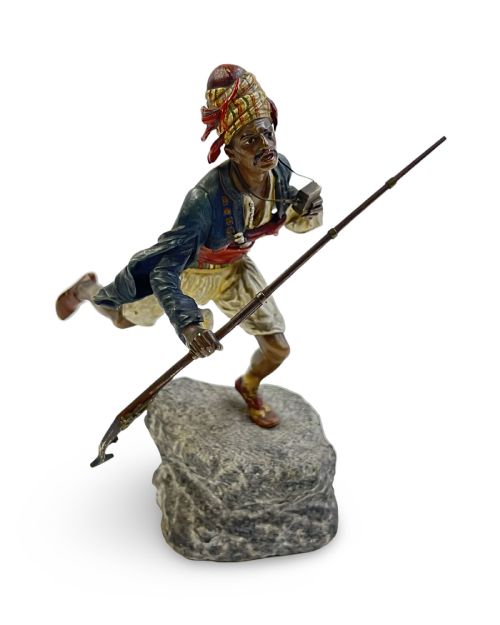
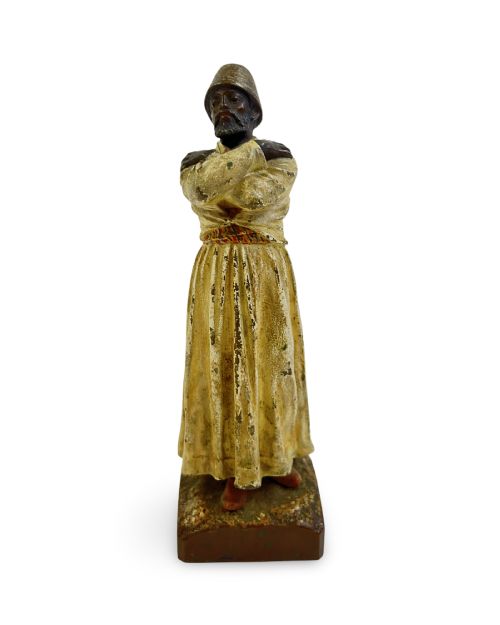


Austrian Orientalist Figurine
An austrian orientalist figurine captures the dramatic flair of late nineteenth and early twentieth century Viennese workshops through vivid metallic sculpture.
Austrian Orientalist Figurine
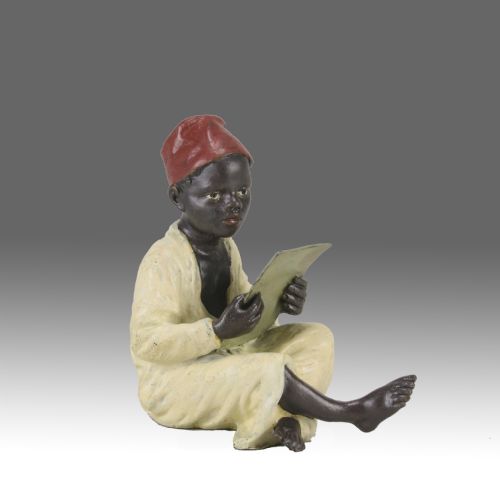
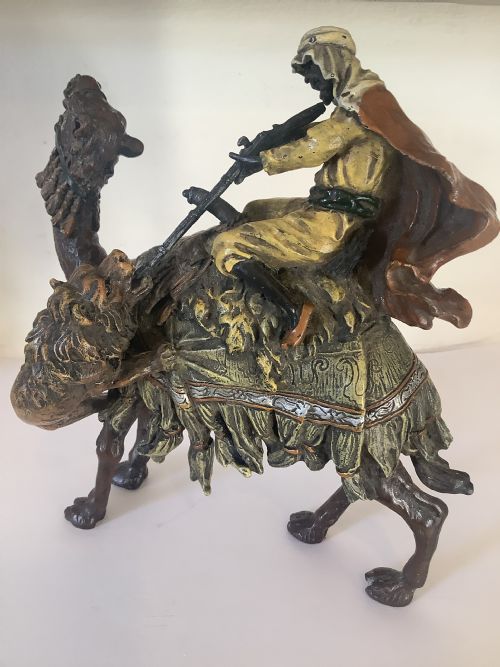
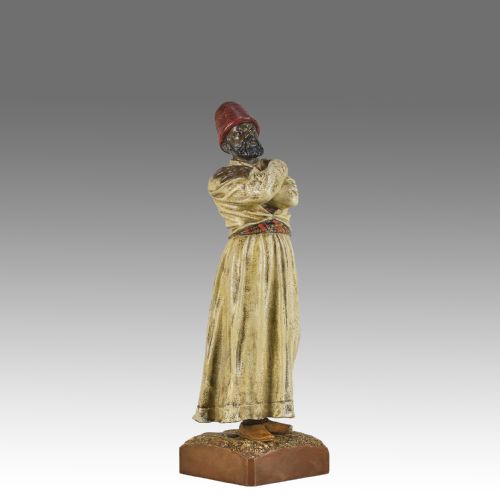
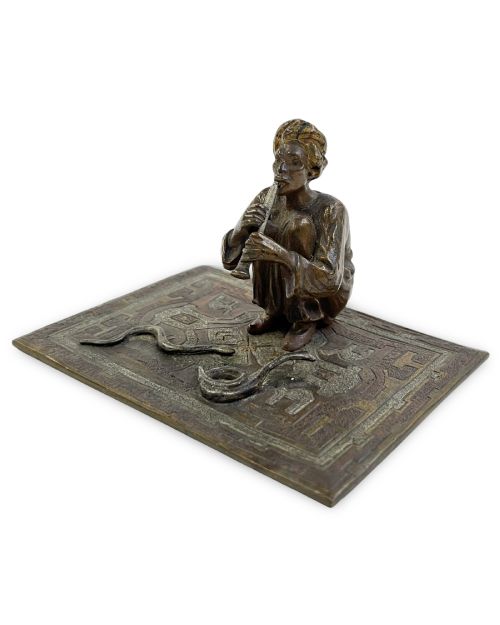
When you examine an austrian orientalist figurine, you are looking at small bronze sculptures created during the Victorian and early twentieth century periods, specifically spanning from the late nineteenth century through the nineteen thirties. These pieces depict figures such as Arab men, camel riders, dervishes, warriors, and attendants captured in narrative poses.
The objects appear under various descriptions including sculptures, statuettes, and figures, often tied to the broader aesthetic of Austrian Orientalism and Art Nouveau. Most examples you will encounter date from the nineteen hundreds up to nineteen thirty, reflecting a specific European fascination with Near Eastern subjects during that era.
What varies in quality
The distinction between tiers of quality rests upon the precision of the casting and the finesse of the hand-painted detailing on the bronze surface. Finer examples display intricate facial expressions, elaborate costume patterns, and careful colour blending that remain crisp across the entire figure.
Several figures depict swirling dervishes caught in perpetual motion.
Franz Bergman·Franz Xavier Bergman·Goldscheider
The Austrian Orientalist Figurine Glossary
- Cold-painted bronze
- A bronze sculpture decorated with paint applied after the metal casting process rather than fired in a kiln. This technique allows for vibrant polychrome finishes that require careful handling over time.
- Vienna bronze
- Small, highly detailed bronze sculptures produced in Austrian foundries, particularly during the late nineteenth and early twentieth centuries. These objects frequently portray human figures and animals in exotic or narrative settings.
- Orientalism
- An artistic movement and style reflecting Western interest in Middle Eastern and North African cultures. In sculpture, this manifested as detailed depictions of regional figures, architecture, and daily scenes.
- Art Nouveau
- An international style of art and architecture prominent around nineteen hundred characterised by curvilinear forms and natural motifs. Some bronzes from this era incorporate these flowing stylistic lines into their bases and apparel.
Austrian Orientalist Figurine: Frequently Asked Questions
What is an austrian orientalist figurine?
These pieces are small bronze sculptures produced in Austria during the late Victorian and early twentieth century periods, depicting figures from Middle Eastern and North African cultures.
They encompass subjects such as dervishes, warriors, and merchants rendered in narrative poses with applied colour.
How were cold painted bronzes made?
Craftsmen first cast the figures in bronze using traditional foundry methods to achieve detailed human and animal forms.
After casting, they applied oil, enamel, or standard paint directly onto the cool metal surface by hand without subsequent firing.
How do I date these figures?
Dating relies on stylistic markers, associated foundry stamps, and the typical period characteristics spanning from the late nineteenth century to the nineteen thirties.
Art Nouveau influences and specific artist signatures often point toward the turn of the twentieth century.
Where should I display them?
These sculptures suit enclosed cabinets, desks, or mantelpieces where their intricate painted details can be viewed closely.
Place them away from direct sunlight and high moisture to protect the delicate cold-painted surfaces from fading or flaking.