
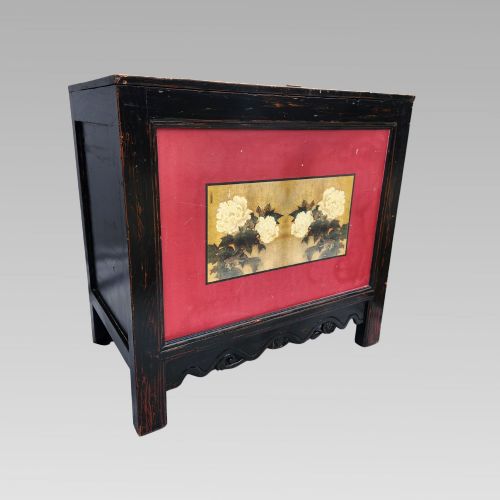


Asian Wooden Coffer
These robust Asian wooden coffer designs offer practical storage with rich regional character, spanning centuries of craftsmanship.
Asian Wooden Coffer
An asian wooden coffer serves as a sturdy storage vessel or chest, frequently appearing in forms such as camphor wood blanket boxes, dowry chests, and heavy storage trunks. These pieces arrive from various origins including China, Japan, Korea, Tibet, India, and Afghanistan, dating from the seventeenth century through the early twentieth century.
The pieces on this page lean heavily towards Chinese camphor wood chests and trunks, alongside elm and hardwood storage furniture from the Qing dynasty and later periods. Alongside traditional coffers, buyers will encounter related storage forms like wedding cabinets, sideboards, and travelling boxes.
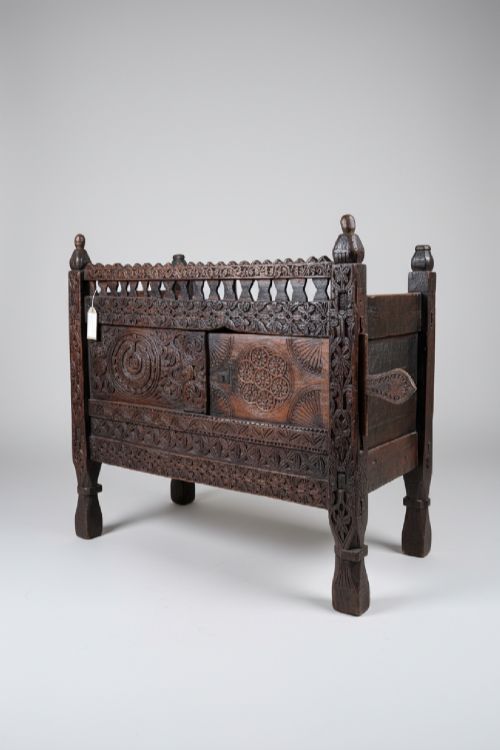
Regional styles dictate the physical presence of each coffer, ranging from the carved floral motifs of Chinese export pieces to the distinct proportions of Korean painted chests and Japanese tansu or kuruma-dansu designs. Buyers select these items both for functional household storage and for their distinct historical aesthetic.
Materials and construction
Makers utilised native timbers such as aromatic camphor wood, dense elm, and assorted hardwoods, combining them with structural iron and brass mounts for reinforcement. Camphor wood provided a practical benefit by deterring insects, making it the preferred choice for blanket boxes and luggage chests.
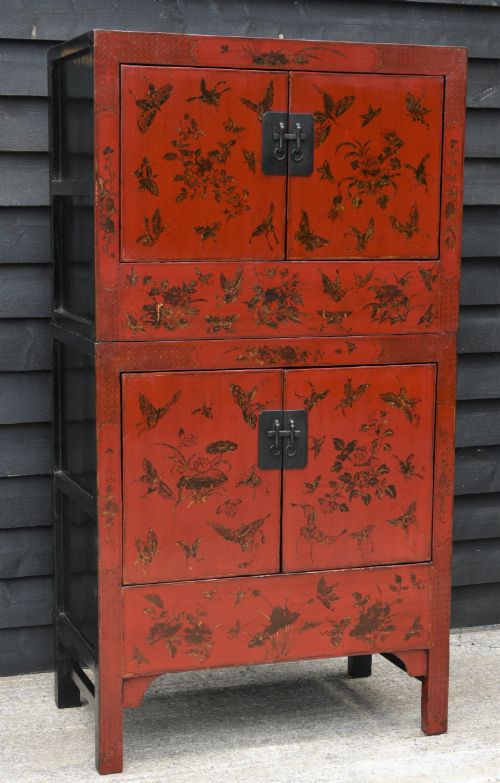
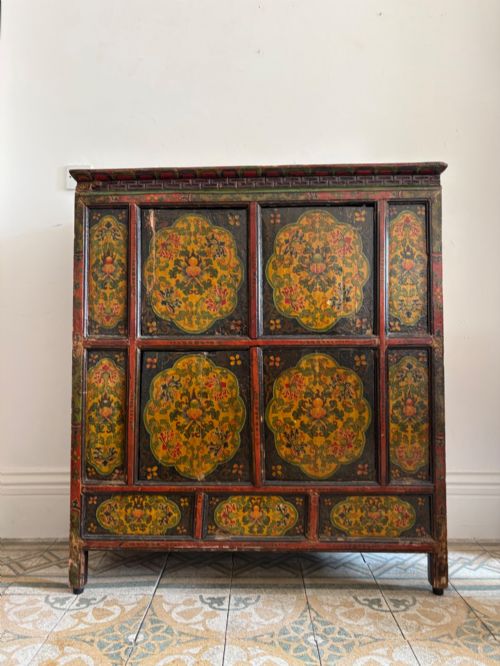
Surface treatments varied widely between natural wood finishes, intricate hand-carved relief panels, and applied red or black lacquer. Artisans also employed hand-painted floral decorations and Chinoiserie details, particularly on export pieces and dowry chests intended for prominent display.
Assessing quality
Quality rests upon the depth and precision of the carving, the integrity of the timber, and the preservation of original surface finishes such as red lacquer or paint. Pieces featuring richly detailed relief work or intact original hardware demand greater attention than plain utility boxes.
The structural honesty of the joinery and the survival of secondary elements like brass covered fittings or wheeled bases dictate the standing of an individual coffer. Better examples maintain their original proportions and surface character without heavy modern alterations.
The Asian Wooden Coffer Glossary
- Chinoiserie
- European interpretation and imitation of Chinese artistic traditions and motifs, frequently applied to lacquered chests and furniture during the eighteenth and nineteenth centuries.
- Tansu
- Traditional Japanese mobile storage cabinetry and chest forms, often fitted with iron hardware and drawers designed for domestic utility.
- Qing dynasty
- The final imperial dynasty of China, lasting from the seventeenth to the early twentieth century, defining a vast proportion of the antique furniture seen today.
- Altar table
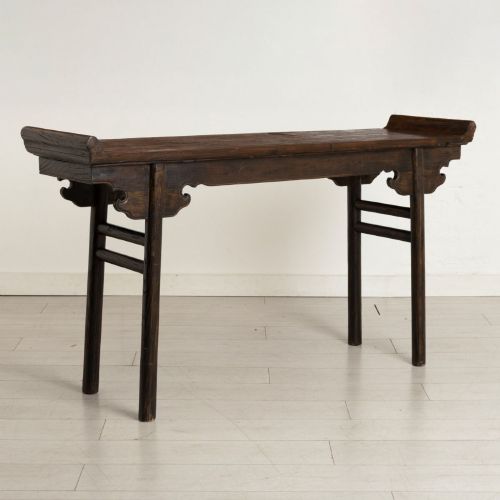
- A long, elevated wooden table originating from ritual use in Chinese homes and temples, characterised by upturned flange ends and sturdy timber construction.
Asian Wooden Coffer: Frequently Asked Questions
What is an asian wooden coffer used for?
These pieces served historically for storing valuable textiles, documents, and personal belongings within the household. Today, they function effectively as living room coffee tables, blanket boxes, or decorative storage furniture.
The sturdy construction allows them to endure daily domestic use while concealing modern clutter inside historic timber frames.
How do I identify a camphor wood chest?
Camphor wood chests typically display a distinct pale grain and retain a characteristic aromatic scent when opened. They often feature dense exterior carvings depicting landscapes, figures, or floral arrangements.
These trunks were frequently utilised for travel and household storage due to the timber's natural insect-repelling properties.
What is a Japanese tansu chest?
A tansu is a traditional Japanese mobile storage chest constructed from timber and reinforced with heavy iron handles and corner brackets. They were built in modular sections to allow easy relocation within traditional homes.
Collectors value them for their ingenious internal drawer configurations and industrial metalwork.
How should I care for a lacquered coffer?
Lacquered surfaces require protection from direct sunlight and extreme humidity fluctuations to prevent the finish from drying or cracking. Dust them gently with a soft, dry cloth without applying modern chemical polishes.
Maintaining a stable indoor climate preserves the integrity of both the wood and the delicate surface decoration.