
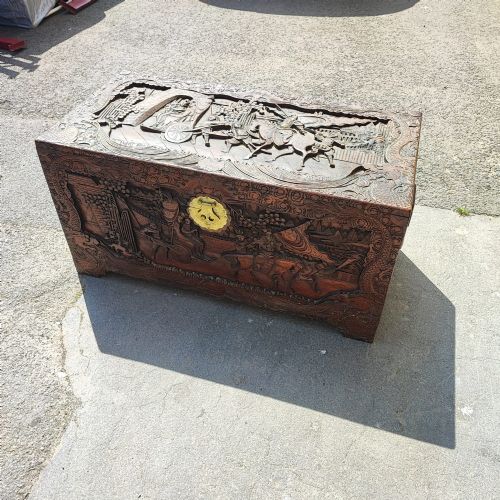


Vintage Oriental Blanket Chest
These vintage oriental blanket chests are robust storage trunks crafted from aromatic woods and fitted with brass hardware, ideal for practical utility and decorative presence.
Vintage Oriental Blanket Chest
A vintage oriental blanket chest serves as a substantial storage container originating from diverse eastern and colonial traditions, designed primarily to protect textiles from insects and moisture. These pieces span periods from the nineteenth century through the Edwardian era and into the nineteen-thirties, reflecting trade routes and regional craftsmanship.
The version most commonly encountered on this page is the Chinese carved camphor wood trunk, often featuring detailed relief work on the lid and sides. Alongside these, buyers find Zanzibar chests, leather-bound China trade trunks, and occasional examples in elm or oak.
Forms range from deep storage boxes to large luggage trunks and traditional bandaji chests, functioning today as coffee tables, end-of-bed storage, or statement furniture. Their origins encompass Chinese export workshops, Indian regional centres, and coastal trading ports.
Materials and construction methods
Camphor wood and teak provide the structural foundation for many examples, chosen for their durability and natural insect-repellent properties. Hardwoods such as rosewood and elm appear in specific regional pieces, while secondary materials include oak and pine.
Metalwork plays a defining structural and decorative role, with heavy brass reinforcement, corner brackets, straps, and padlocks securing the heavy wooden panels. Surface finishes vary from natural waxed timber to red leather, black lacquer, and painted polychrome details.
Listings feature camphor wood, oak, elm, brass, leather, and lacquer across pieces dating from the nineteenth century up to nineteen-thirty.
What determines quality in these chests
The depth and crispness of the hand-carved relief work separate standard production from superior examples, with finer chests showing intricate dimensionality rather than shallow stamping. The quality of the timber selection, particularly the grain and figure of the camphor wood or rosewood, dictates visual richness.
Original hardware integrity and the retention of factory-fitted brass bindings, mounts, and locking mechanisms elevate the standing of a trunk. The cohesion of the original finish, whether lacquer, leather, or polish, determines how well the piece has survived its working life.
The Vintage Oriental Blanket Chest Glossary
- Camphor wood
- An aromatic hardwood native to Asia, prized for its distinct scent and natural ability to deter moths from stored woollens and blankets.
- Zanzibar chest
- A heavy hardwood storage chest featuring brass studding, strapwork, and a characteristic domed or flat lid, associated with East African and Indian trade routes.
- China trade trunk
- A cargo chest produced in treaty ports during the nineteenth century for export to Western markets, frequently finished in leather or lacquered wood.
- Bandaji chest
- A traditional Korean storage chest constructed with distinctive metal corner plates, hinges, and strapwork, often made from elm.
- Chinoiserie
- A Western style of European decorative art that reflects Chinese artistic influences, sometimes applied to imported or export furniture surfaces.
Vintage Oriental Blanket Chest: Frequently Asked Questions
What were oriental chests used for?
These chests served primarily as durable luggage and secure storage containers for valuable textiles, garments, and personal belongings during maritime transport and domestic life.
Their robust construction and natural insect-repellent wood made them ideal for protecting delicate fabrics from humidity and pests in transit.
How do I care for camphor wood?
Maintain camphor wood chests by keeping them out of direct sunlight and away from extreme heat sources to prevent the timber from drying out or splitting.
Clean the surface with a soft, dry cloth and occasionally nourish the wood with a suitable natural wax to preserve the grain and finish.
How can I tell the age of a chest?
Examine the construction methods, the type of hardware used, and the style of any carved decoration to estimate the period of manufacture.
Nineteenth-century examples often display hand-beaten brasswork and dense, aged timber, whereas nineteen-thirties pieces may incorporate different finishes like limed oak.
Are these chests suitable as coffee tables?
Their flat lids and substantial proportions make these chests popular choices for positioning in the centre of a sitting room as alternative coffee tables.
This placement provides hidden storage for living room blankets and books while offering a solid surface for everyday objects.