


Asian Wood Urn Pedestal
An asian wood urn pedestal elevates your display, bringing carved timber and inset marble together for heavy ceramic vessels.
Asian Wood Urn Pedestal
When you search for an asian wood urn pedestal, you are looking at sturdy display furniture designed to hold heavy vessels, plants, and jars. These items take the form of plant stands, jardiniere stands, torchères, and low vase tables originating from nineteenth-century workshops.
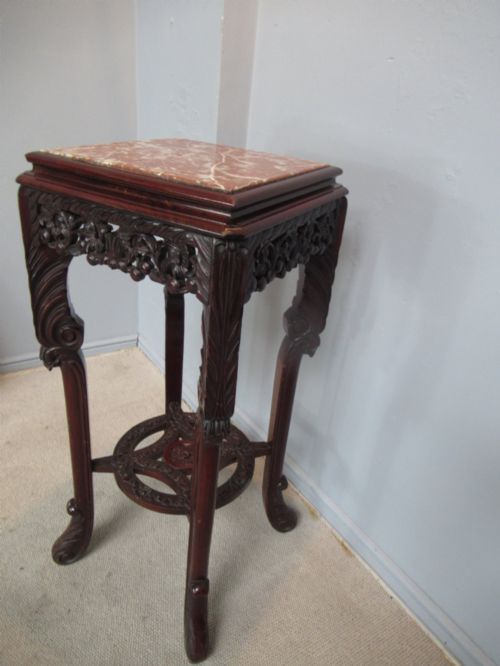
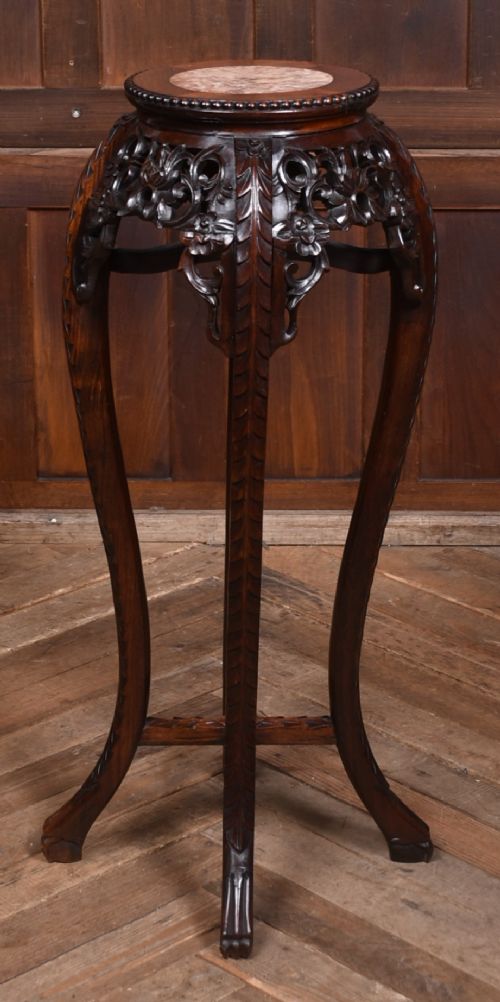
The version you are most likely to meet on this page is a carved hardwood stand featuring an inset marble top and cabriole or straight legs. They date primarily from the Victorian era and the late nineteenth century, reflecting Qing Dynasty traditions and Chinese Export designs.
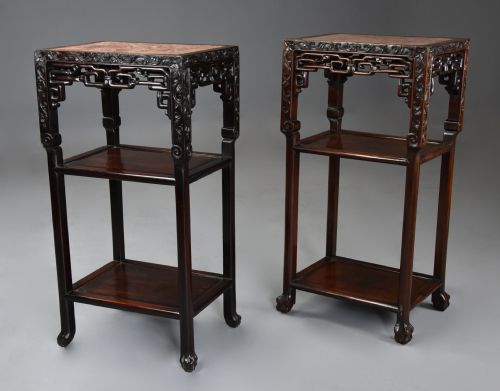
Makers constructed these pieces specifically to elevate decorative objects off the floor, protecting delicate ceramics and timber flooring alike. You will encounter single tables as well as matched pairs suitable for symmetrical interior placement.
What varies in quality
The standard of carving dictates much of the distinction between ordinary utility tables and exceptional display pieces. Crisp, deep undercut detailing in the wood demonstrates superior hand work by skilled artisans compared to shallow, mechanical moulding.
The choice and figuring of the timber and the quality of the marble inset further separate the tiers. Dense grain patterns in rosewood or hongmu and unblemished, well-fitted stone surfaces indicate higher grade production.
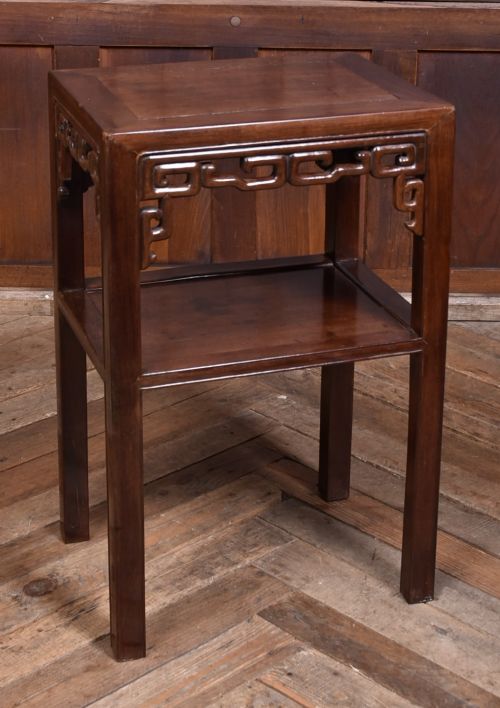
Listings span the nineteenth century through the early twentieth century, featuring forms like jardiniere stands, plant stands, and occasional tables.
The Asian Wood Urn Pedestal Glossary
- Hardwood
- Dense, slow-growing timber selected for durability and dark colour. Such woods include rosewood and hongmu.
- Jardiniere stand
- A tall or low table specifically built to support a heavy ceramic flower pot or plant holder. These pieces often feature water-resistant stone tops.
- Hongmu
- A traditional Chinese term denoting dense red-brown tropical hardwoods. It translates literally as red wood.
- Marble top
- A polished stone slab fitted flush into the wooden frame of a table. This provides a heat-resistant and moisture-resistant surface for urns.
- Torchère
- A tall standalone pedestal designed to hold a light source or a prominent decorative vase. They stand higher than standard occasional tables.
Asian Wood Urn Pedestal: Frequently Asked Questions
What is an asian wood urn pedestal used for?
These pieces function primarily as elevated platforms for heavy decorative vessels, ceramic jars, and large interior plants. They place ornamental objects at a proper viewing height while protecting the floor.
Historically, households used them in principal rooms to display prized porcelain and bronzes. Today, they serve the same practical purpose in domestic interiors.
How do I identify a Qing Dynasty stand?
You identify them by traditional Chinese joinery, dense Asian hardwoods like hongmu, and characteristic carved motifs. They often feature marble insets and high-relief floral apron designs.
Many date to the late nineteenth century and reflect export standards of the period. Their construction prioritises weight and rigid stability to support heavy ceramic urns.
Are these stands strong enough for heavy pots?
Yes, they are engineered from dense tropical hardwoods specifically to bear substantial weight. The inclusion of inset marble adds structural stability to the central platform.
Original makers built them to hold heavy bronze and ceramic jardinieres safely. Regular domestic planters and large vases sit securely upon them.
Can I use these tables as a side table?
While their primary historical function involves display rather than everyday surface use, many examples suit casual placement. Their varied heights allow them to function as occasional tables.
The flat marble or timber top easily accommodates small lamps or decorative items. Care should be taken with uneven surfaces on older stone insets.