




Asian Wood Accent Table
An asian wood accent table brings functional surface space and rich regional character to a room through dense timbers and traditional carving.
Asian Wood Accent Table
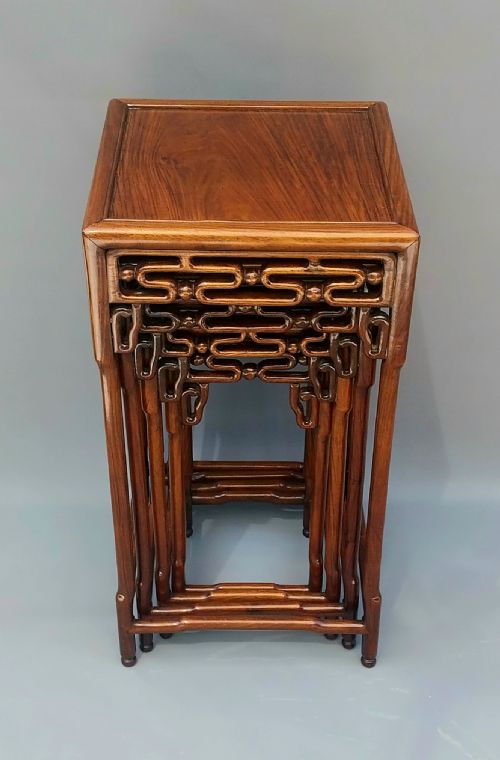
An asian wood accent table encompasses a diverse range of low coffee tables, side tables, plant stands and nests of four tables originating primarily from Chinese and Japanese workshops.
The selections span the nineteenth century and the early twentieth century, incorporating styles from the Qing Dynasty and the Meiji period.
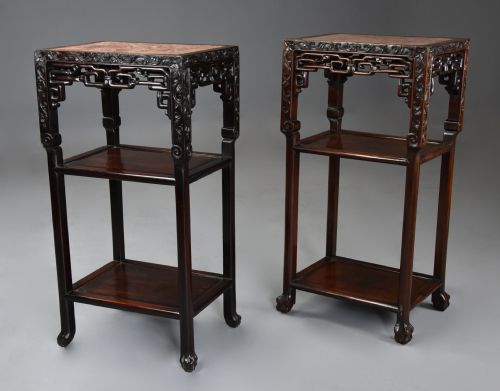
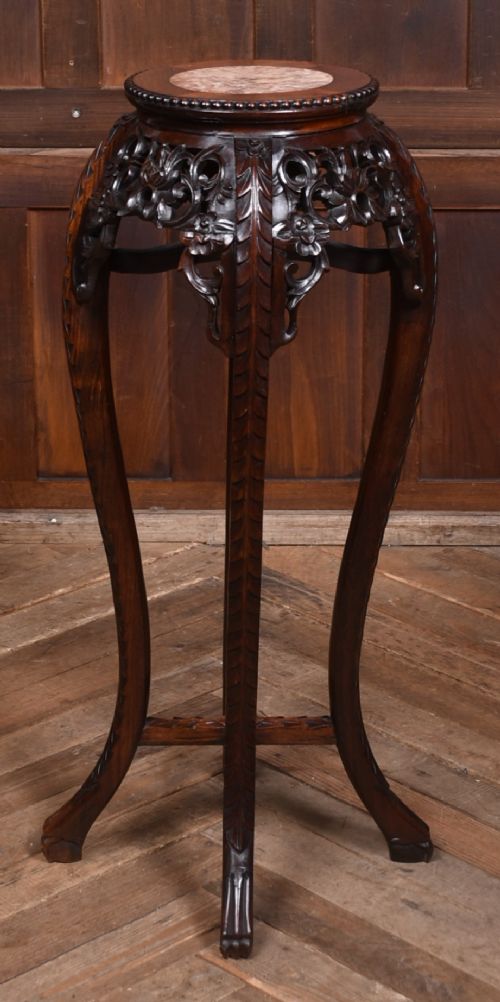
Buyers most commonly encounter dense hardwood and elm occasional tables, alongside marble top pedestals and carved low opium tables.
How they were made
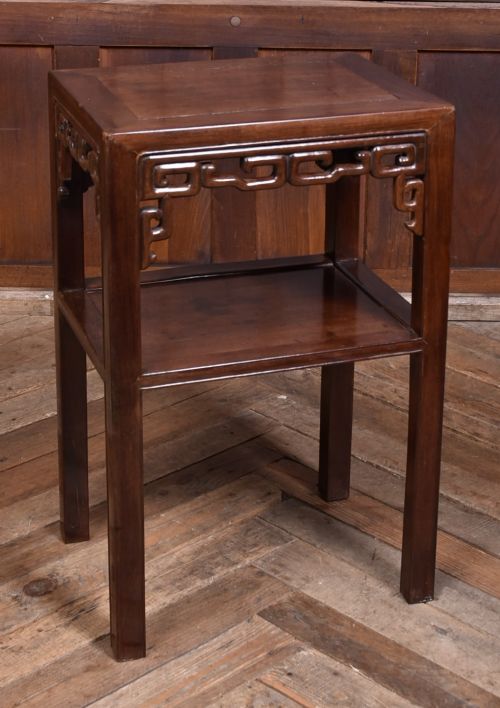
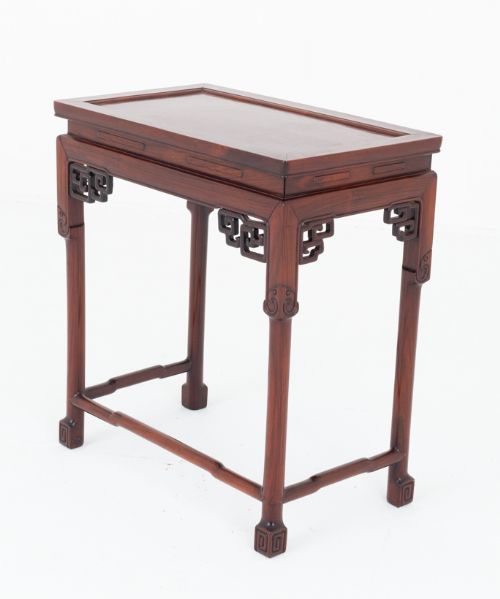
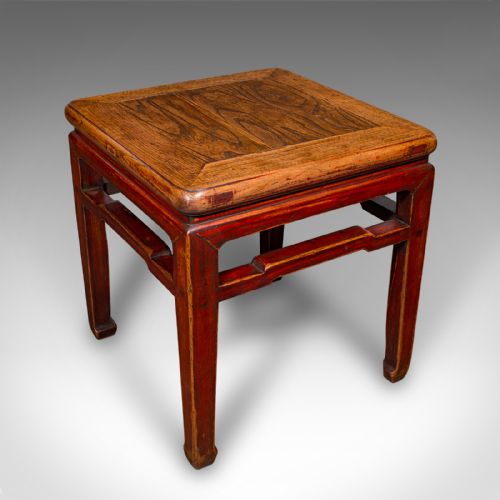
Joinery relies upon dense native timbers such as hongmu, rosewood, elm and rootwood, often shaped into nests, stools and stands.
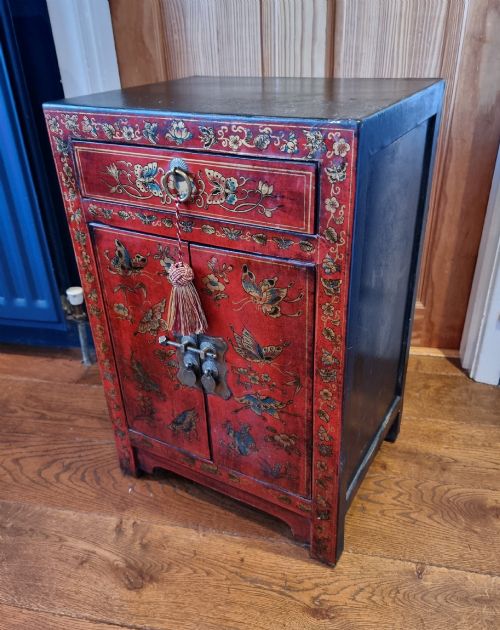
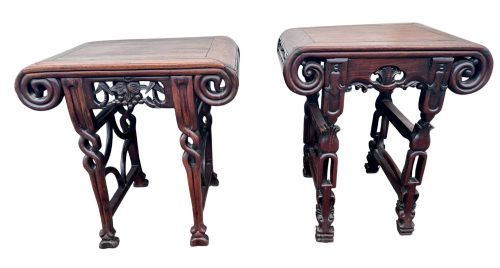
Surfaces receive decorative treatment through hand carving of motifs like dragons, alongside inset marble tops, quartz panels, lacquer and brass details.
What varies in quality
The distinction between tiers rests upon the density of the chosen timber, such as heavy rosewood or hongmu versus lighter local varieties of elm.
Execution of hand carving separates standard production from finer examples, seen in the depth and crispness of floral or dragon motifs.
The Asian Wood Accent Table Glossary
- Hongmu
- A dense tropical hardwood prized in Chinese furniture making for its deep colour and heavy weight. It is often utilised in nests of tables and urn stands.
- Chabudai
- A traditional low dining or tea table originating in Japan, designed for use while kneeling on tatami mats. These typically feature simple elm construction.
- Kang table
- A low domestic platform table from China, frequently used for serving tea or sitting upon heated brick beds. They appear here as low coffee tables.
- Rootwood
- Timber formed from the root mass of a tree, selected for gnarled and eccentric natural shapes. Artisans carve these organic forms into distinctive stands and lamp bases.
- Cinnabar
- A carved lacquer technique involving numerous layers of red pigment applied to a core and subsequently carved with intricate patterns.
Asian Wood Accent Table: Frequently Asked Questions
Where should I place an asian wood accent table?
These pieces suit living spaces and hallways where a compact surface is useful for lamps or small decorative objects.
Low coffee tables and opium tables work well in front of low seating, while tall plant stands fit corners.
How do I care for antique hardwood tables?
Maintain the timber by keeping the surface away from direct heat sources and sudden humidity changes that might cause splitting.
Dust regularly with a dry cloth and occasionally apply a neutral beeswax to nourish the dense grain.
What is a nest of tables used for?
A nest comprises multiple smaller tables that slide neatly beneath the largest one when floor space is limited.
They provide flexible surface areas for drinks and books that can be separated as needed during gatherings.
How do I identify the period of these tables?
Nineteenth-century examples often display deep hand carving, heavy hongmu or rosewood construction, and traditional Qing Dynasty stylistic motifs.
Pieces from the early twentieth century may incorporate simpler Japanese Meiji designs, ebonised elm, or lighter construction methods.