


Asian Tall Plant Stand
These asian tall plant stand pieces lift your displays with height and presence.
Asian Tall Plant Stand
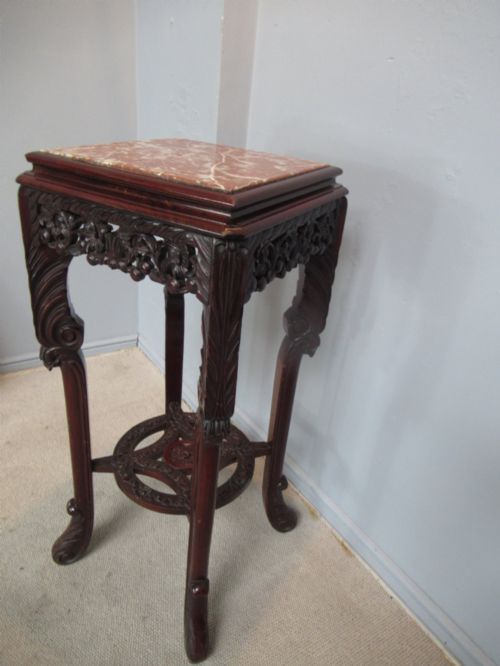
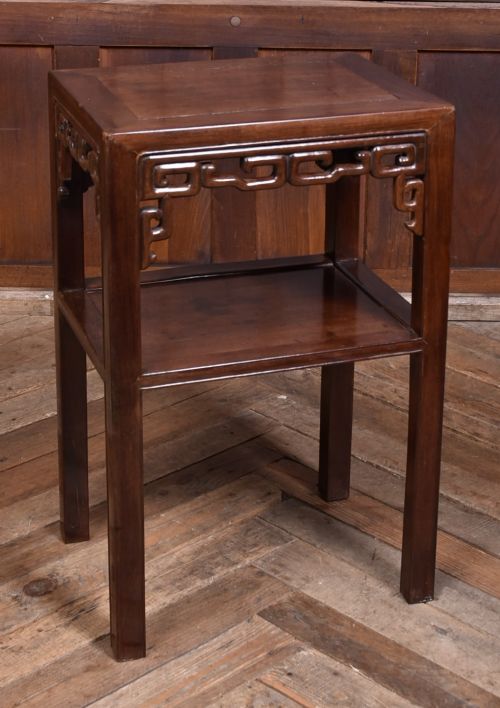
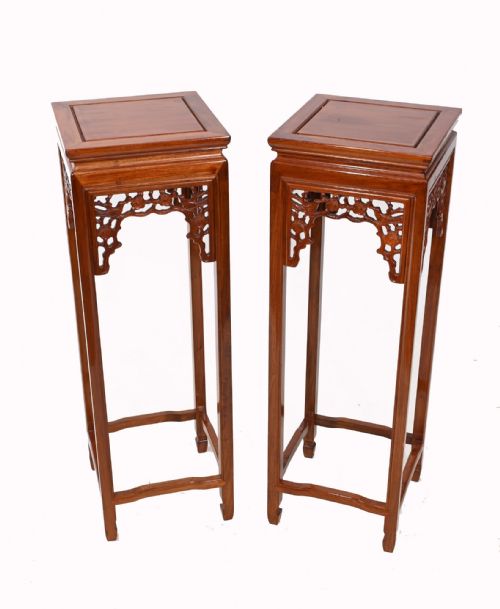
When you search for an asian tall plant stand, you are looking at elevated display furniture designed to hold urns, vases, and jardiniere vessels. The versions you are most likely to meet on this page hail from the nineteenth century and the Victorian era, reflecting Chinese export and Qing dynasty traditions.
These tall forms function as pedestals, torchieres, side tables, and vase tables within domestic interiors. They bring vertical interest to a room by lifting greenery or decorative objects well above the floor level.
Makers fashioned these pieces primarily as sturdy platforms for heavy ceramic vessels or bronze jardiniere containers. Their proportions suit corners or narrow wall spaces where height matters more than a wide footprint.
Materials and construction methods
Carpenters utilised dense tropical timbers such as huali wood, hongmu, and general carved hardwood to build these tall frames. These heavy woods provided the structural integrity required to support inset marble tops and bronze sections without flexing.
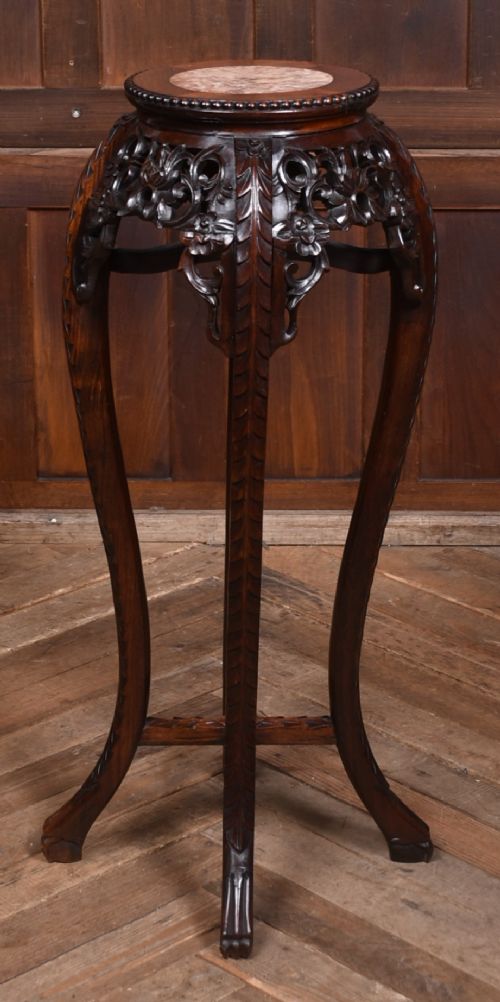
Surfaces often feature intricate carved details executed by hand, alongside inlaid mother-of-pearl accents that catch the light. Marble inserts were fitted neatly into the timber tops to provide a cool, stable, and moisture-resistant surface for wet plant pots.
Joinery techniques matched traditional Chinese woodworking methods, allowing frames to handle the weight of large ceramic vessels securely. Bronze sectional elements also appear in certain jardiniere stands, combining cast metalwork with wooden components.
Some stands feature mother-of-pearl inlay so detailed that even the tiny leaves on a carved branch sparkle in the evening light.
What separates the finest examples
The standard of carving determines much of the visual merit in these tall stands, where crisp undercutting and deep relief separate ordinary items from superior ones. Finer pieces display balanced proportions across their tall legs and aprons, ensuring the frame looks graceful rather than clumsy.
Selection of timber also plays a major role, with richly grained huali wood or heavy hongmu commanding greater attention than plain hardwood. The quality of the fitted marble insert, its colour, and how snugly it sits within the timber frame indicate the level of care taken during production.
The Asian Tall Plant Stand Glossary
- Huali wood
- A fragrant and heavily figured tropical hardwood prized in traditional Chinese furniture making. It offers high density and a rich natural lustre.
- Hongmu
- A category of dense, dark Asian hardwoods often translated as red wood. It provides exceptional weight and strength for carved pedestals.
- Jardiniere
- An ornamental pot or container for holding plants or flowers. These vessels sat directly upon the marble tops of plant stands.
- Torchiere
- A tall standing tall light or display stand designed to hold lamps or decorative objects. They create vertical emphasis in room schemes.
- Qing Dynasty
- The last imperial dynasty of China, spanning from sixteen forty-four to nineteen twelve. Pieces from this era often feature traditional motifs and intricate carving.
Asian Tall Plant Stand: Frequently Asked Questions
What were asian tall plant stands used for?
These tall stands served as dedicated platforms for displaying heavy ceramic vases, jardiniere bowls, and potted plants within nineteenth-century interiors. Their elevated design protected floors from dampness and lifted greenery to eye level.
Owners also utilised them as torchiere supports or side tables for decorative objects in formal reception rooms.
How do I live with an asian tall plant stand?
Place your stand in a corner, beside a seating group, or in a hallway where its vertical height can add architectural interest. Ensure heavy items are centred on the marble top to maintain stability.
Keep timber surfaces away from direct heat sources and wipe the marble top clean with a damp cloth when necessary.
How can I tell the period of these stands?
Nineteenth-century and Victorian pieces show their age through the dry patina of the hardwood and the traditional hand-carving methods used on the aprons and legs. Dense timbers like hongmu and huali wood exhibit weight and grain patterns typical of older Asian workshop production.
Construction details, such as traditional joinery without modern metal fasteners, also point towards nineteenth-century craftsmanship.
What is the difference between a plant stand and a torchiere?
Plant stands generally feature flat tops inset with marble to accommodate wet pots and heavy ceramic jardiniere vessels safely. Torchieres historically carried lighting elements or tall decorative sculptures.
In nineteenth-century export pieces, the terms often overlap as makers adapted tall pedestals for multiple display purposes.