




Mother of Pearl Pedestal
A mother of pearl pedestal brings an iridescent shimmer to a room, catching the light across centuries of craftsmanship.
Mother of Pearl Pedestal
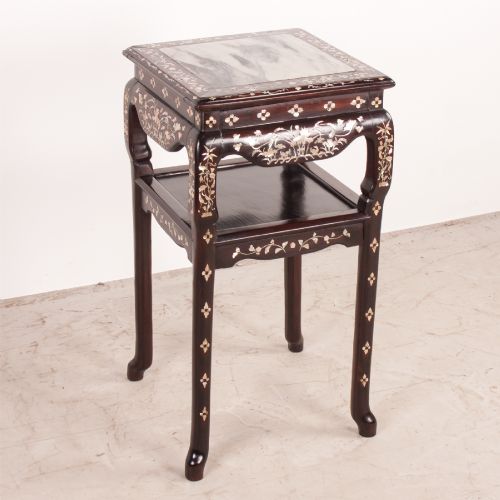
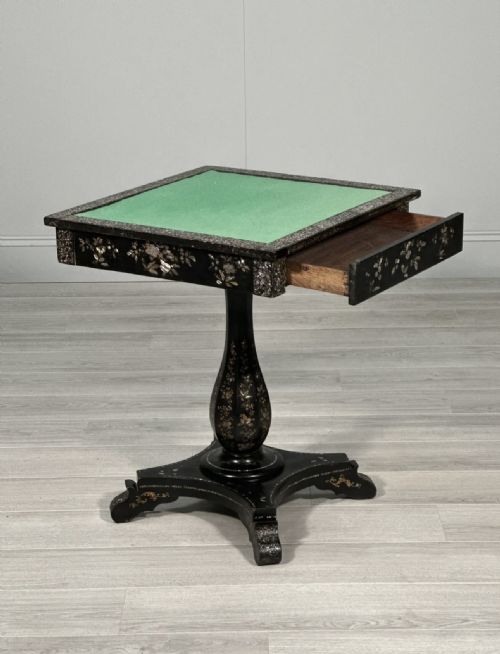
A mother of pearl pedestal encompasses a diverse group of occasional tables, plant stands, and work tables built across the nineteenth and early twentieth centuries. These forms reflect global traditions, appearing in Chinese export work, Anglo-Indian design, Victorian papier-mâché, and Syrian craftsmanship.
The version most commonly met on this page is the low occasional table or plant stand, heavily inlaid with shimmering shell fragments upon dark timber or lacquer grounds. Alongside these, buyers find games tables, sewing tables, and desks that incorporate mother-of-pearl decoration into their surfaces.
Originating from periods spanning from eighteen-fifty to nineteen-twenty, these items combine structural utility with intricate surface ornament. The makers utilise marble, rosewood, hardwood, and papier-mâché as foundations for the luminous inlay work.
How they were made
Craftsmen built the foundations of these pieces using dense timbers such as rosewood and hongmu, or moulded them from papier-mâché for smooth, dark surfaces. These bases provided rigid support for intricate decorative schemes executed in contrasting materials.
The defining technique involves cutting thin flakes of mother-of-pearl and setting them meticulously into recesses carved within the wood, lacquer, or papier-mâché. Artisans then secured the shell fragments flush with the surrounding surface before polishing the entire panel to a smooth finish.
Materials recorded on this page include mother-of-pearl, marble, rosewood, lacquer, papier-mâché, and hardwood.
What varies in quality
The distinction between tiers of quality rests upon the density and precision of the inlay work. Pieces featuring tightly fitted, complex geometric or floral arrangements display a higher standard of artisan skill than those with sparse or uniform decoration.
Material selection dictates the upper range of these objects, where solid hardwoods like rosewood or substantial marble tops elevate the weight and presence of the pedestal. Inferior examples rely on lighter constructions or simpler surface treatments that lack depth and tactile richness.
The Mother of Pearl Pedestal Glossary
- Mother-of-Pearl
- The iridescent inner layer of mollusc shells, used extensively for decorative inlay in furniture. This material catches the light to create a shimmering effect against dark wooden grounds.
- Papier-Mache
- A composite material made from paper pulp mixed with glue and oil, then pressed and dried into sturdy forms. Victorian makers utilised this substance for tables and desks before finishing them with lacquer and shell inlay.
- Hongmu
- A dense Chinese hardwood prized for its deep colour and durability. Makers employed this timber to support intricate mother-of-pearl designs on plant stands and occasional tables.
- Japanned
- A European technique mimicking East Asian lacquerwork through the application of layered varnishes and dark finishes. It frequently appears on nineteenth-century pedestal desks and tables.
- Comport
- An ornamental dish or bowl raised on a pedestal, used for serving fruit or sweets. Examples from this tradition combine bronze structures with mother-of-pearl dishes.
Mother of Pearl Pedestal: Frequently Asked Questions
What is a mother of pearl pedestal?
A mother of pearl pedestal is a decorative item of furniture, such as a plant stand or occasional table, adorned with iridescent shell inlay.
These pieces draw on various global traditions, including Chinese export work, Anglo-Indian craftsmanship, and Victorian papier-mâché design.
How were these tables used?
These pieces served as functional surfaces for displaying plants, lamps, or decorative objects within nineteenth-century interiors.
Some specialised forms, such as games tables or work tables, also provided designated spaces for leisure activities and needlework.
Where do these pieces originate?
The listings encompass items originating from China, India, Syria, and Britain during the nineteenth and early twentieth centuries.
Each region applied its distinct woodworking and decorative traditions to the incorporation of mother-of-pearl inlay.
What materials support the inlay?
Makers applied mother-of-pearl to a variety of foundation materials, including dense hardwoods, rosewood, marble, and papier-mâché.
The dark colour of these grounds provides a strong visual contrast that accentuates the natural shimmer of the shell.
How do I care for inlaid furniture?
These items require gentle dusting with a soft, dry cloth to protect the delicate shell and its surrounding lacquer or wood.
Keeping them away from direct sunlight and excessive moisture helps preserve the integrity of the antique materials.