

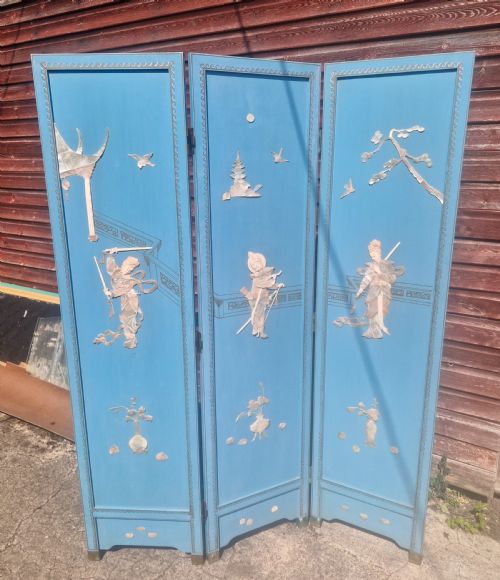
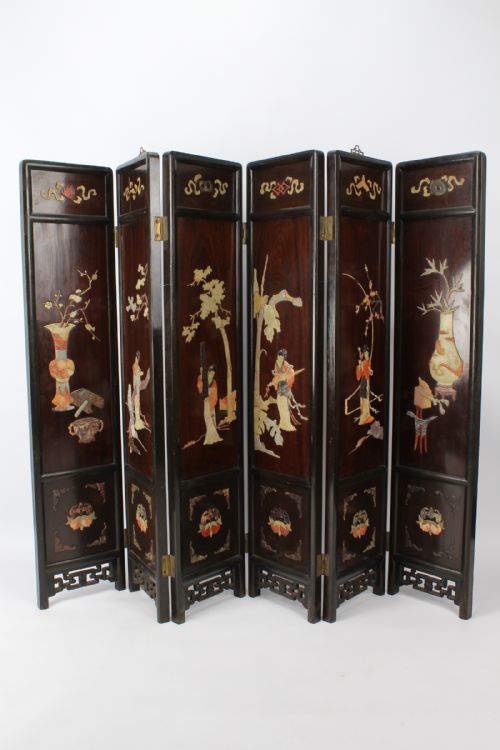


Asian Room Divider
An asian room divider creates a dramatic partition, bringing intricate craftsmanship and striking visual depth to an interior scheme.
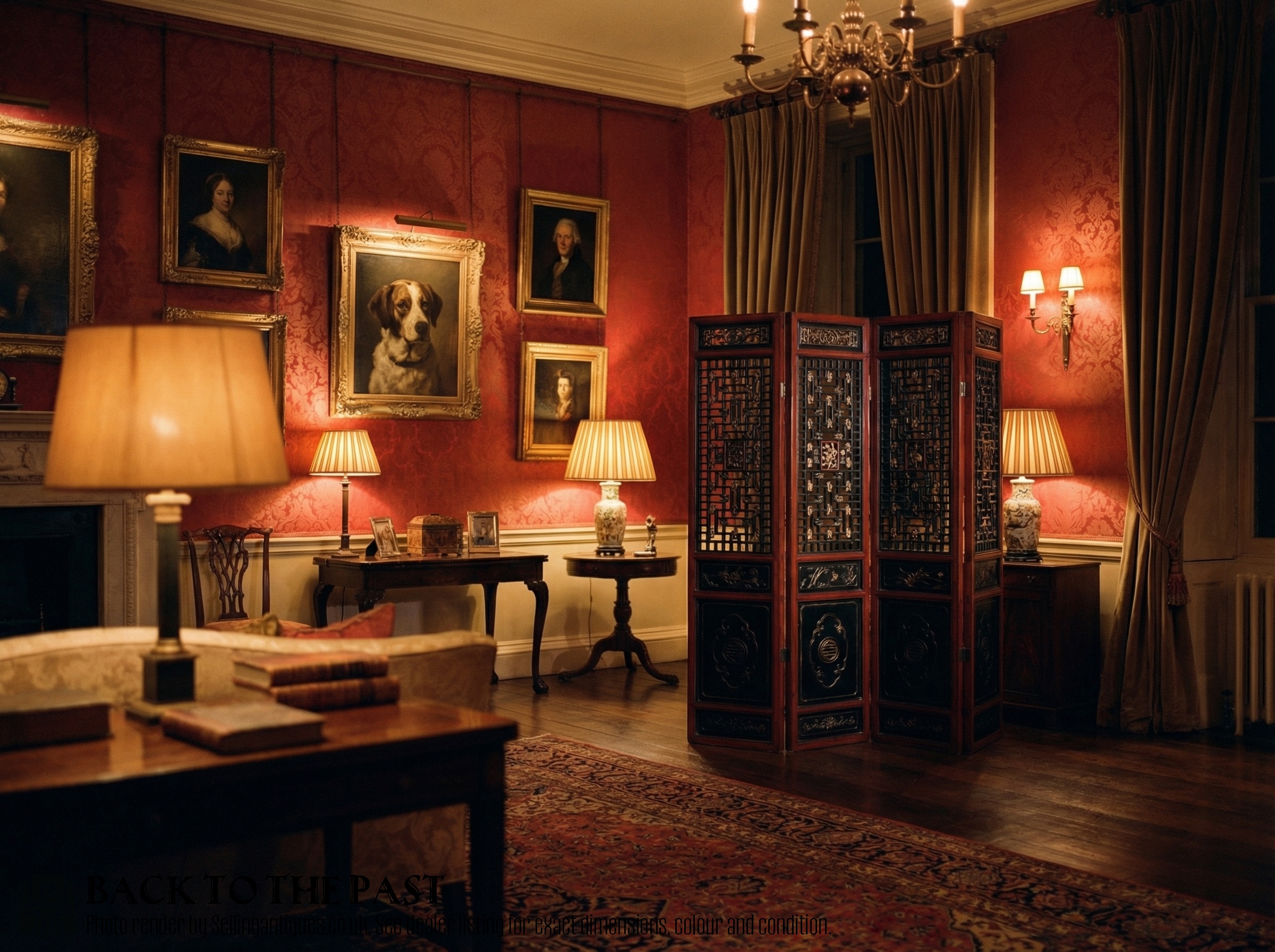
Asian Room Divider
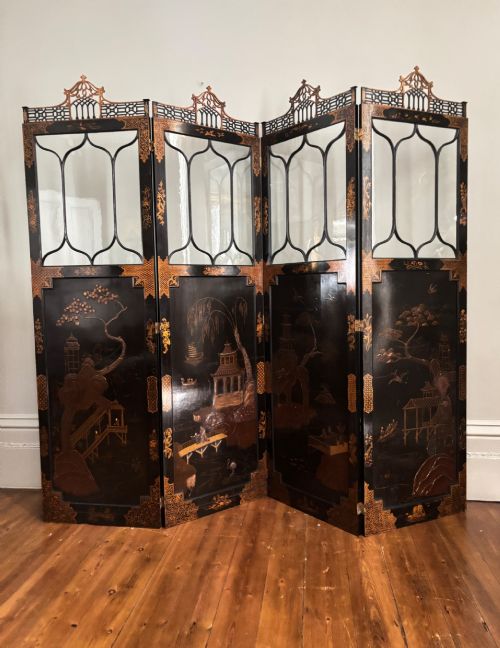
When you search for an asian room divider, you encounter multi-fold screens designed to segment interior spaces or adorn walls. The selection here spans folding screens, fire screens, table screens, and wall art, with large multi-fold examples appearing frequently.
Originating from diverse traditions, these pieces encompass Chinese hardwood and lacquer works alongside Japanese folding screens and Burmese examples. Makers utilised various panel counts, ranging from intimate three-fold dressing screens to expansive eight-fold compositions.
Stylistic influences run from Chinese Qing Dynasty and Chinoiserie to Japanese Meiji and Chinese Chippendale designs. Dating ranges from the Victorian era and the nineteenth century through the early decades of the twentieth century.
Materials and construction
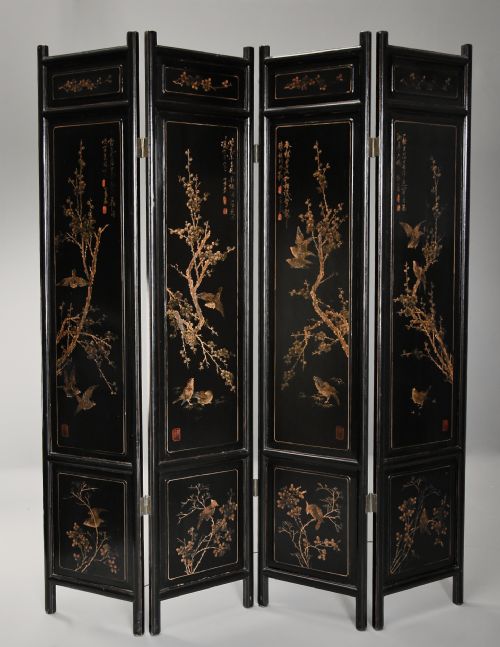
Construction relies heavily on robust wood and hardwood foundations, often finished with deep layers of lacquer. Craftsmen applied black and Coromandel lacquer techniques to build durable, lustrous surfaces across the folding panels.
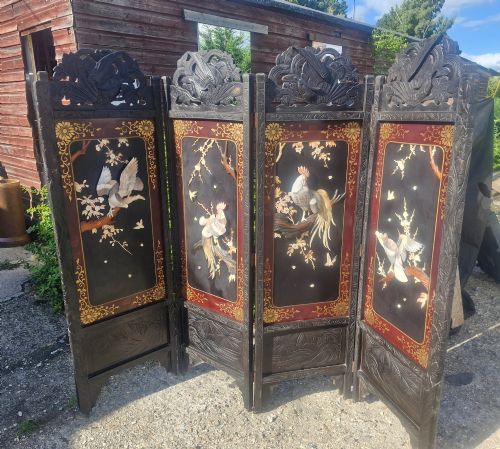
Decoration incorporates intricate carving and applied details such as bone, hardstone, and ivory inlay. Textile elements including silk and cotton panels also appear, paired with brass fittings and hinges to articulate the multi-fold frames.
The listings show pieces originating from China, Japan, and Burma across the nineteenth and twentieth centuries.
Assessing quality
Quality differentiates through the depth and precision of carving across the wooden frames and lacquer surfaces. Finer examples display meticulous relief work, secure inlay placement, and substantial hardwood framing that supports heavy folding panels.
The refinement of the painted and lacquered decoration dictates visual distinction, with superior pieces showing complex iconography and harmonious colour balance. The structural integrity of the hinges and the stability of the multi-fold joins further separate standard items from exceptional ones.
The Asian Room Divider Glossary
- Coromandel lacquer
- A Chinese incised lacquer technique where motifs are carved into a dark ground and filled with colours. This method creates a rich, textured surface across folding screens.
- Chinoiserie
- European artistic style reflecting Chinese motifs and decorative patterns. It heavily influences eighteenth and nineteenth-century furniture and screen designs.
- Meiji
- A period in Japanese history spanning from eighteen sixty-eight to nineteen twelve. Pieces from this era often feature detailed lacquer work and bone inlay.
- Hardstone
- A collective term for semi-precious stones used in decorative inlays. Artisans mount these stones onto lacquer grounds to create dimensional floral and figural scenes.
- Fire screen
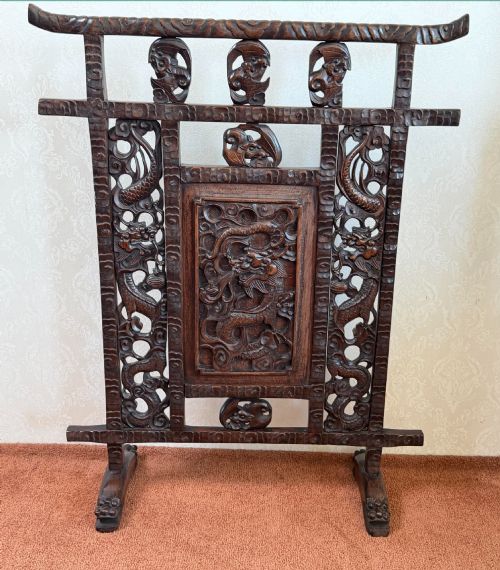
- A small decorative screen placed before an unused fireplace. These items share construction techniques with larger room dividers.
Asian Room Divider: Frequently Asked Questions
How do I use a room divider?
These screens partition large rooms, create private dressing areas, or stand against walls as decorative art. Their multi-fold construction allows them to angle according to the space available.
Smaller versions, such as fire screens or table screens, function as decorative focal points on surfaces or hearths. Positioning depends on the panel count and the physical reach of the screen.
What materials were used?
Wood and hardwood form the primary structural frames for most panels. Lacquer finishes, both black and Coromandel, provide the characteristic glossy surface.
Decorations incorporate carved bone, hardstone, and painted silk or cotton inserts. Brass hinges and fittings connect the individual leaves together.
How do I date an antique screen?
Dating relies on stylistic markers, material analysis, and construction methods. Pieces reflect Victorian, Qing Dynasty, or Meiji aesthetic conventions depending on their origin.
Nineteenth-century examples often display dense carving and traditional lacquer techniques. Early twentieth-century pieces incorporate similar motifs with varying panel configurations.
Are these screens freestanding?
Most folding screens are freestanding and self-supporting when arranged in a zigzag or angled position. Their multiple leaves distribute weight to maintain stability across the floor.
Some single panels or smaller formats require wall mounting or specific placement against vertical surfaces. Multi-fold screens do not typically require permanent fixings.
What is the difference between styles?
Chinese styles frequently feature deep carved wood, Coromandel lacquer, and hardstone inlays depicting traditional landscapes or figures. Japanese pieces often showcase painted textiles, silk panels, and delicate bone work.
Chinoiserie and Chinese Chippendale represent European interpretations of Asian design motifs. Each origin brings distinct regional aesthetics to the folding screen format.