

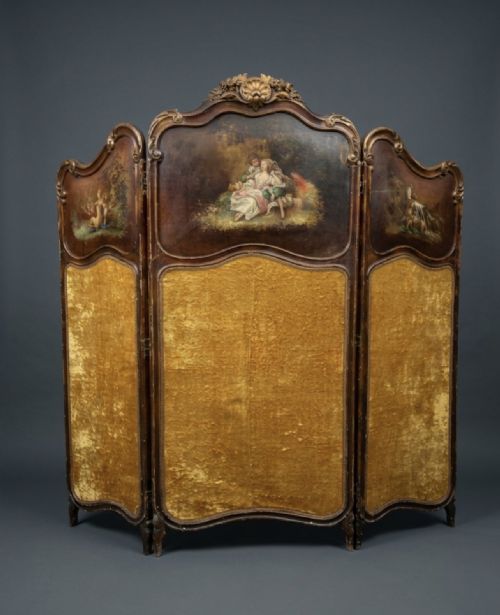
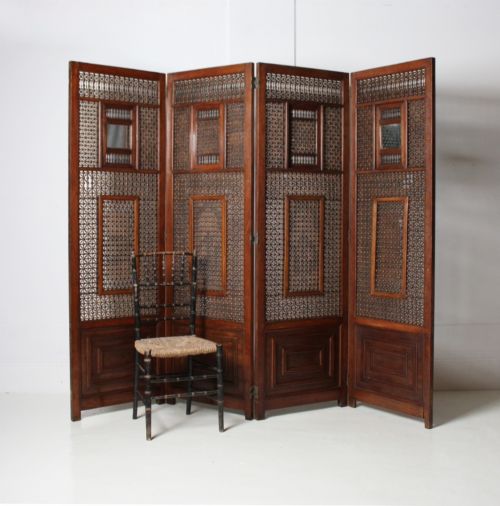

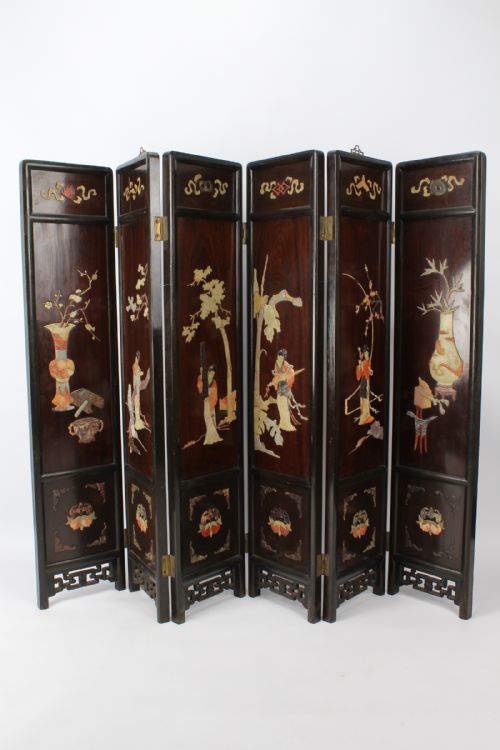


Carved Wooden Folding Screen
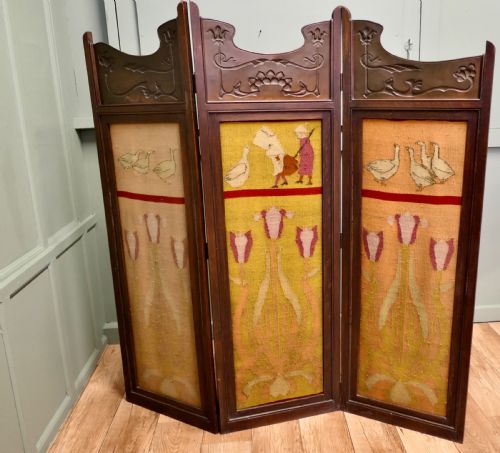
A carved wooden folding screen divides a room with architectural weight and intricate panel work.
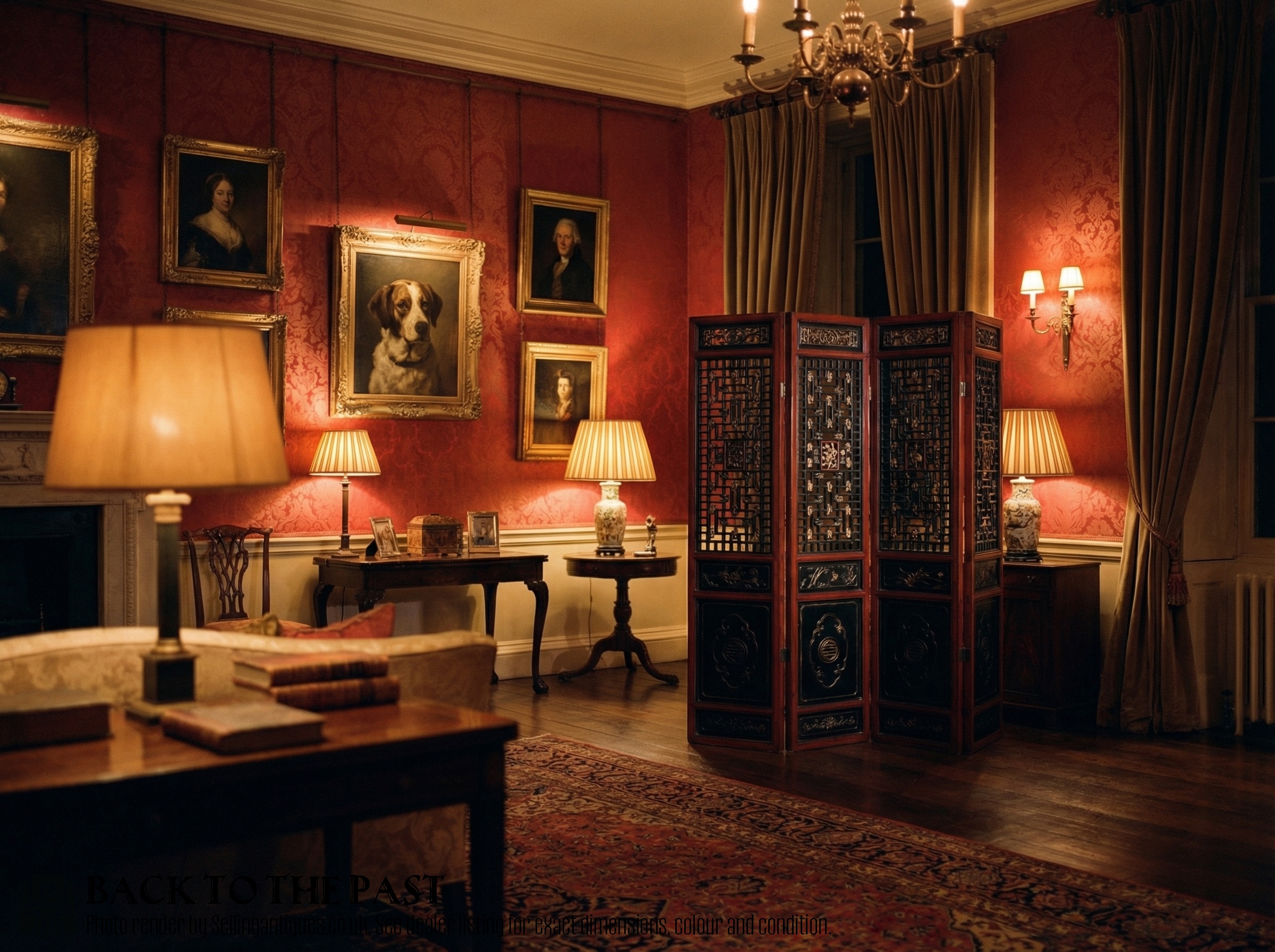
Carved Wooden Folding Screen
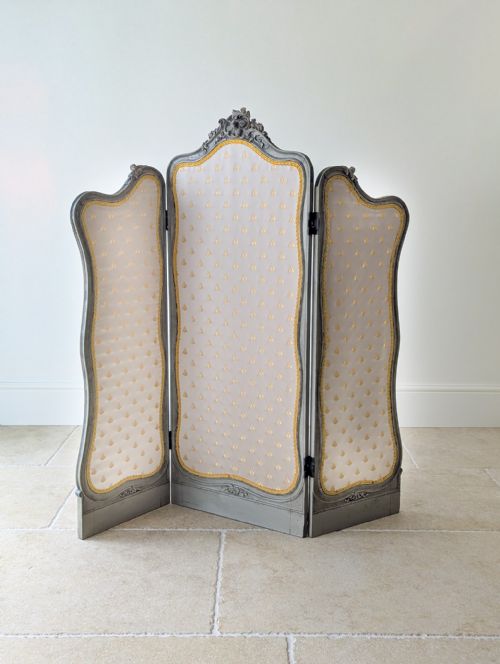
A carved wooden folding screen functions primarily as a room divider or a decorative partition within domestic interiors. These panels span multiple folds, ranging from compact three-fold examples to substantial six and eight-fold structures.
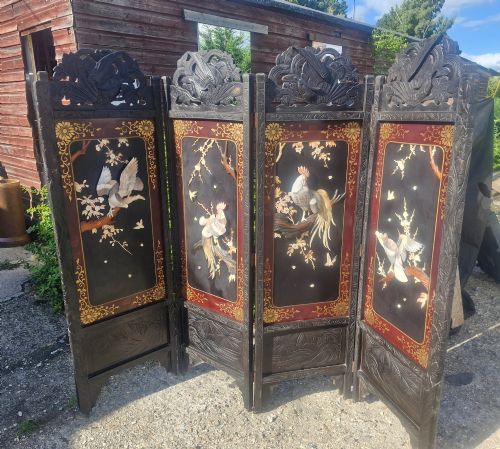
The materials and styles seen on this page draw from diverse origins, including Chinese, Japanese, Indian, and European workshops. Buyers frequently encounter pieces incorporating hardwood, lacquer, paint, and intricate fretwork.
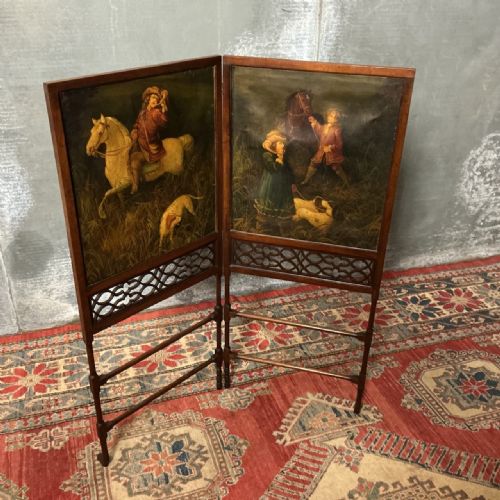
Beyond traditional room dividers, the selection includes smaller fire screens and modesty screens designed for specific domestic placement. The structural format relies on hinged panels that allow the piece to articulate and stand unsupported.
How they were made
Makers utilised solid timbers such as mahogany, walnut, padauk, and various hardwoods to construct the foundational frames. These woods were joined using traditional woodworking techniques to support heavy folding sections and multi-panel layouts.
Surface ornamentation involved deep carving, fretwork, and applied decoration such as bone figures, brass, and hardstone inlay. Lacquer finishes, oil paintings, and painted pastoral scenes further enriched the visual depth of the panels.
Listings span periods from the eighteenth century through the Edwardian era, featuring hardwood, lacquer, and oil paint.
What varies in quality
The depth and crispness of the carving distinguish finer examples from simpler commercial production. Relief work executed with sharp undercut details demonstrates superior craftsmanship compared to shallow or moulded decoration.
The integrity of the structural joinery and the original quality of the hinges dictate how well the multi-fold panels endure movement. Superior pieces maintain alignment across all folds without sagging or binding at the joints.
The Carved Wooden Folding Screen Glossary
- Coromandel lacquer
- A Chinese incised lacquer technique where designs are carved into a dark ground and filled with pigments or gold.
- Fretwork
- Ornamental perforated woodwork created by cutting patterns through thin boards.
- Mashrabiya
- An architectural projecting window enclosed with carved wood latticework, often adapted into folding screen panels.
- Padauk
- A dense tropical hardwood known for its rich red-brown colour and durability, utilised in fine regional furniture.
- Napoleon III
- A French stylistic period spanning the mid-nineteenth century, known for eclectic revivals and decorative painted finishes.
Carved Wooden Folding Screen: Frequently Asked Questions
How were folding screens used?
These screens partitioned large rooms, created private dressing areas, and managed drafts near fireplaces.
Smaller variants acted as fire screens to shield occupants from radiant heat.
How do I clean a lacquered screen?
Dust surfaces gently with a dry, soft microfibre cloth to protect delicate finishes and inlaid materials.
Avoid liquid cleaners, waxes, or solvents that can damage antique lacquer and oil paint.
Are all screens freestanding?
Most folding screens use hinged panels that angle to support themselves on a flat floor.
Some smaller fire screens or modesty screens incorporate fixed bases or feet for stability.
How do I identify Chinese Coromandel work?
Coromandel screens feature deep incisions cut through layers of dark lacquer to reveal a contrasting ground underneath.
Artisans then hand-coloured these recessed carved areas with pigments.