








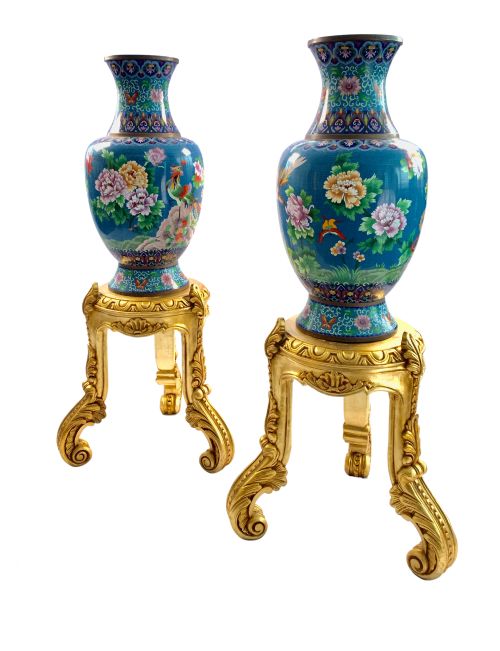
Asian Cloisonne Decorative Urn
These asian cloisonne decorative urn pieces are metal vessels worked in wire and enamel, offering rich colour and pattern for a mantelpiece.
Asian Cloisonne Decorative Urn
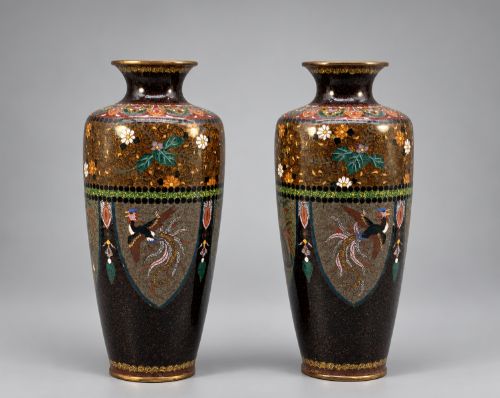
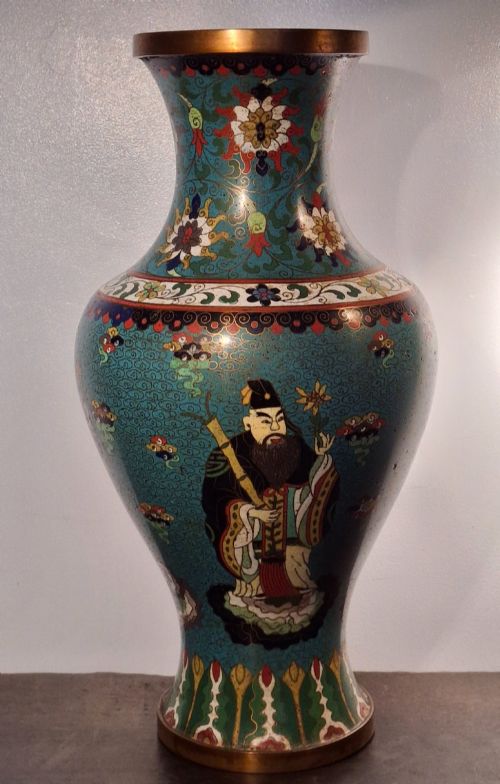
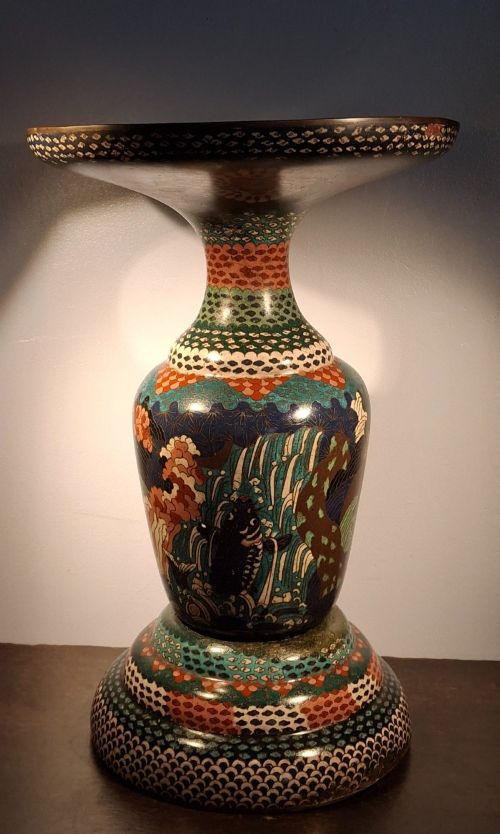
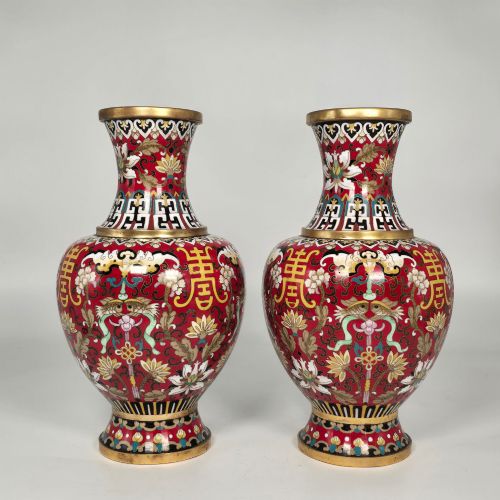
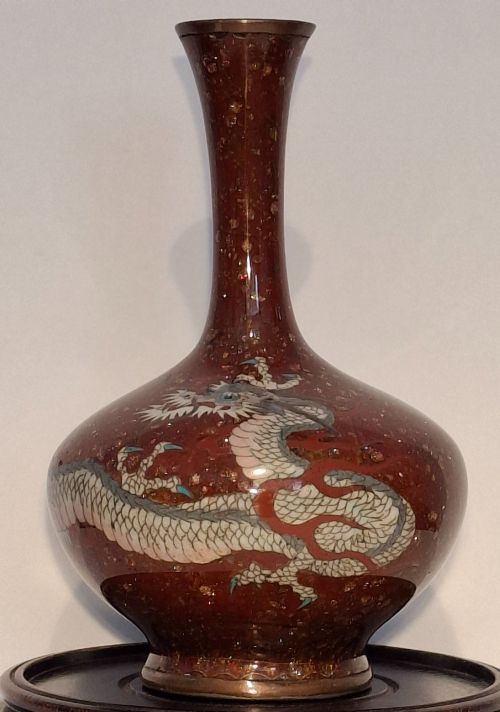
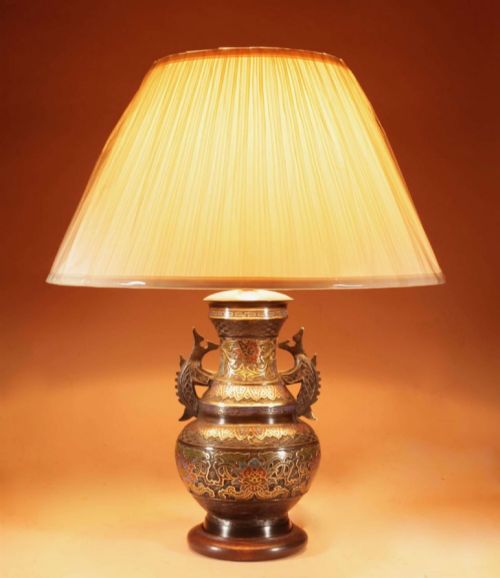
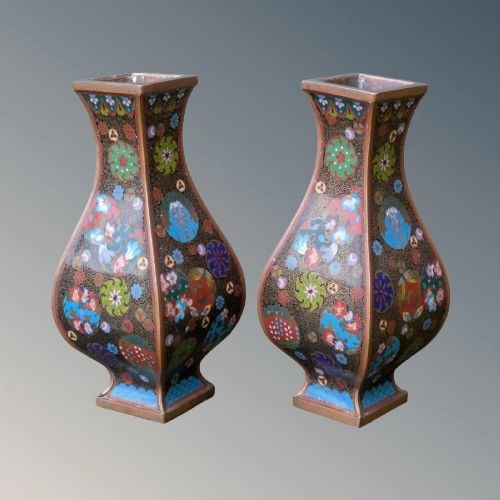
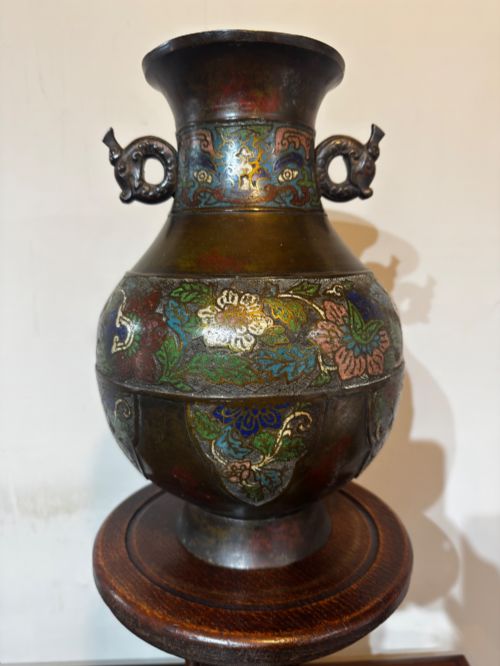
An asian cloisonne decorative urn brings together copper, brass, and bronze vessels decorated with fine wire cells and coloured pastes. The pieces seen on this page span the nineteenth century, the Edwardian era, and the nineteen-thirties, taking the form of vases, lidded vessels, and table lamps.
Japanese and Chinese workshops created these items across distinct periods including the Meiji and Edo eras alongside Qing styles. Buyers encounter monumental palace pieces, pairs of mantel vases, and smaller miniature examples designed for display.
How they were made
Craftsmen soldered thin metal wire onto copper, brass, or bronze bodies to form intricate geometric or pictorial compartments known as cloisons. Workers filled these tiny cells with coloured enamel paste before firing the vessel multiple times in a kiln.
The cooled surface underwent repeated grinding and polishing until the metal wires remained flush with the smooth, vitreous enamel fields. Artisans occasionally incorporated silver foil beneath translucent enamels to create depth in pictorial motifs such as birds and fish.
Asian Cloisonne Decorative Urn Retail Price Guide 2026
Typical asking prices for asian cloisonne decorative urn among the pieces listed under this phrase on Sellingantiques today, from the lower quarter to the upper quarter. They describe what is for sale here now, not the wider market.
The listings span the nineteenth century through the nineteen-thirties, including Victorian and Edwardian examples.
What varies in quality
The fineness of the wirework dictates the clarity of the design, with closely spaced compartments demanding greater skill from the maker. Heavier metal bodies and even, polished enamel surfaces separate standard production items from more ambitious works.
Clarity of colour and the precision of the grinding process distinguish finer examples. The complexity of the subject, such as detailed figures or birds, marks the division between basic decorative wares and accomplished pieces.
The Asian Cloisonne Decorative Urn Glossary
- Cloisonné
- Enamelwork in which thin metal wires form raised barriers on a metal base to hold coloured pastes before firing. This technique creates patterned surfaces filled with vibrant colours.
- Champleve
- Enamelwork where troughs or cells are carved directly into a bronze or brass body rather than built up with applied wire. The recessed areas are then filled with enamel and fired.
- Meiji period
- A historical Japanese era spanning from eighteen sixty-eight to nineteen twelve noted for the export of decorative metalwork and enamel. Pieces from this time often display meticulous detail.
- Qing dynasty
- The final imperial dynasty of China, lasting from sixteen forty-four to nineteen twelve, associated with rich decorative arts. Enamel wares from this tradition utilise heavy bronze foundations.
- Edo period
- A Japanese era lasting from sixteen hundred and three to eighteen sixty-eight characterised by traditional craft production. Palace vessels of significant scale originate from this timeline.
Asian Cloisonne Decorative Urn: Frequently Asked Questions
How do I clean an old cloisonne vase?
Dust the surface gently with a soft, dry brush to prevent accumulation in the wire channels.
Avoid liquid cleaners and polishing compounds, which can damage the exposed metal wires and the fired enamel.
Are these pieces waterproof?
Many older metal vessels feature constructed seams and enamel linings that may not hold water securely.
Use a concealed inner container if you intend to display fresh flowers inside any antique vase.
How do I tell Japanese from Chinese work?
Japanese items often utilise thinner bronze or brass bodies with restrained colour palettes and natural motifs.
Chinese examples frequently employ heavier foundations with dense floral patterns and bolder turquoise or blue backgrounds.
Can I convert a vase into a lamp?
Historic examples were occasionally fitted for electrical wiring during the early twentieth century for domestic lighting.
Ensure any modern wiring method preserves the original metal body without drilling through the enamel design.