


Asian Ceramic Baluster Vase
An asian ceramic baluster vase brings together swelling curved profiles and painted decoration from Chinese and Japanese kilns.
Asian Ceramic Baluster Vase
The asian ceramic baluster vase takes its name from its distinctive profile, which swells outward near the base and tapers toward a narrow neck. These vessels originate from major stylistic traditions spanning the eighteenth, nineteenth, and early twentieth centuries.
Most examples encountered in this selection belong to the nineteenth century and the Meiji period, reflecting extensive export production from Chinese and Japanese workshops. Forms range from standard decorative vessels to large floor-standing models and pieces converted into table lamps.
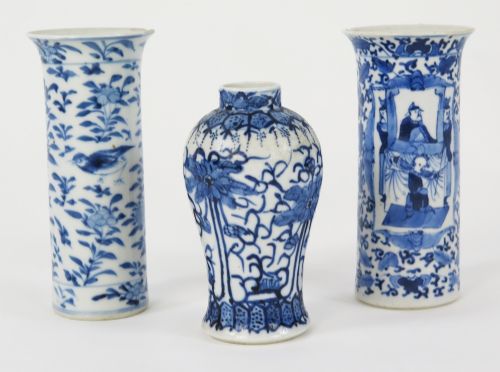
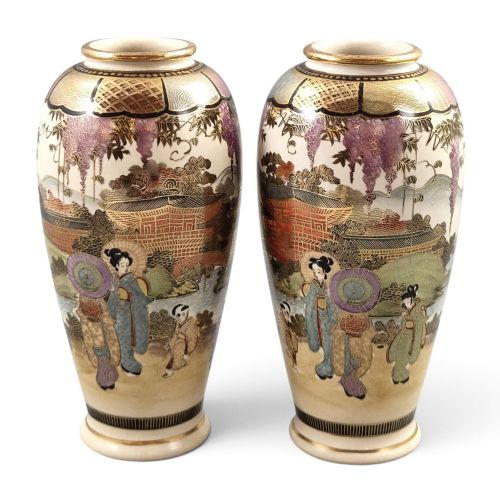
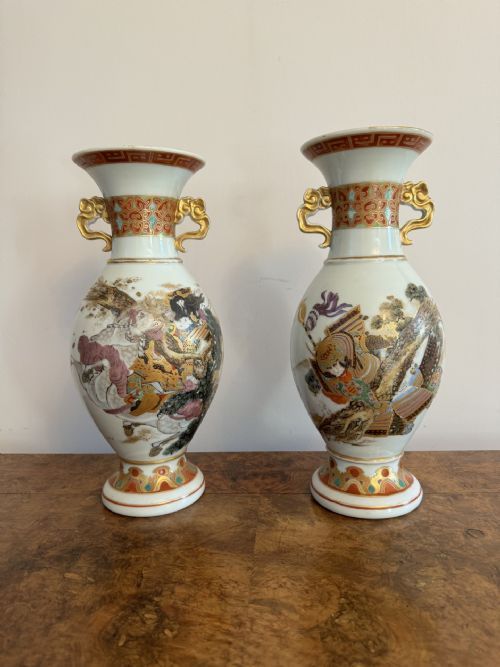
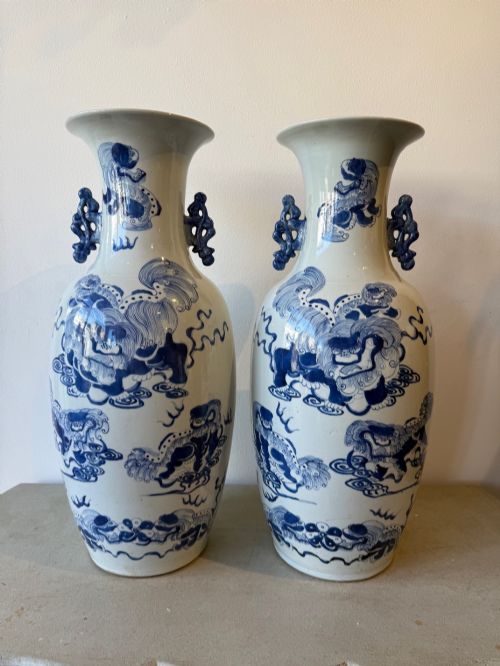
Makers utilised diverse regional aesthetics, encompassing Chinese blue and white porcelain, famille verte palettes, and intricate Japanese Imari, Satsuma, and Kutani patterns.
Materials and Techniques
Potters formed these vessels primarily from dense porcelain and earthenware clays, throwing them on a wheel or shaping them within moulds to achieve the characteristic curved profile. Pigments such as cobalt blue and multi-coloured enamel were applied by hand before the pieces underwent high-temperature kiln firing.
Certain vessels incorporate supplementary embellishments, including applied relief figures, brass mounts, wood bases, and hand-applied gold leaf or bronze accents. Glazes provide the smooth vitrified finish characteristic of durable ceramic wares.
Listings feature porcelain and earthenware materials decorated in Qing Dynasty, Meiji Period, and Chinoiserie styles.
Assessing Quality
The distinction between standard commercial output and superior craftsmanship rests on the precision of the hand-painted brushwork and the clarity of the enamel colours. Finer examples display balanced composition, crisp detail in figurative or floral motifs, and control over the high-temperature glazing process.
Substantial physical presence and well-executed forms, such as symmetrical baluster contours or carefully integrated applied decoration, separate exceptional cabinet and floor pieces from everyday domestic wares.
Shozan·Makuzu Kozan·Kōko·Kizan
The Asian Ceramic Baluster Vase Glossary
- Baluster
- A vertical architectural form with a swelling lower portion that inspired the curved silhouette of these ceramic vases. The shape provides stability and visual balance.
- Imari
- A traditional style of Japanese porcelain featuring distinctive iron-red, cobalt blue, and gold decoration. These wares were heavily produced for export during the Edo and Meiji periods.
- Famille Verte
- A Chinese porcelain palette dominated by green enamel tones, supplemented by other colours. This style gained prominence during the Qing dynasty.
- Satsuma
- A type of Japanese earthenware characterised by a crackled ivory glaze and detailed polychrome and gilt ornamentation. Satsuma pieces often depict figures and natural scenes.
- Kutani
- A style of Japanese coloured porcelain and pottery noted for bold pictorial designs and rich palettes. Kutani wares frequently incorporate reds, greens, and gold.
Asian Ceramic Baluster Vase: Frequently Asked Questions
What is an Asian ceramic baluster vase?
These vessels are ceramic containers featuring a curved, swelling body that narrows toward the top, originating from Chinese and Japanese kilns. They were produced in various sizes for interior display.
Craftsmen utilised porcelain and earthenware bodies, decorating the surfaces with blue and white cobalt, enamels, and gilt motifs.
How do I identify a Meiji period vase?
Meiji period pieces often display dense decorative schemes associated with Japanese export art, including Imari patterns and Kutani palettes. Examining the painting style helps indicate this era.
Signatures or marks on the base can also provide specific studio or maker attributions from late nineteenth and early twentieth century Japan.
Were these vases used as lamps?
Many examples were converted into table lamps during the twentieth century, fitted with electrical wiring and fabric shades. This adaptation allowed decorative vessels to serve domestic lighting functions.
Such conversions often incorporate brass or wooden mounts attached to the original ceramic base.
What is the difference between Imari and Satsuma?
Imari wares are made of porcelain with deep blue and iron-red underglaze painting, often highlighted with gold. They possess a resonant, vitreous body.
Satsuma pieces consist of earthenware with a characteristic crackled buff glaze, serving as a ground for detailed pictorial enamel work.