
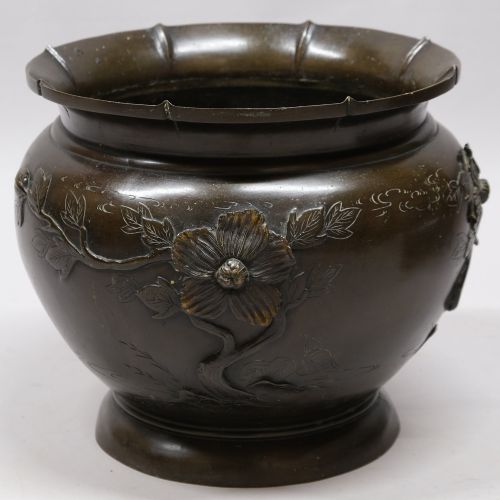


Asian Bronze Planter
These heavy, patinated vessels bring weight and historic texture to a room, holding greenery with quiet authority.
Asian Bronze Planter
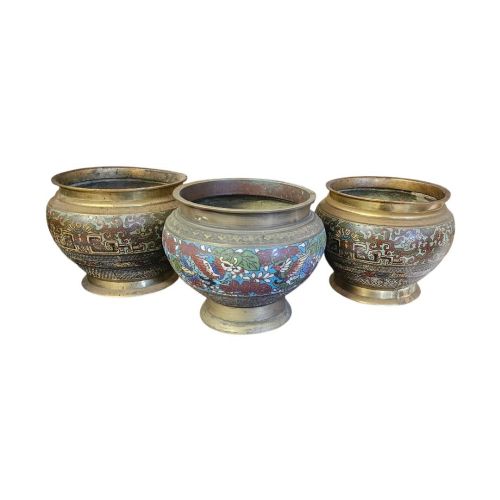
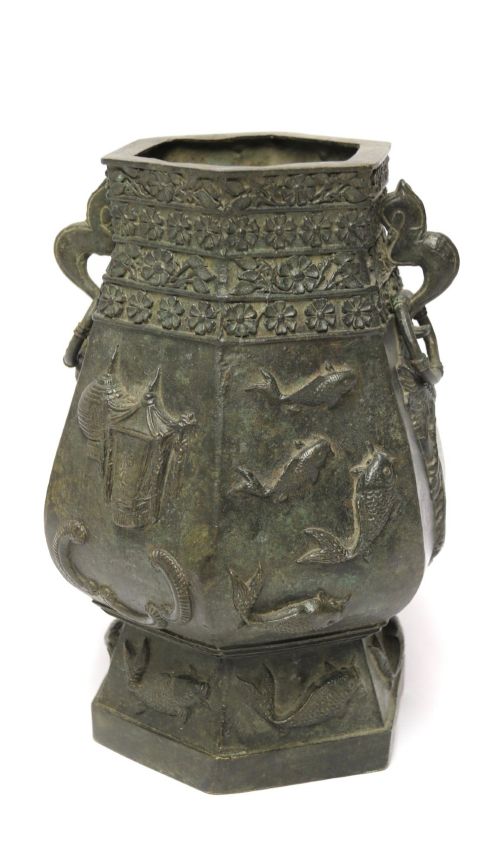
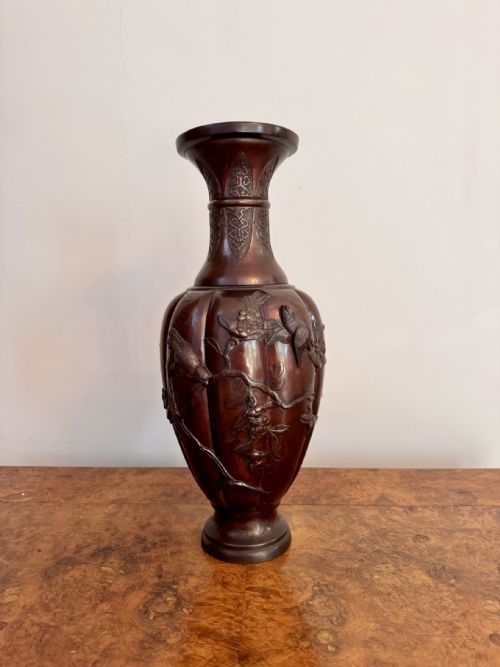
The selection here leans heavily towards Japanese Meiji period jardinières and Chinese vessels spanning the nineteenth century up to the early twentieth century. Forms range from hexagonal vessels and stem vases to monumental garden urns.
Buyers look for substantial bronze bowls designed to house plants or stand alone as decorative focal points. Many feature rich patination built up over decades of gentle handling.
How they were made
These vessels rely primarily on traditional metalcasting techniques, yielding solid bronze walls capable of holding damp earth and water. Artisans shaped the molten metal into complex geometric and rounded profiles.
Many surfaces incorporate champlevé and cloisonné enamel work, fusing glass powders into recessed metal cells to create vibrant decorative bands. Natural patination is often deepened through chemical treatments or long-term exposure.
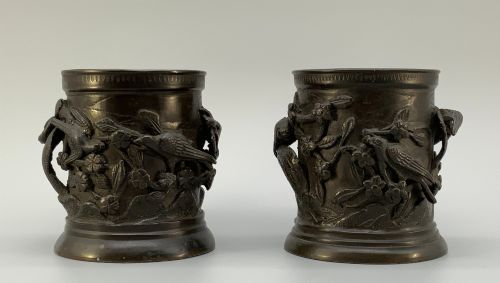
Details such as birds, blossoms, and traditional motifs are cast directly into the body or applied with meticulous hand-finishing.
Materials documented across the inventory include solid bronze, brass, champlevé enamel, and patinated bronze.
What varies in quality
Quality rests on the crispness of the casting and the depth of the metalwork, distinguishing heavy, purposeful vessels from lighter decorative items. Superior examples display balanced proportions and confident surface relief.
The complexity of decorative elements, such as intricate enamel work or finely detailed animal and floral motifs, marks out superior craftsmanship. The richness and stability of the patination also separate standard production from exceptional work.
The Asian Bronze Planter Glossary
- Jardinière
- A large ornamental pot or bowl designed to hold live plants or flowers. It often sits directly on the floor or a dedicated stand.
- Meiji Period
- The era in Japanese history spanning from 1868 to 1912, noted for rapid artistic output and fine metalwork. Pieces from this time frequently display naturalistic motifs.
- Champlevé
- An enamelling technique where troughs or cells are carved into the bronze surface and filled with vitreous enamel before firing. This creates colourful decorative patterns flush with the metal.
- Patinated Bronze
- Metal that has developed a distinct surface sheen or colour through oxidation, age, or chemical treatment. Collectors prize patination for the visual depth it gives the vessel.
- Suiban
- A shallow Japanese basin traditionally used for arranging cut flowers or displaying stones in water. These ceramic and bronze vessels focus attention on minimalist compositions.
Asian Bronze Planter: Frequently Asked Questions
How do I clean an antique bronze planter?
Dust the surface gently with a soft, dry cloth to preserve the historic patination. Avoid harsh chemical cleaners or polishes that strip away the aged finish.
If the metal requires attention, consult a specialist conservator rather than attempting aggressive DIY restoration.
Can I plant directly into these vessels?
Many buyers prefer to use a plastic or terracotta inner pot to protect the historic bronze interior from moisture and soil acidity. This prevents long-term corrosion while allowing you to house live plants safely.
Ensure any inner pot has adequate drainage if you water plants while they sit inside the vessel.
How do I date a Japanese bronze jardinière?
Examine the casting method, the style of decoration, and the depth of the patination. Pieces from the Meiji period often exhibit highly detailed bird and blossom motifs.
Comparing the weight, handles, and base construction with documented examples helps narrow down the decade of production.