

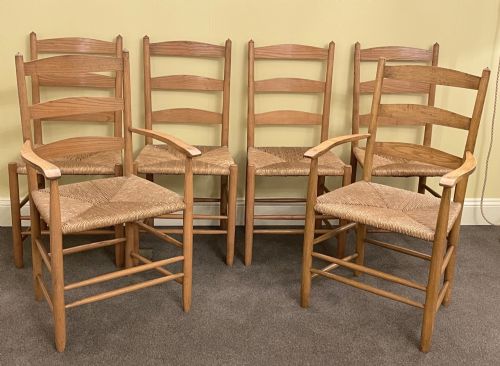
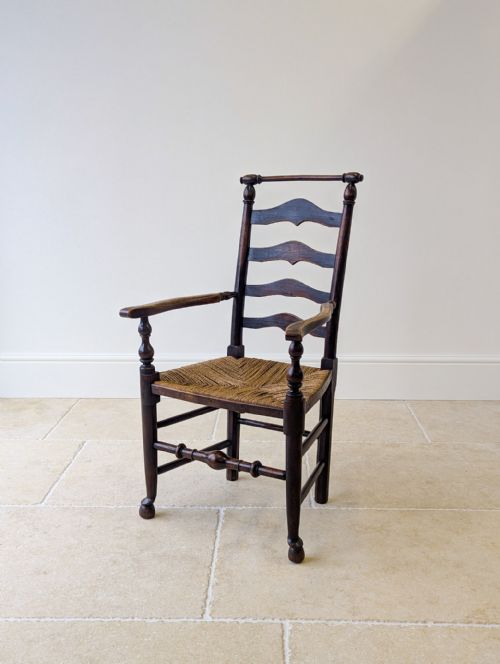
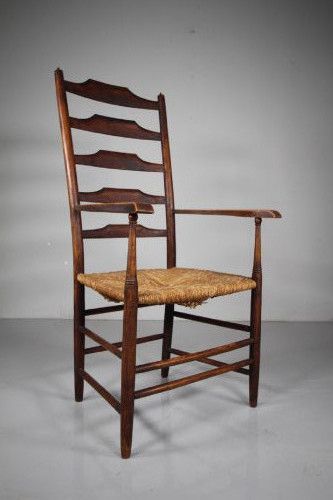
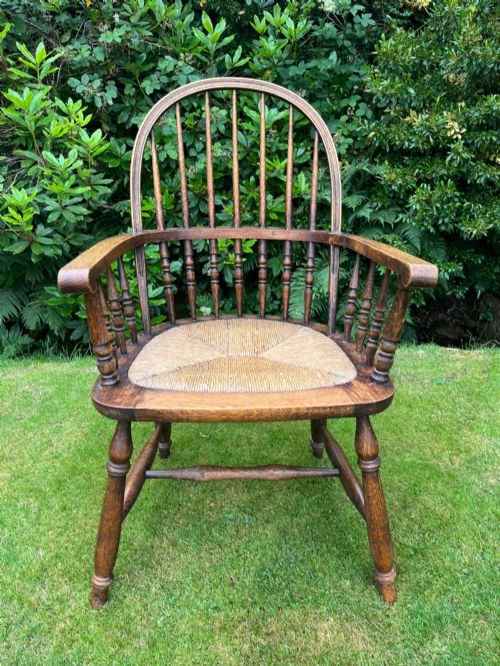



Ash Rush Seat Armchairs
Ash rush seat armchairs combine sturdy native timber with woven seating, offering honest country character for daily use.
Ash Rush Seat Armchairs
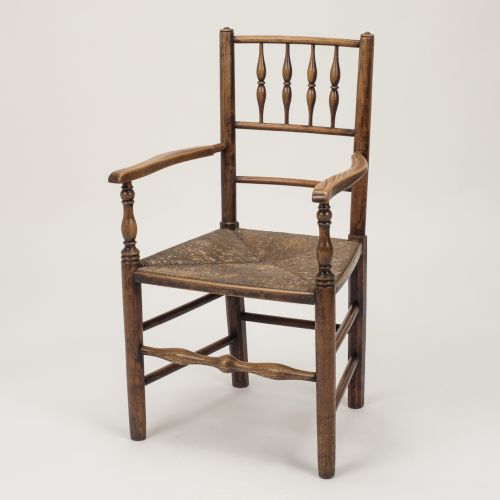
Ash rush seat armchairs encompass sturdy vernacular seating produced across British rural workshops from the Georgian period through the Victorian era and into the twentieth century. These vernacular forms include ladderbacks, spindle backs, and Windsor chairs built for farmhouse kitchens and dining rooms.
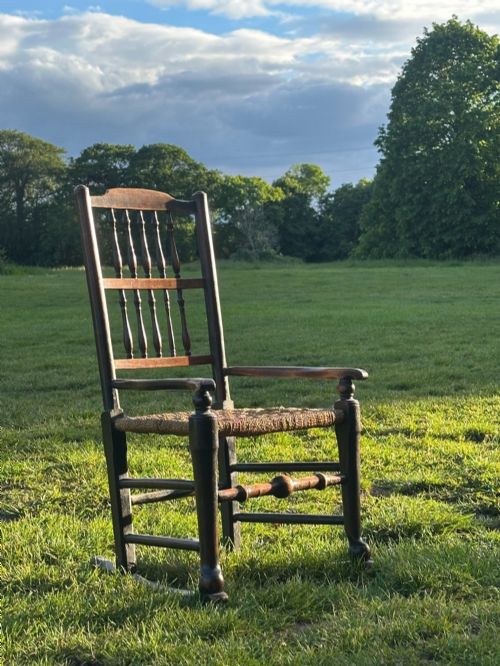
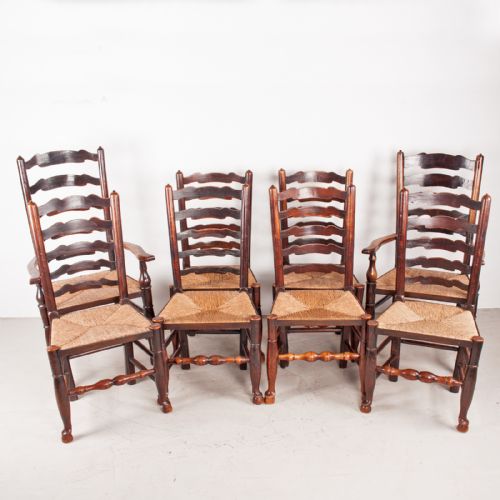
Buyers encountering ash rush seat armchairs on this page will most frequently find nineteenth-century vernacular pieces alongside regional ladderbacks and twentieth-century interpretations. The selection spans single armchairs, carver chairs from larger dining sets, and occasional rocking chairs.
Makers fashioned these ash rush seat armchairs using native timbers, pairing turned ash frames with woven natural rush seats. Regional variations emerge from Cheshire and Lancashire traditions, featuring shaped slats or wavy ladderbacks.
How they were made
Craftsmen shaped green or seasoned ash for the frames, often turning uprights and spindles on a pole lathe before assembling them with traditional joinery. Elm frequently supplemented the ash, particularly in seats or underlying structures where extra breadth was required.
Makers twisted natural rush around cord foundations to weave the tight, supportive seat pads characteristic of these chairs. Some examples retain original painted finishes over the timber, whilst others display the bare grain of polished or scrubbed ash.
Ash Rush Seat Armchairs Retail Price Guide 2026
Typical asking prices for ash rush seat armchairs among the pieces listed under this phrase on Sellingantiques today, from the lower quarter to the upper quarter. They describe what is for sale here now, not the wider market.
Some nineteenth-century makers incorporated wavy ladderback slats, adding a playful rhythmic ripple to an otherwise strictly utilitarian country chair.
What varies in quality
Quality in these chairs rests upon the crispness of the turning, the proportional balance of the arms and uprights, and the tightness of the rush weaving. Finer examples display slender, well-proportioned spindles and sculptural ladderback slats that reflect deliberate regional design choices.
The integrity of the timber frame and the preservation of the original woven rush seating distinguish superior survivals. Chairs that retain their early painted surfaces or possess documented regional attributions command greater interest among collectors.
Ernest Gimson·Philip Clissett
The Ash Rush Seat Armchairs Glossary
- Rush
- A marshland plant material dried and twisted to form the cord used for weaving traditional chair seats. It provides a flexible, supportive surface that mellows in tone over decades of use.
- Ladderback
- A chair back constructed with horizontal arched slats resembling the rungs of a ladder. This vernacular form is frequently paired with rush seating in English country dining chairs.
- Vernacular
- Everyday utilitarian furniture made by regional craftsmen for local use rather than following metropolitan high-style fashions. These pieces rely on local traditions of ash and elm construction.
- Spindle back
- A chair back composed of multiple thin, turned wooden uprights fitted between the top rail and the seat. This construction lightens the frame while maintaining structural strength.
Ash Rush Seat Armchairs: Frequently Asked Questions
What periods do these armchairs date from?
The pieces span the eighteenth century, the Georgian era, the Victorian period, and into the mid-twentieth century. Most examples date from the nineteenth century.
Regional vernacular traditions persisted across these periods, meaning construction methods often remained consistent despite changing decades.
Are the rush seats original?
Rush is a natural material that wears down with use and frequently requires renewal over the lifespan of a chair. Many surviving chairs feature twentieth-century or later rush seating woven in the traditional manner.
Original rush from the eighteenth or nineteenth century is exceptionally uncommon due to the organic nature of the cord.
How do I care for an ash frame?
Ash timber benefits from occasional application of traditional beeswax to nourish the grain and protect the surface. Avoid placing these chairs near direct heat sources or in damp environments, which can cause the timber to split or the rush to brittle.
Keep the woven rush clean by gently brushing away dust with a soft bristle attachment.
Where were these chairs originally made?
These pieces originated in rural workshops across England, with specific regional styles documented in Lancashire and Cheshire. Country cabinet makers and bodgers utilised locally felled timber to supply farmhouses and cottages.
The vernacular designs reflect the practical needs of rural domestic life rather than urban fashion.