

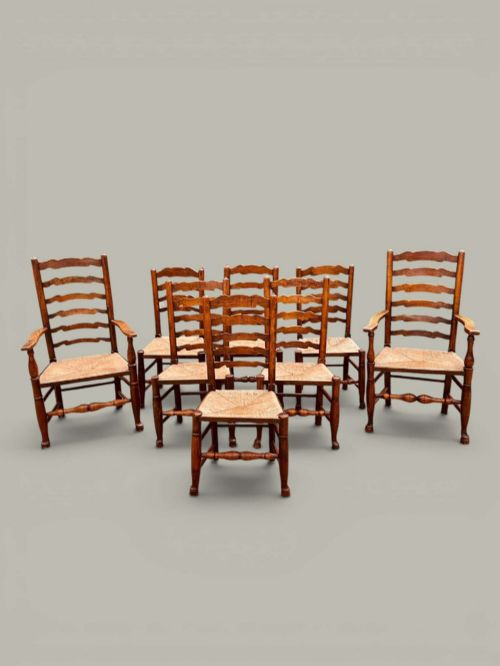
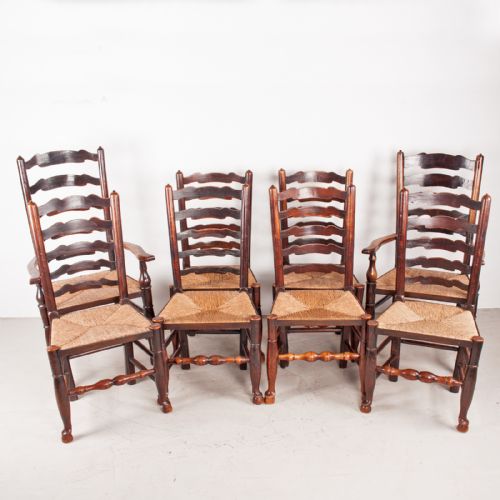


Ash Ladderback Dining Chairs
Ash ladderback dining chairs are robust vernacular seats defined by horizontal slats and rush or straw seating, built for straightforward utility in country homes.
Ash Ladderback Dining Chairs
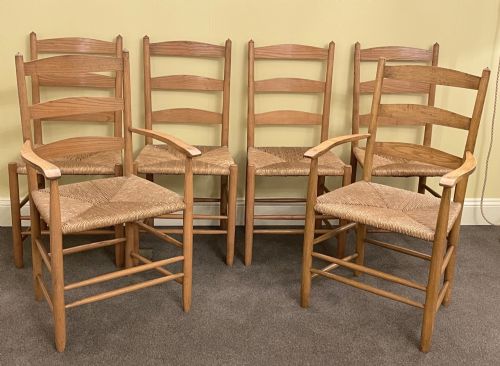
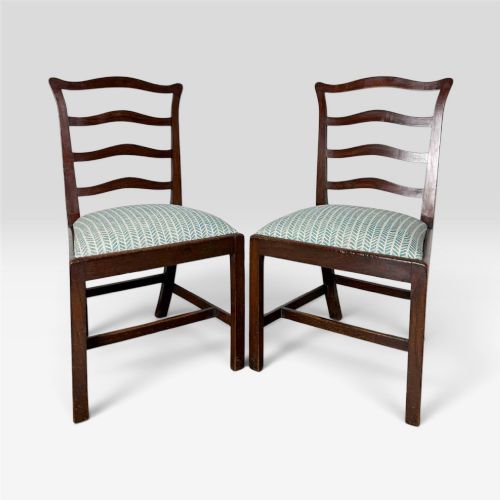
Ash ladderback dining chairs emerge primarily from English, Irish, and rural vernacular traditions spanning the nineteenth and twentieth centuries. These pieces typically take the form of side chairs or armchairs designed for daily dining use around farmhouse tables.
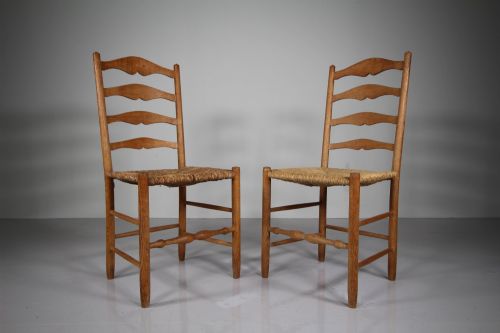
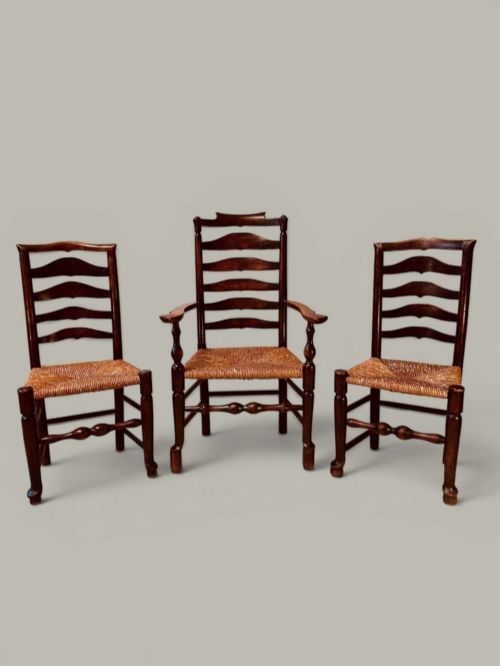
The most common iterations on this page combine turned ash frames with woven rush, straw, or súgán seats. Makers frequently paired ash with elm or alder to construct sets ranging from modest pairs to larger groups of eight with Carver armchairs included.
How they were made
Cabinetmakers and rural bodgers utilised local hardwoods, turning ash for the uprights and rails while incorporating elm or alder for strength in seats and secondary components. Turning lathes shaped the spindles and stiles before green wood techniques allowed parts to lock together as they dried.
Seating surfaces relied on natural materials like rush, straw, or plaited súgán, tightly woven around the seat rails by hand. Some workshop pieces received painted finishes or clear treatments to protect the timber while highlighting the grain.
Ash Ladderback Dining Chairs Retail Price Guide 2026
Typical asking prices for ash ladderback dining chairs among the pieces listed under this phrase on Sellingantiques today, from the lower quarter to the upper quarter. They describe what is for sale here now, not the wider market.
Listings feature ash paired with elm, alder, rush, and straw across nineteenth and twentieth-century periods.
What varies in quality
Quality in these chairs rests upon the integrity of the timber turning and the tension of the woven seat. Superior examples demonstrate balanced proportions in the horizontal slats and disciplined lathe work on the stiles rather than crude shaping.
The distinction between standard country workshop production and master maker output, such as stamped pieces from recognised Arts and Crafts traditions, alters the standing of a set. Original woven seating tightly packed without sag indicates greater care during construction.
Ernest Gimson·Neville Neal·Lawrence Neal
The Ash Ladderback Dining Chairs Glossary
- Ladderback
- A chair back constructed with multiple horizontal slats resembling the rungs of a ladder. These slats are arched or shaped to fit the sitter's spine.
- Rush
- Marsh grass utilised for weaving traditional chair seats. It provides a flexible, durable surface that tightens as it ages.
- Súgán
- An Irish term for a twisted straw rope used to create plaited seat bottoms. This material is characteristic of vernacular Irish country seating.
- Spindle back
- A chair design featuring thin turned uprights rather than solid slats. This method reduces weight while maintaining structural support.
Ash Ladderback Dining Chairs: Frequently Asked Questions
How do I clean rush seats?
Rush seats require dry brushing or gentle vacuuming with a soft attachment to remove dust from the natural fibres.
Moisture damages dried grass over time, so liquid cleaners and damp cloths should stay away from the woven portions entirely.
Can I mix different chair sets?
Mixing sets successfully depends on matching the timber tone, approximate scale, and slat profile of the pieces.
Country vernacular furniture often pairs well together when the turning styles share a similar rural origin.
What is a carver chair?
A carver chair is an armchair traditionally placed at the head of a dining table to match surrounding side chairs.
These pieces feature integrated armrests supported by the front posts and extended stiles.
How do I date an ash chair?
Dating relies on observing tool marks, timber shrinkage, and the specific turning patterns used on the legs and uprights.
Nineteenth-century examples often display subtle irregularities from hand lathe work compared to twentieth-century workshop revivals.