

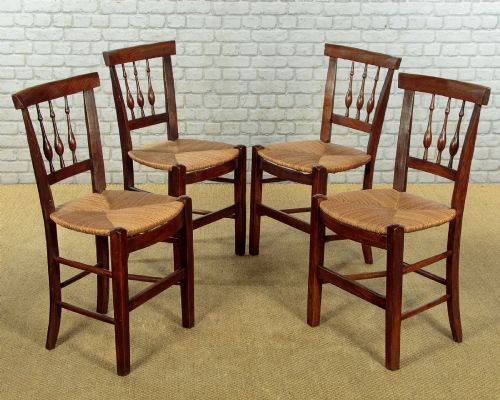
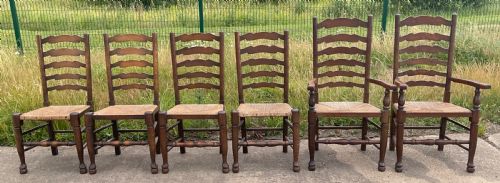


Wooden Ladderback Side Chairs
These wooden ladderback side chairs offer honest vernacular comfort and straightforward seating, built for daily use around the farmhouse table.
Wooden Ladderback Side Chairs
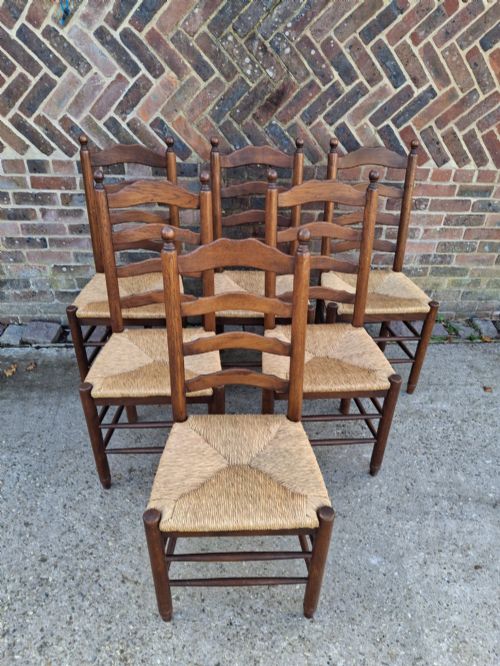
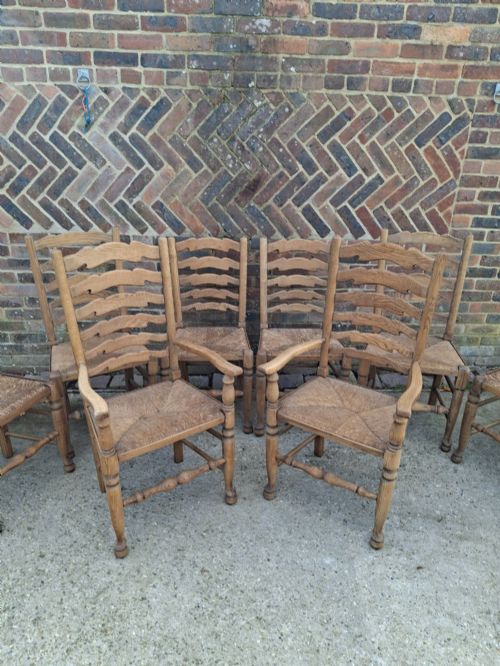
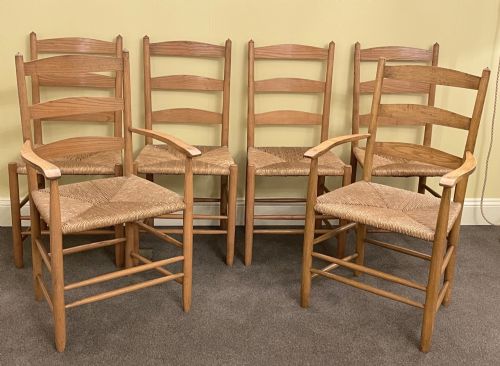
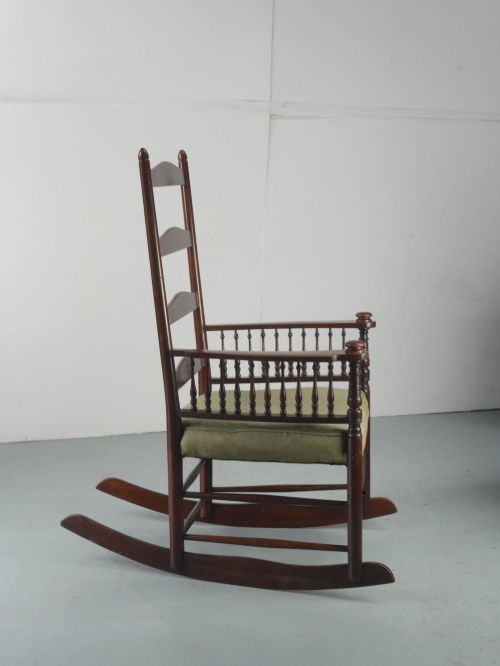
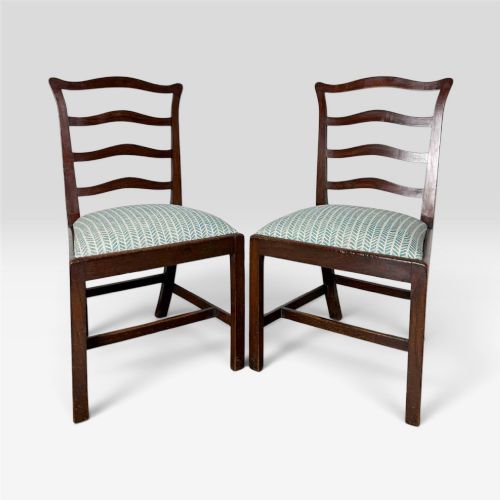
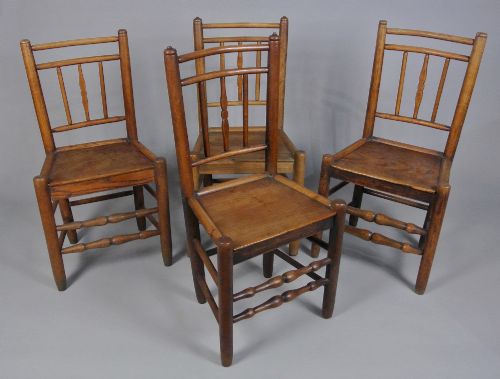
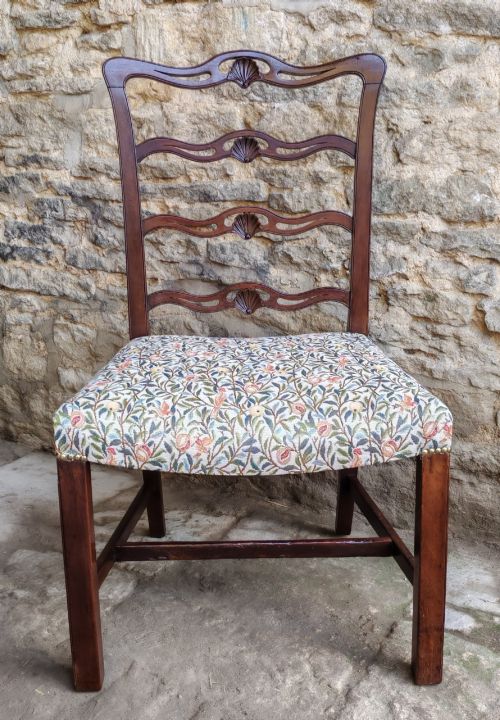
When you search for wooden ladderback side chairs, you encounter traditional seating defined by horizontal slats framed between upright posts. These pieces range from simple country kitchen forms made in the nineteenth century to refined Georgian mahogany examples and later Arts and Crafts revivals.
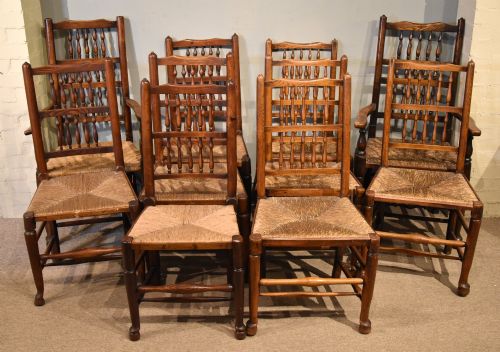
You are most likely to meet elm, ash, and beech framing combined with woven rush seating across these listings. They appear as individual side chairs, matched pairs, or larger dining sets originating from English country workshops.
The regional vernacular shows up clearly in variations such as Dales chairs or Shropshire farmhouse Clun chairs. These utilitarian forms prioritize sturdy construction and straightforward utility over elaborate ornamentation.
Materials and construction
Local timbers such as ash, elm, and beech provide the structural framework for these ladderback chairs. Turners shaped green wood on bodging benches, utilising the natural strength of unseasoned timber for spindles and uprights.
Seats are commonly woven from natural rush, creating a durable and slightly yielding surface. Cabinet makers also employed solid mahogany for more formal Georgian interpretations, demonstrating greater refinement in the shaping of the slats.
Wooden Ladderback Side Chairs Retail Price Guide 2026
Typical asking prices for wooden ladderback side chairs among the pieces listed under this phrase on Sellingantiques today, from the lower quarter to the upper quarter. They describe what is for sale here now, not the wider market.
Several chairs feature built-in wheels, proving that nineteenth-century diners appreciated mobility just as much as modern desk workers do.
Assessing quality and construction
The integrity of the frame construction separates everyday utility pieces from finer artisan work. Tighter turning on the uprights and well-balanced proportions indicate superior craftsmanship in country chairs.
The condition and tightness of the rush seating significantly affect the standard of a piece. Original timber patination and minimal replacement of structural components distinguish better-preserved examples.
Ernest Gimson·Liberty's·Lawrence Neal
The Wooden Ladderback Side Chairs Glossary
- Ladderback
- A chair back constructed with horizontal slats between two upright posts. This traditional design distributes support evenly across the spine.
- Rush seat
- A seating surface woven from dried marsh grasses. This material provides a resilient and breathable pad for everyday sitting.
- Side chair
- A chair without arms designed for dining or occasional use. These pieces easily tuck beneath table edges when not occupied.
- Vernacular
- Objects built by local craftsmen using regional traditions rather than high academic styles. These pieces reflect the practical needs of their immediate surroundings.
- Spindle back
- A chair variation utilising numerous thin turned uprights instead of flat slats. This construction lightens the visual weight of the frame.
Wooden Ladderback Side Chairs: Frequently Asked Questions
How do I clean a rush seat?
Gently brush away dust using a soft bristle attachment on your vacuum cleaner. Avoid applying excessive water to the dried marsh grass.
Keep the material conditioned in dry winter months by wiping it very lightly with a damp cloth, then let it dry completely.
Are these chairs suitable for daily dining?
Most of these pieces were originally constructed for heavy everyday use in farmhouses and kitchens. Their robust timber frames handle regular sitting well.
Check that the joints remain firm and the rush seating is secure before putting them into heavy daily rotation.
How do I date a ladderback chair?
Examine the tool marks on the underside of the seat and the wear patterns on the foot terminals. Hand-turned components often show subtle irregularities.
Compare the timber species and slat profiles against documented regional styles from the eighteenth and nineteenth centuries.
Can I mix different styles around a table?
Combining various country ladderbacks creates an eclectic dining arrangement that reflects historical kitchen practices. Vernacular seating naturally tolerates slight variations.
Keep seat heights relatively uniform to ensure comfort for everyone seated at the table together.