


Arts and Crafts Suite
An arts and crafts suite brings together unified design and honest construction, offering robust furniture sets that transform period rooms.
Arts and Crafts Suite
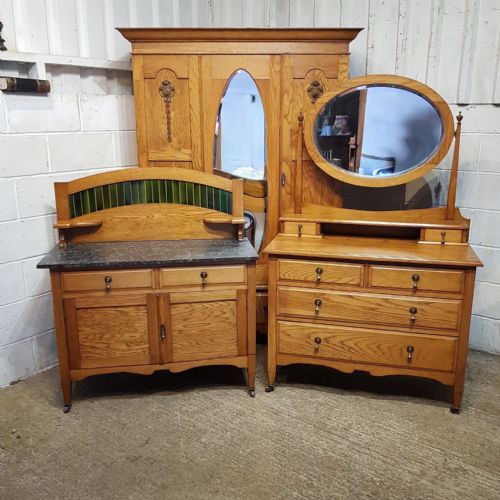
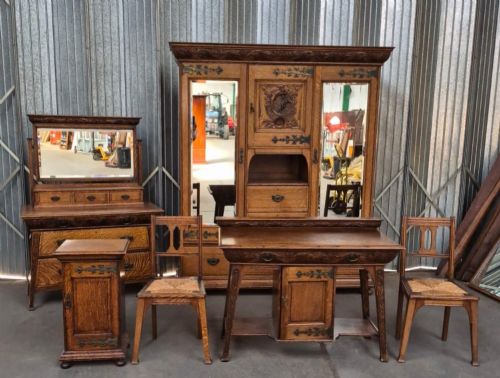
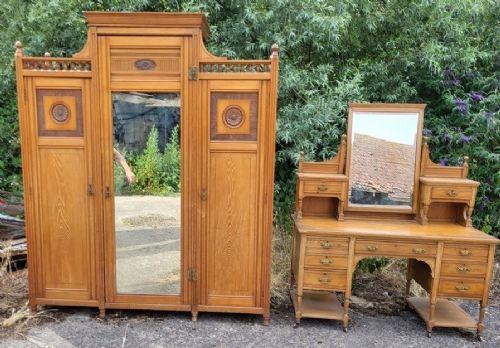
An arts and crafts suite comprises matching groupings of furniture or jewellery created to furnish entire rooms or provide coordinated personal adornment. Buyers seeking these items will frequently encounter substantial bedroom suites featuring wardrobes and dressing tables, alongside complete dining sets and seating arrangements.
The pieces emerge primarily from the late nineteenth and early twentieth centuries, spanning periods from eighteen ninety up to nineteen thirty. Common configurations include multi-piece bedroom groups, dining tables paired with matching chairs, and occasionally silver jewellery sets incorporating turquoise matrix.
How they were made
Maker workshops utilised sturdy timbers such as oak, ash, walnut and mahogany as the foundational structural materials for larger furniture forms. These woods were frequently selected for their pronounced grain, allowing the natural character of the material to remain visible.
Metalwork and upholstery played a significant role in completing the suites, incorporating brass hardware, leather seating pads, fabric elements and inset ceramic details. Jewellery items combined silver work with gemstones to create coordinated parures.
The listings demonstrate a strong presence of oak across dining sets and bedroom suites, alongside occasional examples in ash, mahogany, walnut and silver.
What varies in quality
Quality in an arts and crafts suite rests upon the integrity of timber selection and the sophistication of structural joinery. Pieces produced by documented makers demonstrate superior execution in carved details, hardware integration and overall proportion compared to anonymous workshop output.
The coherence of the suite remains paramount, distinguishing complete original groupings from assembled collections of individual chairs and tables. Intact matching sets preserve the unified aesthetic intended by the original designers and makers.
Shapland and Petter·George Henry Walton
The Arts and Crafts Suite Glossary
- Parure
- A set of matching jewellery designed to be worn together, such as earrings, a ring and a necklace. These coordinated sets became popular during the nineteenth century.
- Wardrobe
- A tall cupboard used for storing clothes, typically forming the largest component of a bedroom suite. These pieces often feature panelled doors and internal hanging space.
- Pedestal dressing table
- A vanity table featuring banks of drawers on either side supporting a central mirror and writing surface. They frequently appear within ash or oak bedroom groupings.
- Splatt back
- A chair back featuring a central vertical wooden strip connected to the top rail and seat. High splatt backs appear in mahogany dining chair variations.
- Salon suite
- A matching set of seating furniture designed for formal reception rooms. These groupings coordinate in wood type and upholstery style.
Arts and Crafts Suite: Frequently Asked Questions
What is an arts and crafts suite?
An arts and crafts suite is a coordinated group of furniture pieces, such as a bedroom wardrobe and dressing table, or a dining table with chairs, designed in a unified style. These groupings also occasionally include matching silver jewellery sets.
They reflect the design philosophies of the late nineteenth and early twentieth centuries, prioritising solid construction and natural materials over excessive ornament.
How do I date an arts and crafts suite?
Dating relies on examining the timber types, construction methods, and stylistic cues present in the pieces. Oak and ash pieces commonly date from eighteen ninety to nineteen ten, while walnut examples can extend into the nineteen thirties.
Maker attribution stamps or labels, where present, provide the most precise indication of origin and period.
Are these suites suitable for modern homes?
These robust wooden suites integrate well into contemporary interiors due to their functional forms and emphasis on natural grain. Dining sets and bedroom wardrobes offer practical storage and seating while providing distinct period character.
Careful measurement of room dimensions ensures that large multi-piece furniture groupings fit comfortably without overwhelming the space.
What woods were used in these suites?
Oak serves as the primary timber for the majority of dining and bedroom groupings, often accompanied by ash or walnut. These native hardwoods provided the structural strength required for heavy wardrobes and extending dining tables.
Secondary materials like brass handles, leather upholstery and ceramic inserts complement the primary wood surfaces.