


Light Oak Wardrobe
A light oak wardrobe brings warmth and clean grain to a bedroom, offering sturdy storage rooted in centuries of cabinet-making.
Light Oak Wardrobe
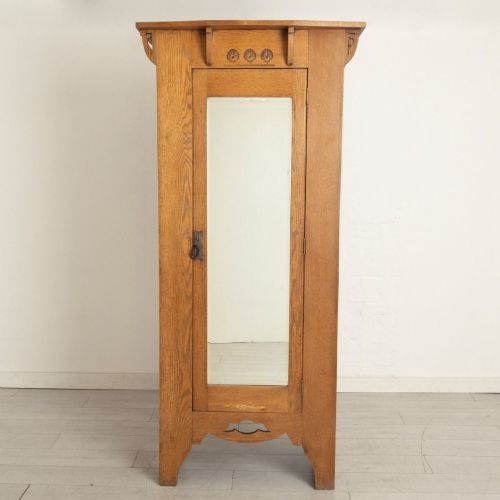
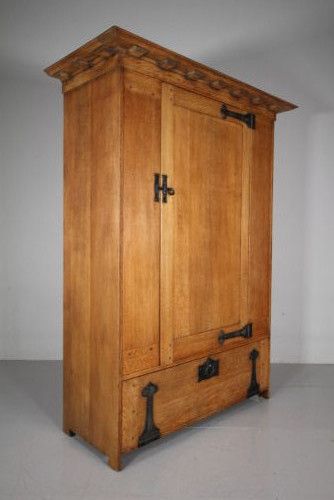
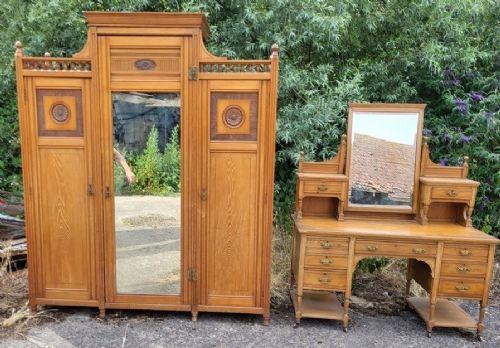
A light oak wardrobe spans styles from early vernacular cupboards to streamlined twentieth-century designs, often appearing as French armoires, Arts and Crafts cabinets or Edwardian mirror-door pieces. Buyers seeking a light oak wardrobe will find examples ranging from seventeenth-century Dutch linen cupboards and eighteenth-century French country pieces up to Art Deco and 1920s London workshop productions.
The form shifts according to period and origin, encompassing single hanging spaces, tall triple wardrobes, and complete bedroom suites paired with dressing tables. Solid oak dominates the selection, occasionally complemented by ash or finished with a bleached surface that lightens the natural tone.
How they were made
Cabinet-makers relied principally on solid oak, utilising its dense grain for structural integrity, panel doors and carved decorative elements. Secondary timbers like ash appear in specific framing, while wrought iron, brass and metal provide functional hinges, lock plates and hanging hooks.
Surface treatments vary from traditional wax finishes to bleached techniques that soften the natural colour of the wood. Bevelled glass frequently inserts into door panels, reflecting light and adding depth to the taller armoire forms.
Light Oak Wardrobe Retail Price Guide 2026
Typical asking prices for light oak wardrobe among the pieces listed under this phrase on Sellingantiques today, from the lower quarter to the upper quarter. They describe what is for sale here now, not the wider market.
Listings feature oak alongside ash, with hardware in brass, iron, and wrought metal across periods from the seventeenth century to the 1920s.
What varies in quality
Quality rests in the precision of the joinery and the selection of the timber, where well-figured grain and unwarped solid panels distinguish superior workshops. Maker stamps, paper labels and structural attribution to known firms elevate a piece above standard vernacular output.
The balance of proportions and the integration of hardware, such as original brass or wrought iron fittings, separate refined production from utilitarian storage. Carved details and specialised regional styles, from French provincial mouldings to Arts and Crafts simplicity, demonstrate the maker's hand.
Heals·Shapland and Petter·Arnott and Co
The Light Oak Wardrobe Glossary
- Armoire
- A large upright cupboard or wardrobe, traditionally used for storing clothing and originating in continental Europe.
- Arts and Crafts
- A design movement valuing handcraftsmanship, simple forms and natural materials over mass production.
- Bleached oak
- Timber treated to lighten its natural tone, creating a pale, neutral surface popular in twentieth-century furniture.
- Linen cupboard
- A tall storage piece traditionally designed for household textiles, predating modern hanging wardrobes.
Light Oak Wardrobe: Frequently Asked Questions
How do I date an oak wardrobe?
Dating relies on construction methods, timber preparation and stylistic details such as panel moulding or hardware. Comparing the piece to documented examples from specific periods helps establish its era.
Workshop labels or stamps provide precise attribution when present on the interior woodwork.
Are light oak wardrobes heavy?
Solid timber construction makes these wardrobes substantial pieces of furniture that require careful placement. Many larger armoires and triple wardrobes dismantle into sections for transport.
Enlisting professional movers ensures safe delivery and correct reassembly in the home.
How should I care for bleached oak?
Bleached surfaces require gentle cleaning with a dry or barely damp cloth to preserve the light tone. Avoiding direct sunlight prevents uneven darkening of the natural timber over time.
Applying a suitable wax occasionally maintains the protective barrier without altering the colour.
Can I fit modern hangers inside?
Internal depth varies significantly between antique and contemporary furniture, particularly in older single wardrobes and linen cupboards. Checking the internal hanging depth ensures standard coat hangers fit comfortably inside.
Some period pieces utilise sliding rails or traditional peg hooks rather than modern hanging rods.