
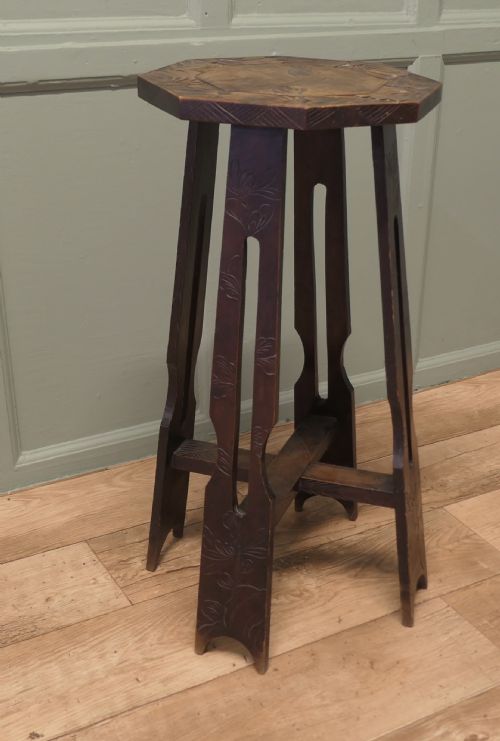
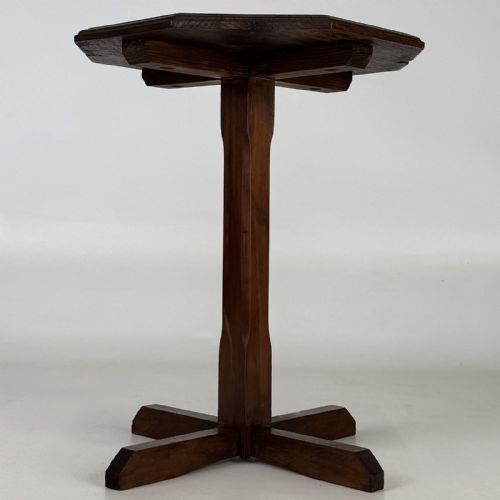
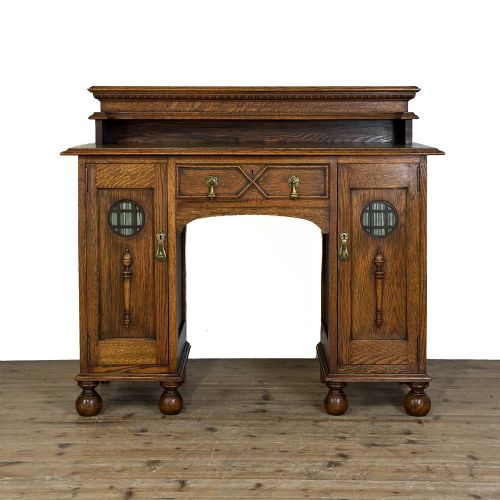

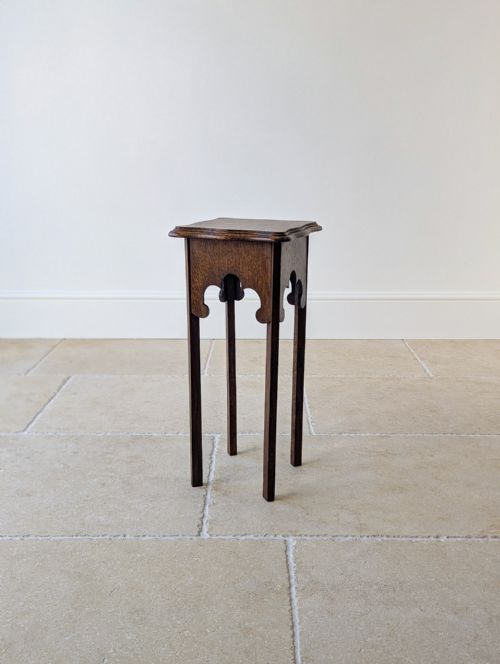
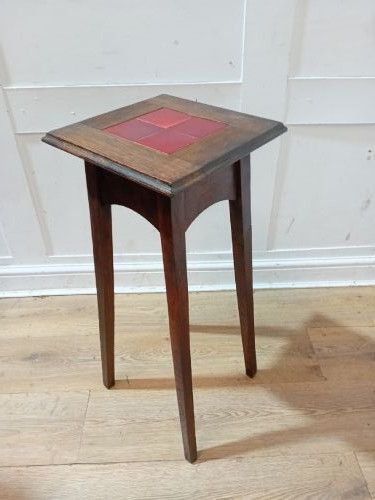

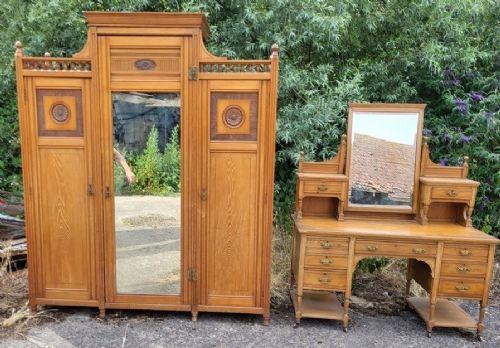
Arts and Crafts Pedestal Table
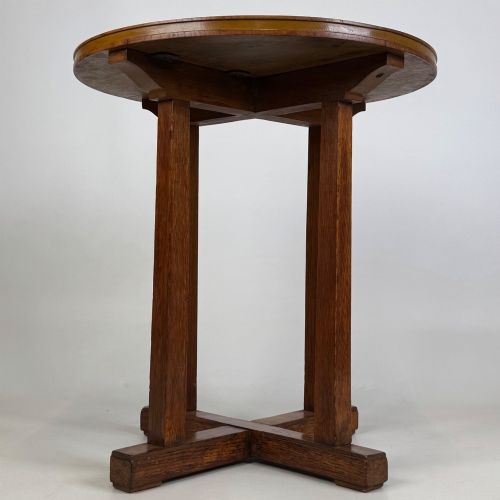
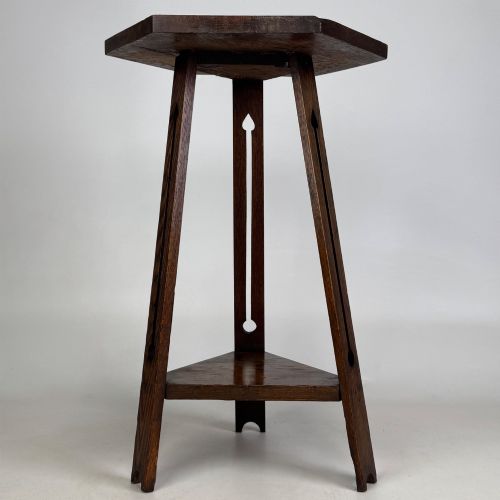
An arts and crafts pedestal table brings honest timber and simple geometry into a room, offering sturdy utility for daily use.
Arts and Crafts Pedestal Table
When you search for an arts and crafts pedestal table, you encounter practical furniture designed to combine solid construction with plain, unpretentious form. Most pieces you meet on this page date from the late nineteenth century through the Edwardian period and into the nineteen-thirties, reflecting the longevity of the movement.
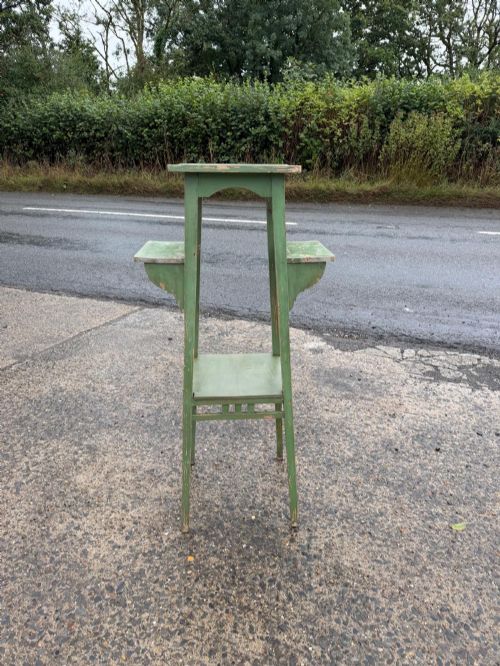
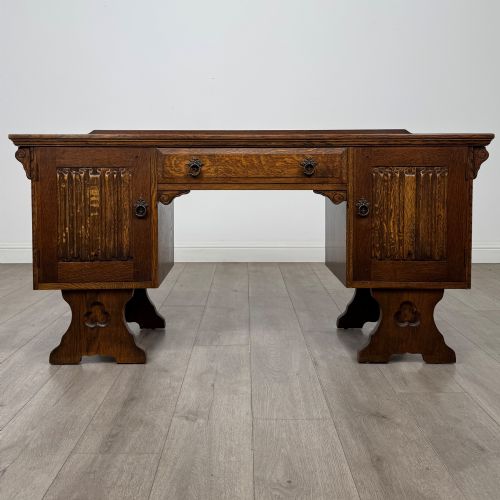
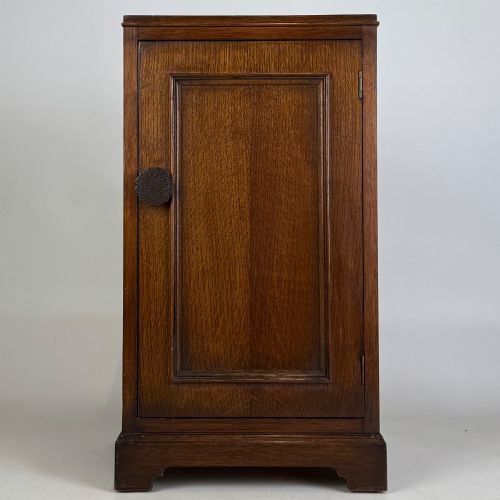
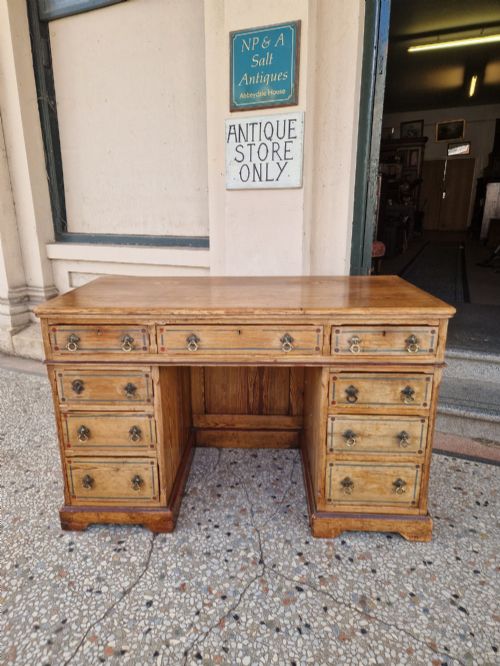
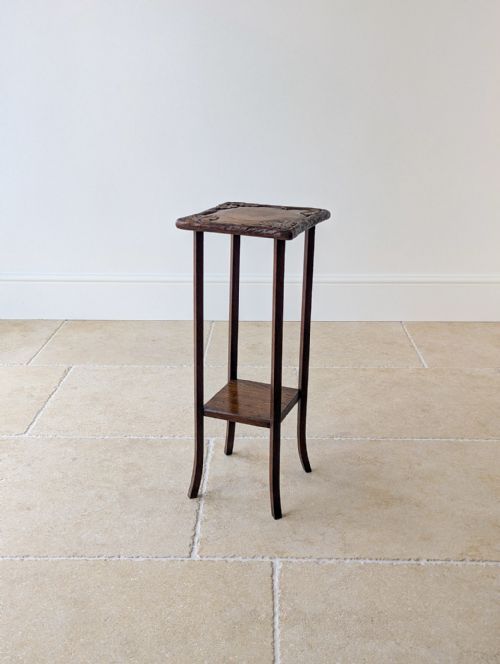
The selection here includes occasional tables, side tables, and plant stands supported by a central column or pedestal, alongside related desks and cabinets in the same spirit. Oak is the primary wood encountered, though ash, pitch pine, and beech also appear among the offerings.
Makers and designers associated with the broader movement, such as Baillie Scott, Shapland and Petter, and Heal and Sons, set the standard for these forms. You will find examples ranging from simple rustic designs to refined Cotswold School pieces.
How they were made
Makers relied primarily on solid oak, working the timber to display natural grain rather than masking it with heavy veneers or opaque finishes. Construction techniques prioritised visible joints and sturdy joinery over concealed metal fasteners, ensuring the central pedestal bore weight reliably.
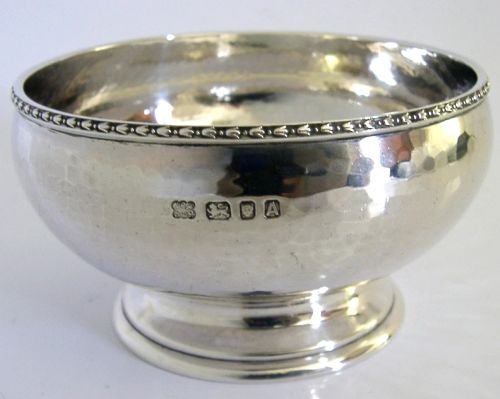
Complementary materials such as brass, copper, and glass appear on related items, providing functional hardware and decorative contrast. Surfaces were often left with a natural waxed finish or original paint, highlighting the hand-worked quality of the timber.
Some tables arrive with original paint or carved fruiting vines that suggest a maker enjoyed a cheerful afternoon in the workshop.
What varies in quality
The distinction between standard commercial production and finer work lies in the handling of the material and the proportion of the pedestal. Better examples demonstrate careful timber selection, thoughtful grain matching, and restrained carving that respects the structure of the table.
Simplicity of design requires precise execution, so subtle details like chamfered edges, well-proportioned octagonal or round tops, and stable column attachments separate workshop pieces from mass-produced items.
Baillie Scott·Shapland and Petter·Heal and Sons·Whytock and Reid
The Arts and Crafts Pedestal Table Glossary
- Pedestal table
- A table supported by a single central pillar or column rather than four corner legs. This form allows for flexible seating and efficient use of floor space.
- Cotswold School
- A regional design movement associated with handcrafted furniture and honest construction methods. Pieces from this tradition emphasise traditional woodworking techniques.
- Occasional table
- A small, movable table designed for specific, intermittent tasks such as holding a lamp or book. They are typically light enough to reposition easily around a room.
- Plant stand
- A tall, slender piece intended to elevate flowers or greenery. These often share the central column construction seen in pedestal tables.
Arts and Crafts Pedestal Table: Frequently Asked Questions
Where should I place a pedestal table?
These tables suit corners, beside armchairs, or as a central surface in a compact hallway.
Their footprint makes them adaptable for holding lamps or small decorative objects without crowding a room.
How do I care for oak furniture?
Keep timber surfaces away from direct heat sources and strong sunlight to prevent the wood from drying out.
Apply a traditional beeswax polish occasionally and buff with a soft cloth to maintain the finish.
Are these tables sturdy enough for daily use?
Solid construction and substantial central columns provide dependable stability for everyday items.
Tables built from oak or ash handle routine placement of books, mugs, and lamps without difficulty.
How can I identify the period?
Examine the timber preparation, hardware materials, and overall proportions for clues to the date of manufacture.
Earlier pieces often feature hand-planed surfaces and simple brass fittings characteristic of the Edwardian era.