
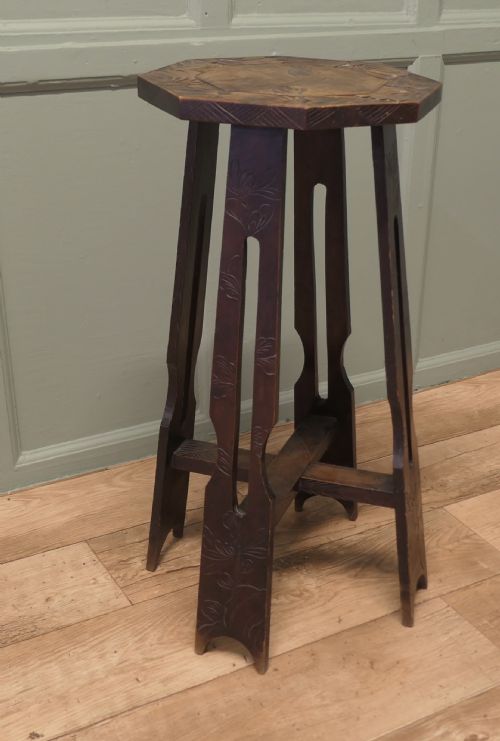
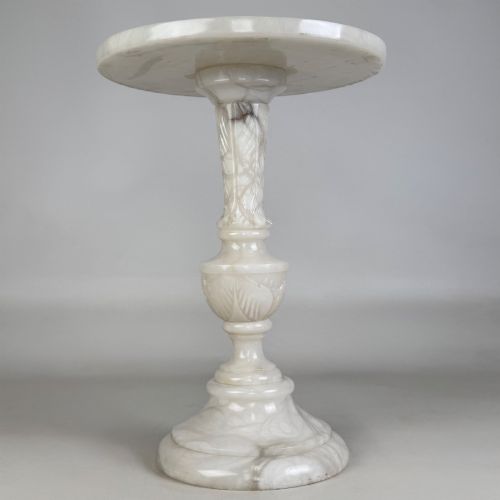
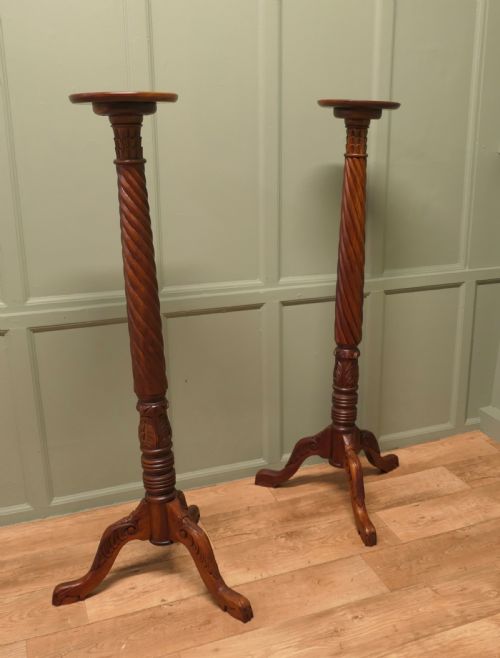
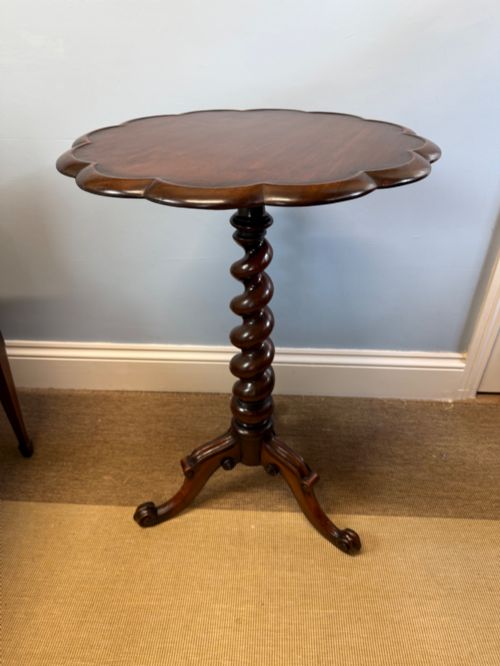
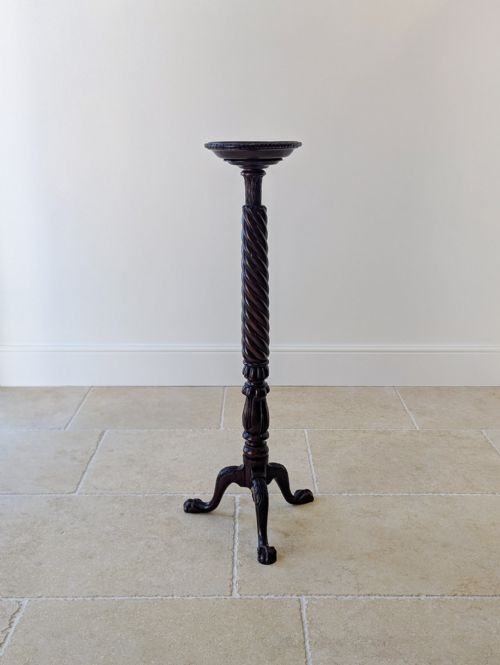
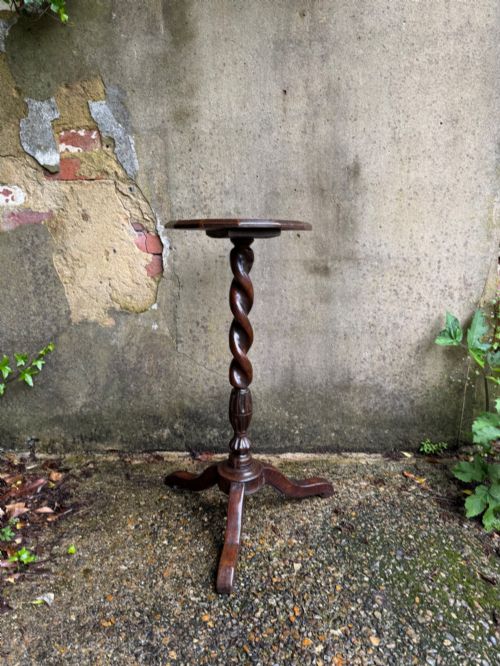
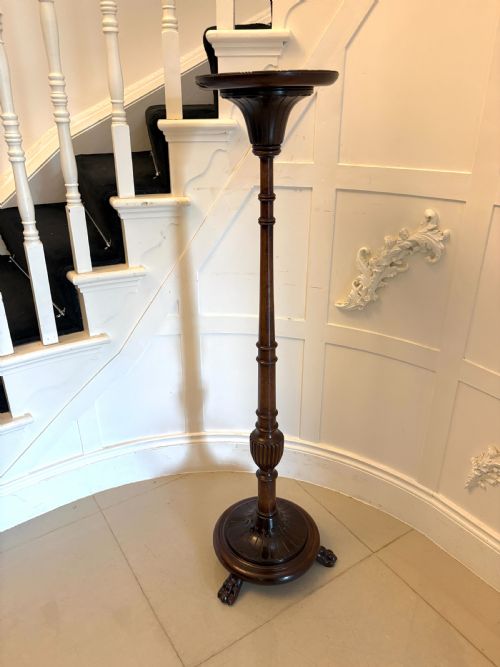
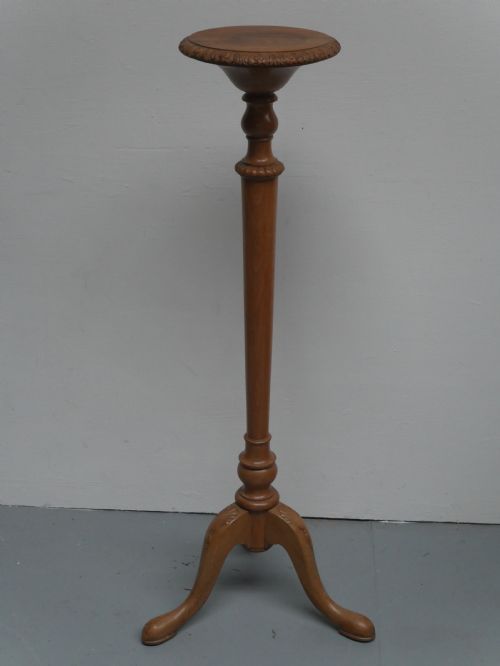
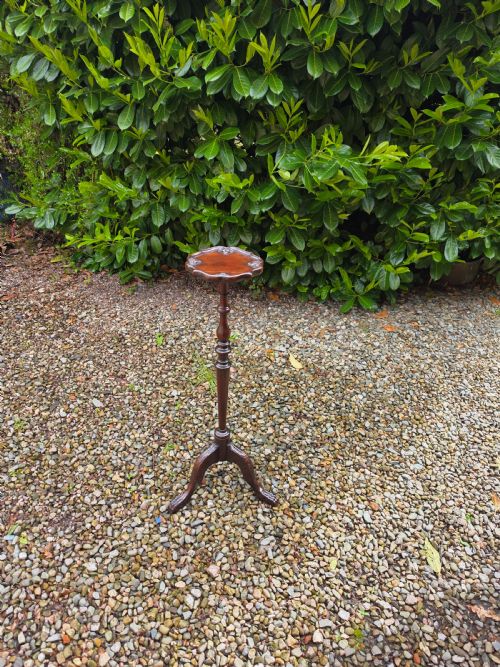


Edwardian Carved Plant Pedestal
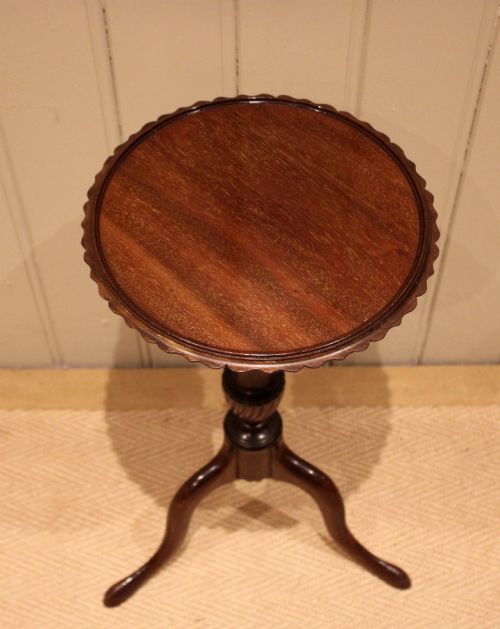
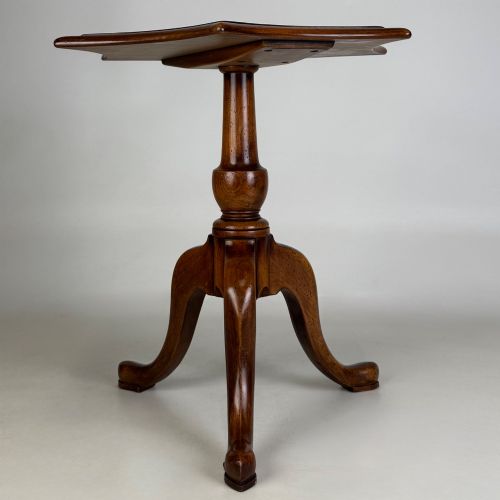
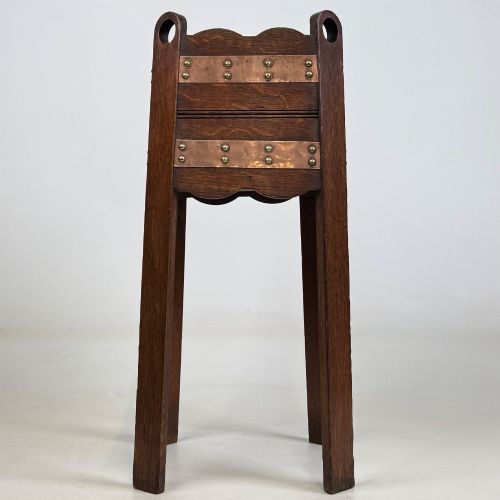
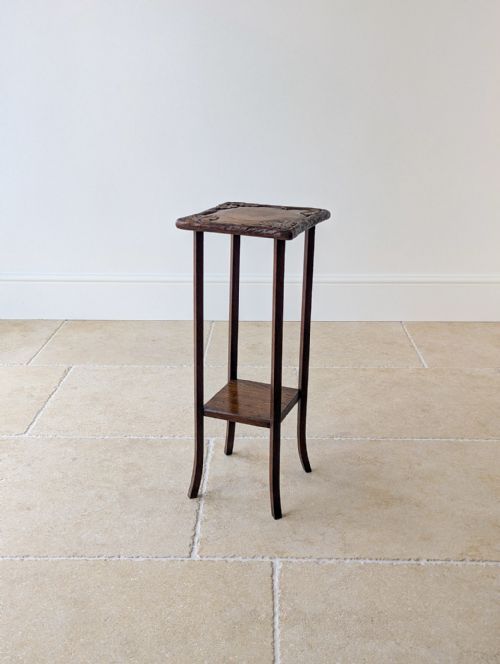
An Edwardian carved plant pedestal lifts greenery to eye level, combining practical display with carved timber work.
Edwardian Carved Plant Pedestal
When you search for an Edwardian carved plant pedestal, you find tall display furniture designed to hold potted plants, jardinières and lamps. These pieces place botanical displays at varying heights to occupy empty corners or frame windows.
Most examples originate from the Edwardian era and the early twentieth century, though nineteenth-century Victorian pieces also appear. Forms range from slender torchères and columns to two-tier stands and occasional tables.
Makers utilised various timber species, notably mahogany and oak, alongside marble and brass elements. The selection balances sturdy upright columns with decorative carved surfaces tailored for domestic interiors.
Materials and construction
Cabinet makers built these stands predominantly using mahogany, oak, walnut and rosewood, occasionally incorporating ebonised wood or teak. Hardwood timbers provided the necessary structural integrity to support heavy ceramic pots and stone urns without tipping.
Decoration relied on hand carving, spiral barley twist legs, and turned pillars. Workshops also added brass fittings, gallery edges, and inset marble tops to create durable, ornamental surfaces resistant to water from plants.
Listings feature timbers including mahogany, oak, walnut, rosewood, teak and beech, paired with marble and brass.
Assessing quality
The distinction between standard production and finer pieces lies in the crispness and depth of the hand carving. Crisp detail on floral motifs or fluted columns indicates skilled workmanship, whereas shallow or mechanically stamped decoration signals mass production.
Stability and material selection dictate overall longevity. Heavy timber bases, well-joined pillars, and solid marble inserts demonstrate superior construction compared to lightweight woods with loose joints.
Liberty of London
The Edwardian Carved Plant Pedestal Glossary
- Torchère
- A tall, slender stand designed to hold a light or a plant. These pieces feature narrow shafts supported by tripod or weighted bases.
- Jardinière
- An ornamental pot or stand for holding plants or flowers. They often incorporate waterproof liners or raised platforms to protect the timber underneath.
- Barley twist
- A spiral turning resembling a twisted rope, carved into furniture legs and columns. This technique gained popularity during revival periods.
- Gallery
- A raised wooden or brass rail encircling the edge of a table top. This feature prevents items from sliding off the surface.
Edwardian Carved Plant Pedestal: Frequently Asked Questions
What is an Edwardian plant pedestal?
An Edwardian plant pedestal is a tall piece of furniture designed specifically to elevate potted plants, ferns, or floral arrangements within a room.
These stands give height variation to interior layouts, allowing greenery to catch natural light or fill unused vertical space.
Where should I place a pedestal?
These pieces suit corners, hallway landings, or spaces beside windows where plants receive adequate light.
Ensure the floor is level so the tall, narrow structure remains stable and secure under heavier pots.
Are these stands strong enough for heavy pots?
Most solid hardwood pedestals support substantial ceramic pots, provided the base is wide and balanced.
Check that the joints remain tight and the central column stands straight before placing heavy items on top.