

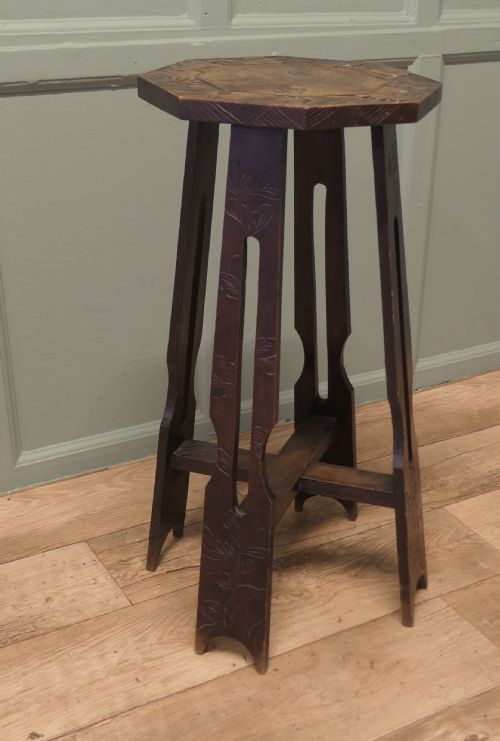

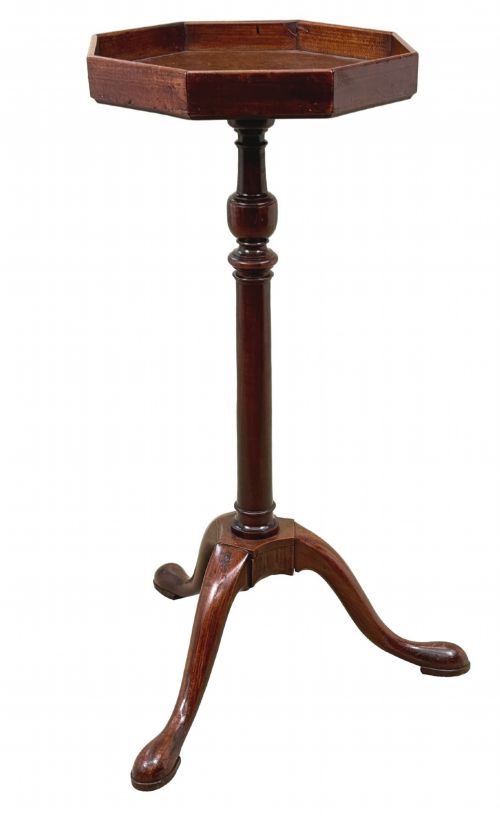
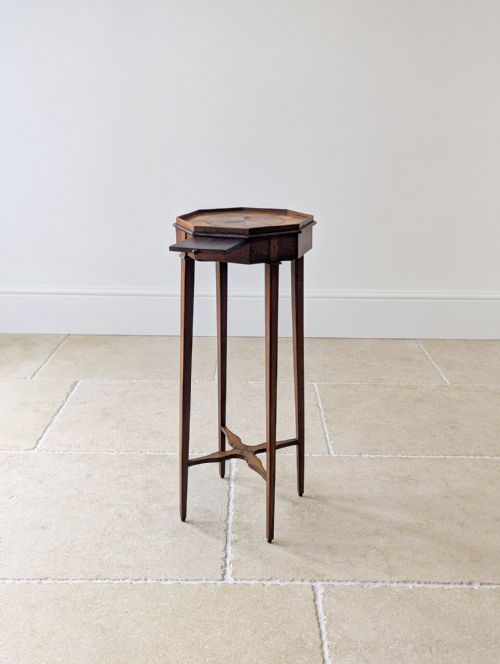
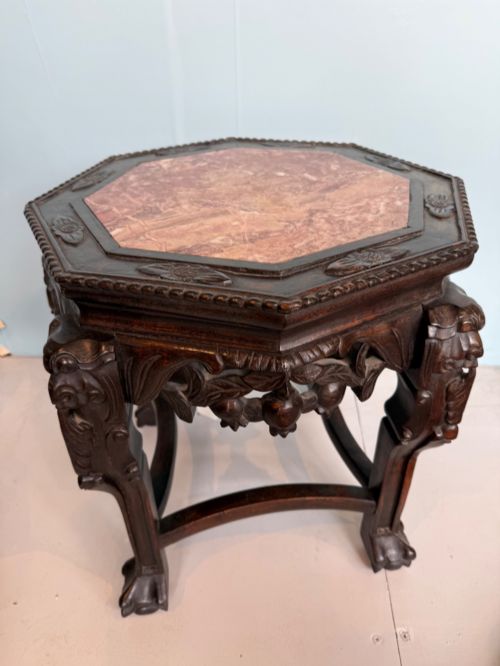


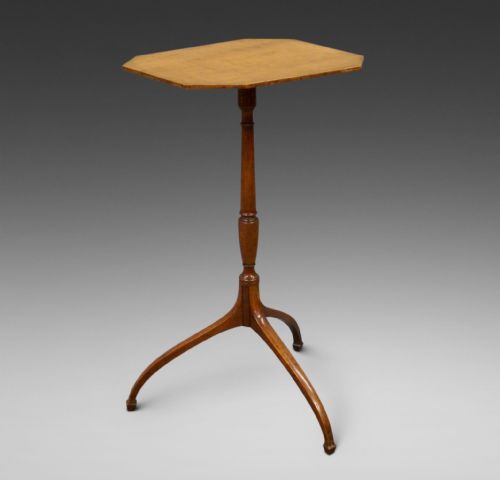
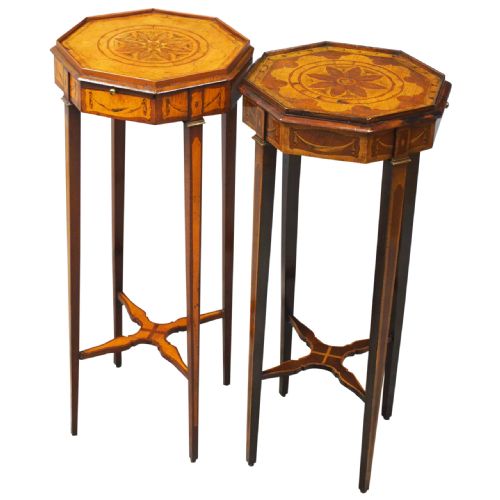


Octagonal Wooden Plant Pedestal
An octagonal wooden plant pedestal elevates floral displays with architectural form, offering sturdy timber construction and refined multi-sided geometry for period interiors.
Octagonal Wooden Plant Pedestal
An octagonal wooden plant pedestal provides a stable, elevated platform for heavy planters and decorative ornaments within domestic spaces. Buyers seeking this form will encounter Victorian and Georgian examples alongside Arts and Crafts and Art Deco interpretations.
The inventory on this page spans walnut, mahogany, elm, and satinwood, often taking the shape of torchere stands, occasional tables, or dedicated plant stands. These pieces range from restrained 18th-century designs to more ornate 19th-century interpretations featuring carved or inlaid surfaces.
Makers and regional workshops from various periods adapted the multi-sided top to suit changing interior fashions, resulting in diverse structural heights and pillar profiles. The eight-sided format remains a distinctive choice for displaying jardinieres and ornamental urns.
Materials and construction methods
Cabinetmakers constructed these stands using dense hardwoods such as mahogany, walnut, elm, and padouk, selected for their structural stability under heavy loads. Walnut veneer and satinwood frequently appear on decorative surfaces to provide striking grain patterns and contrasting borders.
Joinery techniques ranged from traditional column and plinth assemblies to tripod bases and carved central shafts. Artisans employed hand-carving, inlay, and grain painting to finish the timber surfaces, depending on the prevailing style of the period.
Octagonal Wooden Plant Pedestal Retail Price Guide 2026
Typical asking prices for octagonal wooden plant pedestal among the pieces listed under this phrase on Sellingantiques today, from the lower quarter to the upper quarter. They describe what is for sale here now, not the wider market.
Listings feature timbers including mahogany, walnut, elm, and satinwood across periods spanning from the seventeenth century through to the Art Deco era.
Assessing quality in stands
The distinction between standard production pieces and finer examples rests on the selection of timber and the crispness of any carved or inlaid detail. Superior craftsmanship is evident in the tightness of the joints at the eight-sided corners and the stability of the central column.
Proportion and balance dictate the success of the design, ensuring that the top platform securely supports weight without tipping. The depth of the timber grain and the integrity of the original polish further differentiate the finished work.
Liberty & Co·Shoolbred
The Octagonal Wooden Plant Pedestal Glossary
- Torchere
- A tall, slender stand designed specifically to support a candle, lamp, or small decorative object. These elevated supports often feature intricate carving or classical columns.
- Jardinere
- A decorative pot or container for plants and flowers, frequently placed atop a dedicated pedestal or stand. They demand stable, load-bearing furniture to prevent tipping.
- Padouk
- A heavy, durable tropical hardwood noted for its reddish-brown colour, utilised in various exported and imported stands. It provides exceptional strength for slender architectural columns.
- Occasional table
- A small, versatile table used for specific, temporary purposes such as holding a lamp, book, or plant. Many octagonal examples function in this capacity within period rooms.
Octagonal Wooden Plant Pedestal: Frequently Asked Questions
What is an octagonal wooden plant pedestal used for?
An octagonal wooden plant pedestal serves as an elevated platform for displaying potted plants, flowers, and decorative vessels within a room. The multi-sided top provides a stable surface that draws the eye upward and showcases botanical displays.
Historically, these stands allowed delicate plants to receive better light and protected flooring from moisture. Today, they function similarly while adding architectural interest to living spaces and hallways.
How do I distinguish between Victorian and Georgian stands?
Victorian stands often feature heavier carvings, darker timbers, and more eclectic stylistic influences, reflecting the industrial manufacturing capabilities and revival movements of the nineteenth century. Georgian pieces tend to exhibit cleaner classical lines, restrained mahogany or satinwood veneers, and proportions rooted in Palladian design.
Examining the construction methods and secondary timbers underneath can also offer clues regarding the date of manufacture. Period-specific brass fixings and joinery techniques help confirm the exact era.
Can these stands support heavy planters safely?
Most antique pedestals were built from dense hardwoods like mahogany, walnut, or elm, designed to bear considerable weight without flexing. The eight-sided top distributes loads evenly down through the central column or tripod base.
It remains wise to check the stability of the central joint and the footprint of the base before placing exceptionally heavy ceramic pots on top. Ensuring the floor surface is level will also prevent accidental tipping.
Where should I place a pedestal in my home?
These stands fit well in corners, empty wall spaces, or flanking doorways where vertical height can break up horizontal furniture lines. Placing one near a window allows a plant to benefit from natural light while displaying the timber grain.
They also work effectively in hallways as a resting place for small decorative objects upon entry. Their compact footprint ensures they occupy minimal floor area while making a strong visual impact.