





Gothic Style Plant Stand
A gothic style plant stand brings architectural weight and pointed lines to a corner, built for displaying ferns or pedestals.
Gothic Style Plant Stand
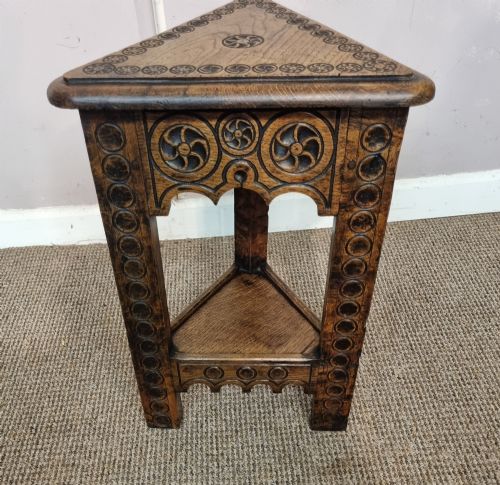
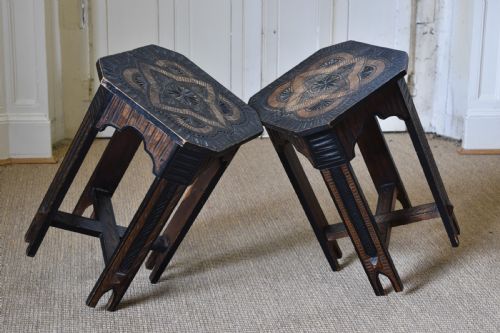
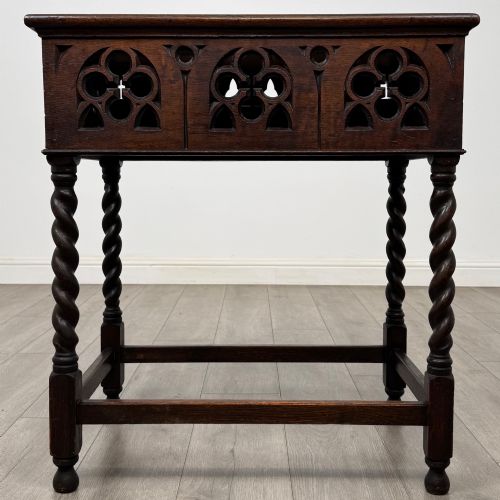
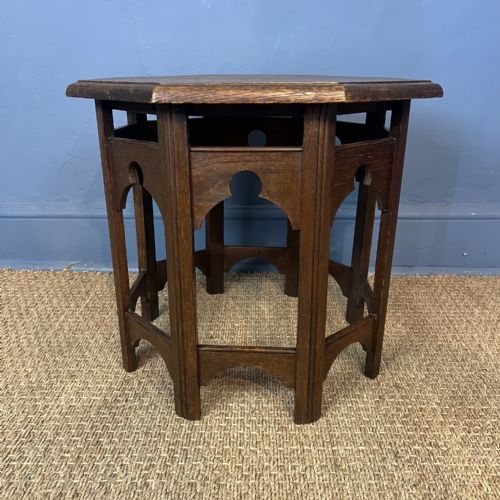
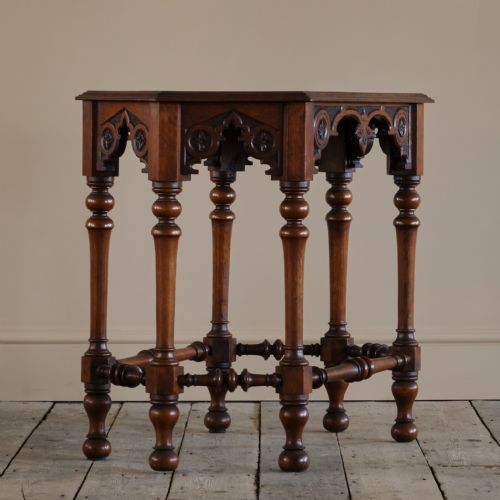
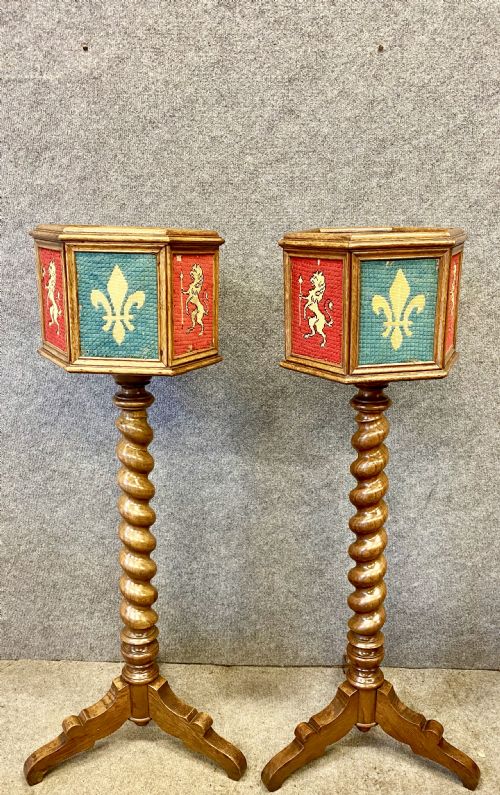
A gothic style plant stand draws on medieval architectural motifs such as pointed arches, quatrefoils, and heavy structural timbers. These pieces appear in forms ranging from triangular lift-top tables and hexagonal tables to specific plant stands and jardinieres.
Most examples found in the inventory stem from the nineteenth and early twentieth centuries, spanning the Victorian, Edwardian, and Arts and Crafts periods. The construction frequently uses oak, wrought iron, ebonised hardwood, and painted softwood.
Buyers encounter variations that include side tables, stools, and cast brass stands with urns, alongside wirework garden settings. The prevalence of oak and wrought iron shapes the visual character of the category across all listed eras.
How they were made
Makers utilised solid oak, ebonised hardwood, and painted softwood, shaping the timber with chip-carving techniques. These wooden structures often display jointing methods suited to heavy use in domestic or garden interiors.
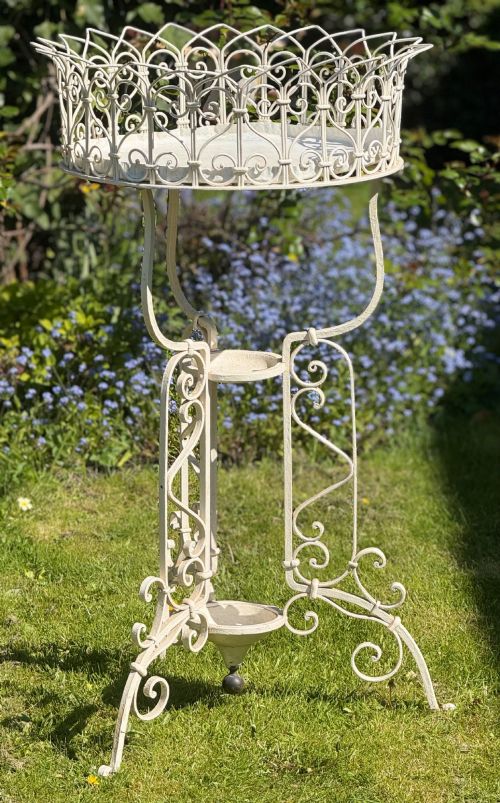
Metalworking played a central role, producing wrought iron plant holders and cast brass stands paired with urns. Wirework also appears in garden-focused pieces, demonstrating varied manufacturing approaches across the material spectrum.
Listings feature oak as the dominant wood, alongside wrought iron, ebonised hardwood, and painted softwood.
What varies in quality
Quality rests in the crispness of the timber carving and the structural integrity of the joints. Hand-finished chip-carving displays depth and precision that distinguish finer workshop production from simpler output.
The choice and treatment of materials dictate the durability and finish of the piece. Ebonised hardwood and selected oak demonstrate careful surface preparation, whereas painted softwood relies on the preservation of its decorative coating.
Baillie Scott
The Gothic Style Plant Stand Glossary
- Chip-carving
- A decorative technique where small chips are removed from a wooden surface to create geometric patterns. This method appears frequently on nineteenth-century occasional tables and stools.
- Ebonised
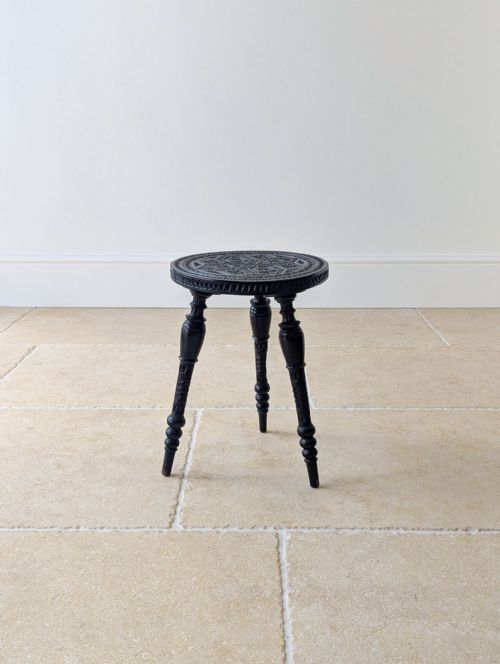
- Wood treated with a chemical stain or finish to imitate ebony. This dark surface finish provides a formal contrast in Victorian and later interiors.
- Wrought iron
- Iron beaten or bent into shape by hand while hot, rather than poured into a mould. It provides robust structural support for garden jardinieres and plant stands.
- Quatrefoil
- A decorative shape consisting of four intersecting or overlapping circles of equal radius. It serves as a recurring motif in gothic architecture and related furniture design.
- Jardiniere
- An ornamental pot or stand designed to hold plants or flowers. These items function as interior or garden display pieces within the inventory.
Gothic Style Plant Stand: Frequently Asked Questions
What periods do these plant stands come from?
The listings span from the nineteenth century through the early twentieth century. This includes Victorian, Edwardian, and Arts and Crafts eras.
Craftsmen produced these works across several decades, resulting in varied stylistic interpretations ranging from strict revivalism to regional craft movements.
What materials were used for construction?
Makers primarily used solid oak, ebonised hardwood, and painted softwood for wooden forms. Wrought iron, cast brass, and wirework appear in metal examples.
Certain pieces incorporate multiple materials, combining wooden frames with metal urns or ceramic elements to achieve decorative contrast.
How do I identify a gothic style piece?
Look for architectural details such as pointed arches, heavy structural timber, and carved geometric motifs. Chip-carving and quatrefoil patterns also indicate the style.
These characteristics link the furniture directly to medieval revival movements popular in British domestic architecture during the Victorian and Edwardian periods.
Were these stands made for indoor or outdoor use?
The inventory contains items designed for both domestic interiors and gardens. Wrought iron jardinieres and wirework tables served outdoor spaces.
Oak occasional tables, stools, and cast brass stands with urns functioned primarily as interior display furniture for plants.