

Arts and Crafts Carved Table
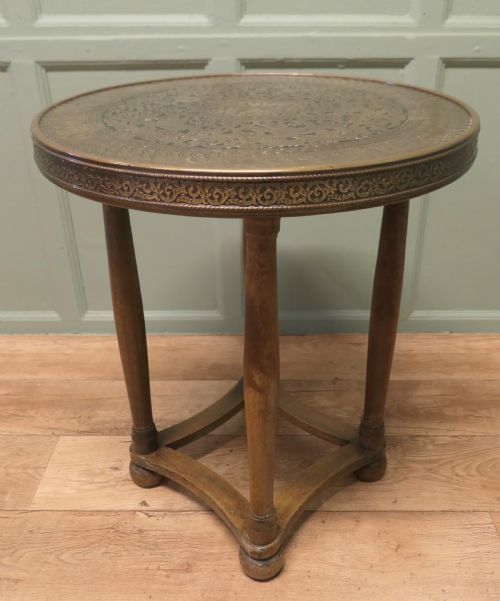
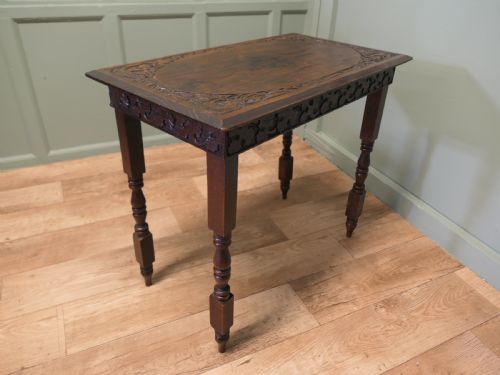
These arts and crafts carved table examples bring honest craftsmanship into a room, offering functional surfaces shaped by hand during the late nineteenth and early twentieth centuries.
Arts and Crafts Carved Table
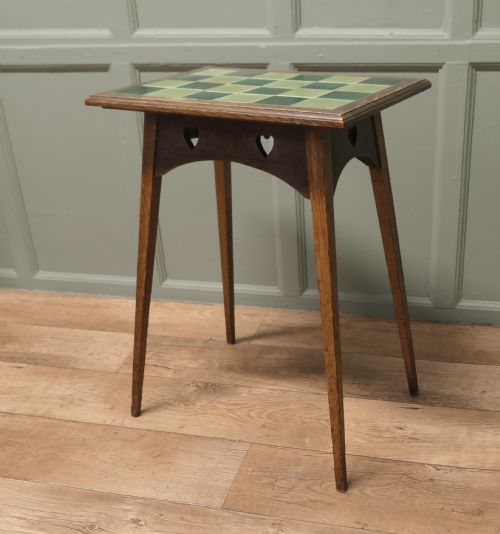
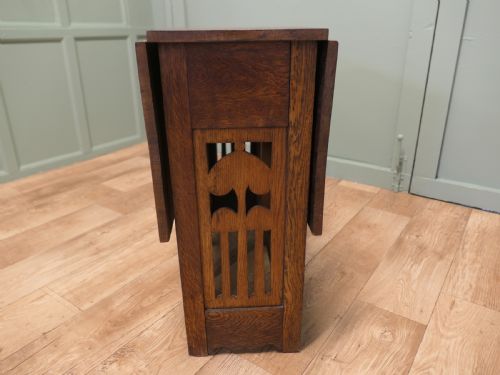
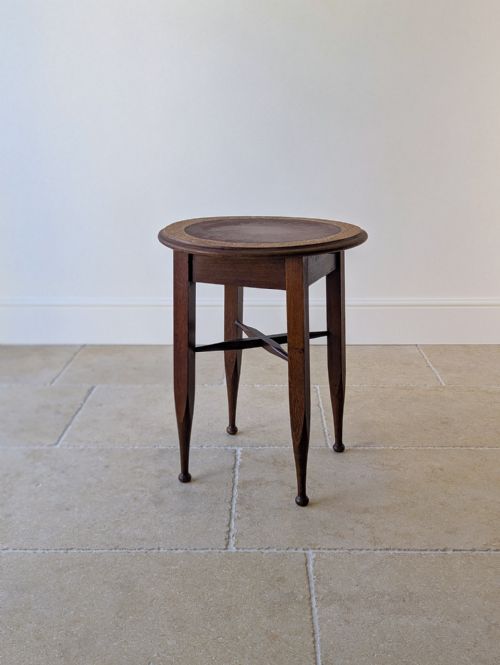
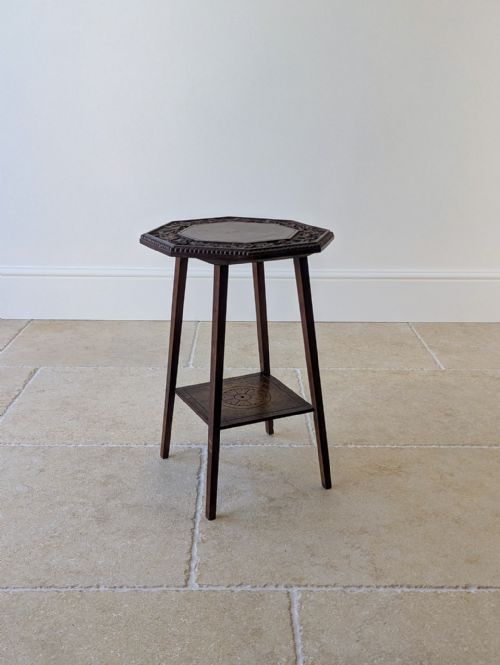
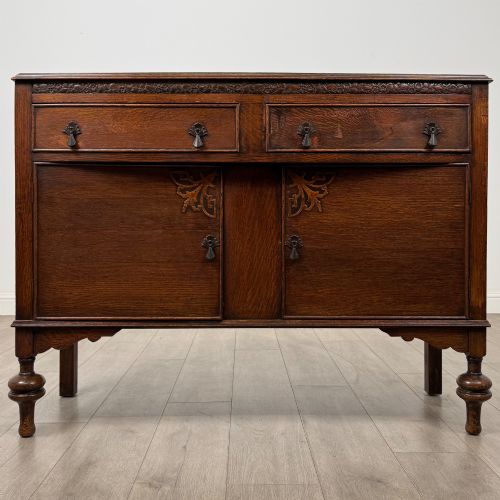
An arts and crafts carved table combines utility with decorative hand-carving originating from periods such as the Edwardian era, Victorian times, and the early twentieth century. Buyers encounter forms ranging from occasional tables and side tables to hexagonal designs and centre tables.
Originating from British workshops and international influences, these tables reflect diverse aesthetic revivals including Jacobean and Gothic styles. Each piece provides a distinct character shaped by the maker's hand rather than mass production.
Materials and construction methods
Makers relied heavily on solid oak, walnut, and mahogany, selecting timber for its grain and durability in everyday furniture. Wood surfaces were frequently waxed or polished to enhance the natural tone without hiding the material.
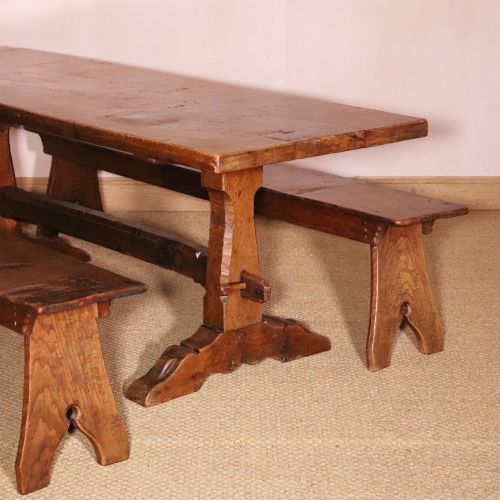
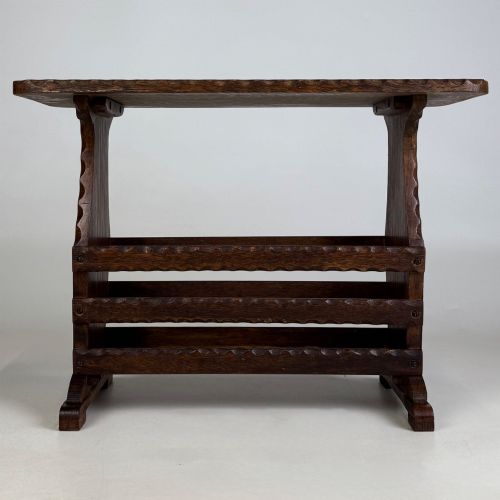
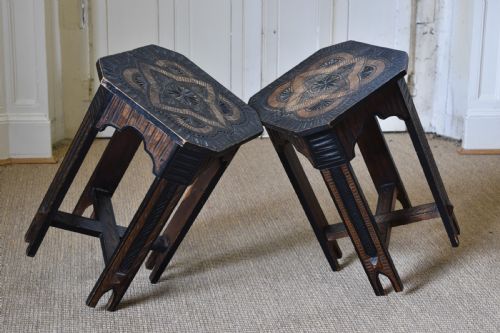
Carving techniques required hand chisels to produce chip carving, floral motifs, and geometric patterns directly onto the solid timber structure. Joinery often employed traditional pegged construction rather than modern metal fasteners, ensuring structural longevity.
Listings feature oak as the dominant material, alongside walnut and mahogany, spanning the late nineteenth century through the 1930s.
Judging the standard of execution
Quality rests in the depth and precision of the hand-carving, where crisp details separate superior studio pieces from standard production work. Well-executed carving retains sharp edges and thoughtful composition across the surface.
The choice of timber and the integrity of the joinery dictate the overall standard of the piece. Tables assembled with pegged joints and well-selected grain demonstrate the higher tier of period cabinet making.
Liberty of London·Shapland and Petter·Arthur Simpson of Kendal
The Arts and Crafts Carved Table Glossary
- Chip carving
- A method of removing small triangles of wood from a flat surface to create geometric patterns. This technique appears frequently on occasional tables from the period.
- Linenfold
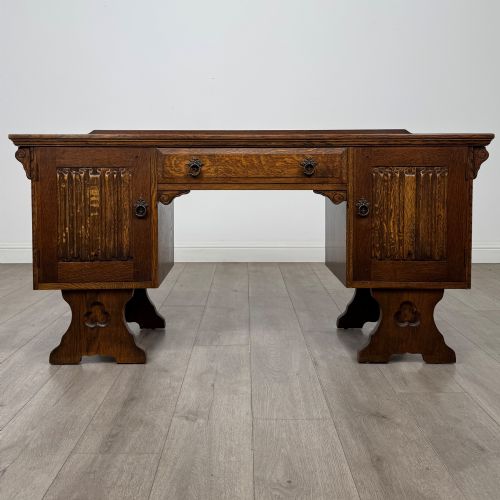
- A style of relief carving used to imitate folded parchment or linen cloth. Cabinet makers applied this motif to panels and furniture sides during revival periods.
- Occasional table
- A small, movable table designed for specific, temporary uses in a reception room. These pieces form a large part of domestic furniture output.
- Pegged construction
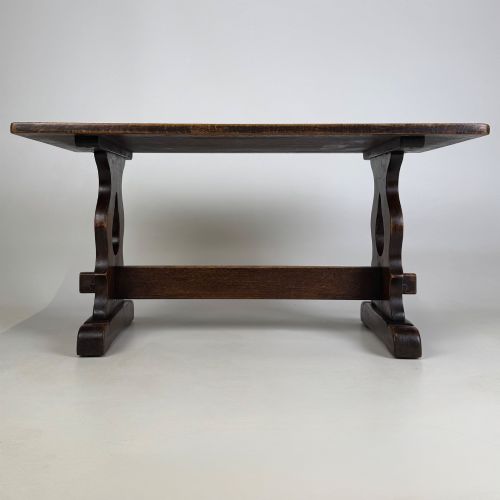
- A method of joining wooden elements using wooden pins or dowels instead of metal nails. This practice indicates traditional craftsmanship.
- Fretwork
- Ornamental work consisting of designs cut with a scroll saw or piercing tool. It provides lighter decorative panels on skirts and brackets.
Arts and Crafts Carved Table: Frequently Asked Questions
How do I identify an authentic piece?
Authenticity shows through traditional joinery methods such as pegged construction, hand-cut carving, and timber selection appropriate to the period.
Examine the underside and joints for signs of age, tool marks, and consistent wear that match the Edwardian or late Victorian eras.
Where should I place an occasional table?
These compact tables fit well beside seating areas or in hallways as functional display surfaces for lamps and small objects.
Keep them away from direct heat sources and strong sunlight to protect the polished wood surfaces and carved details.
How do I care for the wood?
Maintain the finish by applying natural beeswax periodically and buffing the surface with a soft cloth to nourish the timber.
Avoid using silicone-based sprays or harsh chemical cleaners that can degrade the historic wax or polish.
What styles accompany these tables?
The designs often incorporate elements from the Arts and Crafts movement, alongside Jacobean revival and Gothic revival motifs.
These varied influences share an emphasis on visible construction and appreciation for natural materials over factory uniformity.