
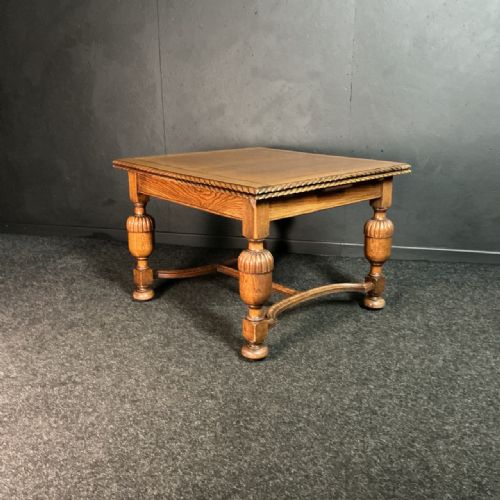
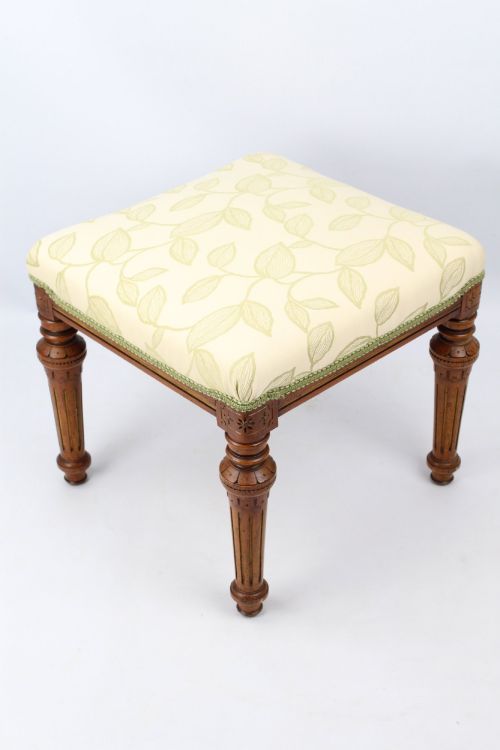


Carved Oak Square Table
A carved oak square table brings solid timber and traditional hand-working straight into a room, offering durability alongside distinct period character.
Carved Oak Square Table
A carved oak square table encompasses sturdy occasional pieces, compact side tables, and occasional lamp tables designed for daily use. The selection spans the Victorian, Edwardian, and Arts and Crafts eras, stretching from the mid-nineteenth century through to the nineteen-thirties.
Most examples you encounter on this page take the form of side tables, occasional lamp tables, and joint stools rather than large refectory boards. These items demonstrate how nineteenth and early twentieth-century makers utilised solid oak to create compact furniture with carved detailing.
How they were made
Construction relies heavily on solid oak timber, frequently paired with secondary woods like beech alongside functional brass hardware and decorative elements such as parcel gilt. Certain seating and footstool variants incorporate leather or fabric upholstery alongside the wooden framework.
Joinery techniques span traditional joint construction and handmade assembly, often embellished with characteristic carving styles that reflect Jacobean Revival and Arts and Crafts influences. Turned components, including barley twist legs, appear alongside flat carved surfaces to provide visual texture.
Materials recorded across the archive include solid oak, parcel gilt, leather, fabric, beech, and brass hardware.
What varies in quality
Quality differentiates itself through the crispness and depth of the hand-carved ornamentation rather than mere surface decoration. Superior pieces display thoughtful proportions and robust joinery that ensure the timber remains stable over generations of use.
The choice of secondary materials and associated maker attribution also elevate specific examples, shifting them beyond standard utility furniture into the realm of notable design.
Liberty of London
The Carved Oak Square Table Glossary
- Oak
- A durable hardwood prized for its distinct grain pattern and structural strength in traditional furniture making. It forms the primary material foundation across the majority of these listings.
- Jacobean Revival
- A nineteenth and early twentieth-century style that imitates seventeenth-century ornamentation, featuring heavy turning, geometric panels, and deep carving. This aesthetic defines several tables and stools on the page.
- Barley Twist
- A woodworking technique where a lathe cuts a rope-like spiral into a table leg or support pillar. This decorative turn appears frequently on side tables from the early twentieth century.
- Joint Stool
- A sturdy wooden stool constructed with mortise and tenon joints rather than turned legs driven into a seat. They often double as small side tables in modern interiors.
Carved Oak Square Table: Frequently Asked Questions
What is a carved oak square table used for?
These tables function primarily as compact side surfaces, lamp tables, or occasional pieces in living spaces and bedrooms. Their modest square footprint allows them to fit easily beside armchairs or against walls.
Historically, similar compact forms served diverse domestic needs from holding lighting to supporting decorative objects. Today, buyers utilise them to introduce natural wood texture into contemporary or traditional interiors.
How do I identify a Victorian table?
Victorian examples typically date from the nineteenth century and often exhibit heavier proportions, darker finishes, or revivalist ornamentation like Jacobean carving. Look for construction hallmarks consistent with nineteenth-century workshop practices.
Comparative details such as turned barley twist supports or specific hardware help separate these mid-to-late nineteenth-century items from later Edwardian production.
Are these tables made of solid oak?
The listings feature solid oak construction as the primary material, occasionally supplemented by other timbers like beech for internal framing or specific turned parts. The heavy grain and dense weight are typical of genuine period oak furniture.
Secondary materials such as brass, leather, and fabric appear on specific variations like footstools or tables equipped with drawers.
How do I care for antique oak furniture?
Protect antique oak surfaces by keeping them away from direct heat sources and strong sunlight, which can dry out the timber and finish. Regular dusting with a soft, dry cloth helps maintain the natural sheen of the wood.
Avoid using modern silicone-based polishes, opting instead for traditional beeswax formulations that nourish the historic timber without leaving synthetic residues.