

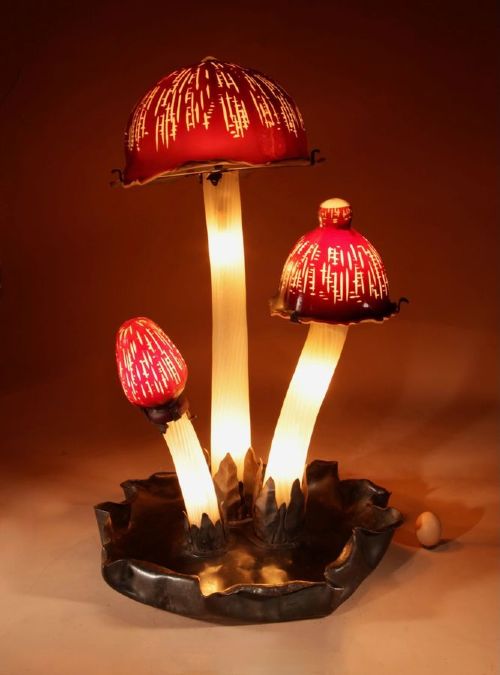


Art Nouveau Table Sculpture
These art nouveau table sculpture pieces capture organic curves and figural grace, offering a touch of period elegance for any room.
Art Nouveau Table Sculpture
An art nouveau table sculpture brings fluid lines and natural motifs into interior spaces through decorative objects, lamps, and figural centrepieces. Buyers seeking these works will encounter pieces dating from the late nineteenth century into the early decades of the twentieth century.
The selections available here frequently take the form of figural table lamps, portrait busts, and sculptural centrepieces. Female figures, mythological subjects, and botanical themes dominate the inventory, often combining illumination with functional art.
Origins span across France, Italy, and Bohemia, showcasing international variations within the movement. French works particularly emphasise graceful bronze and silvered spelter castings, while Italian artisans contribute carved alabaster.
Materials and construction methods
Foundry techniques of the period relied heavily on bronze casting and slip casting for metal and ceramic works. Bronze and spelter served as the primary metals for figural lamps and sculptures, allowing for intricate detail in hair, drapery, and flora.
Softer mediums such as terracotta, porcelain, and carved alabaster provided alternative textures for portrait busts and centrepieces. Artisans frequently applied patinas, silvering, or two-tone finishes to enhance the visual depth of metal surfaces.
Cleopatra's asp and a gleaming bronze mushroom share table space with bathing figures and classical poets.
Distinctions in craftsmanship
Quality in an art nouveau table sculpture rests upon the crispness of the casting and the sensitivity of the modelling. Finer pieces retain sharp details in facial expressions and botanical elements without smoothing from excessive polishing.
The integrity of the original surface patination or cold-painted finish heavily influences the character of the object. Weight, proportion, and the subtlety of the execution distinguish standard production figures from works bearing distinct artistic authorship.
Friedrich Goldscheider·Hector Lemaire·Ivan Zaiec·Royal Dux·Emmanuel Villanis·Henri Honore Ple·Gugielmo Pugi·Auguste Moreau·HL Blasche for Reps and Trinte
The Art Nouveau Table Sculpture Glossary
- Spelter
- A zinc alloy commonly used as a cost-effective alternative to bronze in nineteenth and twentieth-century figures. It accepts metallic finishes and silvering well, though it is softer than bronze.
- Slip cast
- A manufacturing method where liquid clay slip is poured into a plaster mould to create hollow ceramic or porcelain sculptures. This technique allows for consistent reproduction of complex figural forms.
- Centrepiece
- A large decorative object placed in the middle of a table, often rendered in porcelain or metal as a figural composition. These pieces frequently incorporate shallow bowls or basins.
- Patina
- The surface coloration or sheen developed on metal through age or chemical treatment. Artists intentionally apply patinas to accentuate the contours of bronze sculptures.
- Alabaster
- A fine-grained, translucent stone favoured by Italian sculptors for its smooth texture. It allows light to penetrate slightly beneath the surface, creating soft tonal gradients.
Art Nouveau Table Sculpture: Frequently Asked Questions
What is an art nouveau table sculpture?
These works are decorative three-dimensional objects made during the late nineteenth and early twentieth centuries. They frequently depict female figures, mythological characters, and natural forms.
Many examples double as functional items such as table lamps or centrepieces. They reflect the sweeping lines and organic motifs characteristic of the movement.
How do I distinguish bronze from spelter?
Bronze is a heavy, durable copper alloy that maintains a warm metallic tone beneath its patina. Spelter is a lighter zinc-based metal that tends to feel softer and often shows a painted or plated surface finish.
Examining the underside or areas of wear can reveal the lighter grey metal beneath a spelter finish, whereas bronze remains consistent throughout.
How were these figural lamps used originally?
Table lamps from this era served both to illuminate dark interiors and to display artistic taste in a parlour or drawing room. They combined sculpture with electrical or oil-burning fittings.
Figural bases often incorporated the lamp stem directly into the pose of the subject, such as holding a torch or floral shade.
How should I care for alabaster and porcelain sculptures?
Alabaster and porcelain require gentle dusting with a soft, dry cloth to prevent abrasion. Both materials are sensitive to moisture and harsh chemical cleaning agents.
Keeping them away from direct sunlight and extreme temperature changes helps preserve their surface finishes and prevents micro-fissures in the stone.