
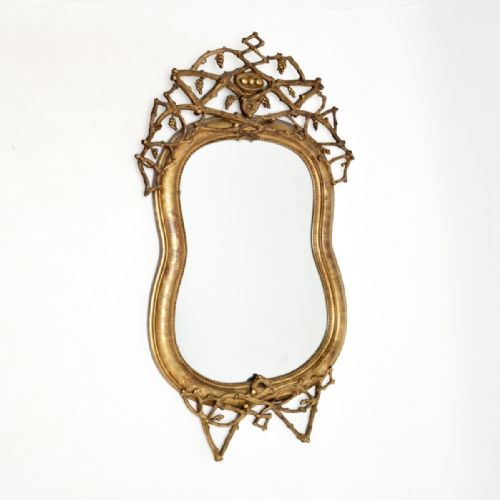

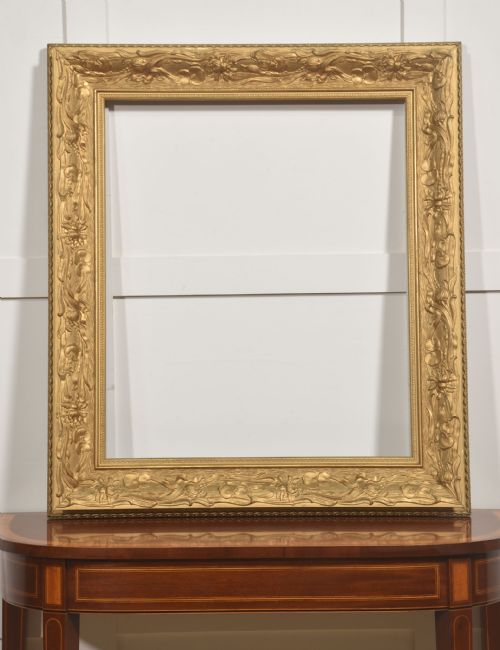


Art Nouveau Style Mirror
An art nouveau style mirror brings fluid, organic lines and botanical motifs into a room, capturing the distinct aesthetic of the early twentieth century.
Art Nouveau Style Mirror
When you search for an art nouveau style mirror, you encounter decorative objects designed to reflect light while displaying the curving, naturalistic forms typical of the movement. These pieces originate across several decades, spanning from the late nineteenth century into the twentieth century, and take various functional forms.
You are most likely to meet wall mirrors and picture frames on this page, alongside occasional table mirrors and hall stands. The selection includes items shaped by regional British and European design movements, from Glasgow School brasswork to Italian gilt wood.
Makers and workshops of the period expressed the style through distinct metalwork and framing techniques, ranging from repoussé copper panels to carved giltwood. Each object serves as both a practical looking glass and a sculptural focal point for an interior.
How they were made
Craftsmen utilised metals such as copper, brass, and silvered copper to construct frames and decorative mounts, frequently employing repoussé techniques to hammer organic patterns into the surface. Wood forms the structural base for many pieces, finished with gesso, gold leaf, or giltwood to achieve a lustrous appearance.
Makers applied bentwood methods for structural furniture pieces like hall stands, while picture frames and wall mirrors relied on traditional joinery and carving. Artisans integrated botanical details directly into the metalwork and timber, depicting stylised honesty seed pods and flanking peacocks.
Glass provides the reflective surface, cut and fitted into bespoke wooden or metal housings designed to complement the flowing contours of the surrounding frame.
Materials recorded across the inventory include glass, wood, copper, brass, gold leaf, gilt wood, giltwood, and gesso.
What varies in quality
Quality reveals itself in the depth and execution of the hand-worked details, particularly in the crispness of repoussé metalwork and the fluidity of carved wooden frames. Pieces with attribution to recognised firms like Liberty & Co or specific regional groups such as the Glasgow School display a higher level of artistic cohesion.
The choice of materials and the preservation of original surfaces dictate the character of each piece. Intricate motifs like stylised seed pods or cast brass ornamentation demonstrate greater maker skill than simpler, mass-produced decorative alternatives.
Liberty & Co·Fischel
The Art Nouveau Style Mirror Glossary
- Repoussé
- A metalworking technique where the artisan hammers the material from the reverse side to form a raised design on the front. This method creates the tactile floral and botanical reliefs seen on copper frames.
- Giltwood
- Timber that has been coated with a thin layer of gold leaf or gold paint. It provides the bright, reflective finish common on ornate nineteenth-century and early twentieth-century frames.
- Gesso
- A plaster-like mixture applied to wood surfaces as a base for gilding or painting. It allows craftsmen to sculpt fine details before applying gold leaf.
- Bentwood
- Wood heated with steam until pliable and then bent into curved shapes. This technique defines the structural framework of certain hall stands from the period.
- Glasgow Style
- A variant of the Arts and Crafts movement associated with designers from Scotland. It is characterised by elongated forms, stylised natural motifs, and distinctive metalwork.
Art Nouveau Style Mirror: Frequently Asked Questions
What defines an art nouveau style mirror?
An art nouveau style mirror is characterised by asymmetrical lines, whiplash curves, and motifs inspired by plants and flowers. These designs break away from strict historical revivals to embrace organic movement.
Such pieces often incorporate hand-beaten copper, brass, or carved giltwood to enhance their sculptural qualities and create a distinct visual impact.
How do I identify a Glasgow School mirror?
Glasgow School pieces typically display distinctive regional characteristics of the Arts and Crafts movement, including stylised natural elements and symbolic imagery such as peacocks. The metalwork is often hand-wrought and shows deliberate artisan marks.
These mirrors rely on linear grace and functional simplicity rather than heavy ornamentation, setting them apart from standard continental revivals.
Where should I hang a wall mirror?
A wall mirror functions effectively in entrance halls, above mantelpieces, or in reception rooms where it can capture and reflect natural light. Positioning the glass at eye level maximises both its practical use and decorative presence.
Ensure the wall fixings are suited to the weight of the frame, particularly for heavier pieces constructed from solid wood or cast metal.
How do I care for giltwood frames?
Giltwood frames require gentle treatment to preserve the delicate gold leaf and underlying gesso layers. Dusting should be done lightly with a dry, soft cloth without applying chemical cleaning agents.
Keep the mirrors away from direct sunlight and areas of high moisture to prevent the wood from warping and the gilding from flaking.