


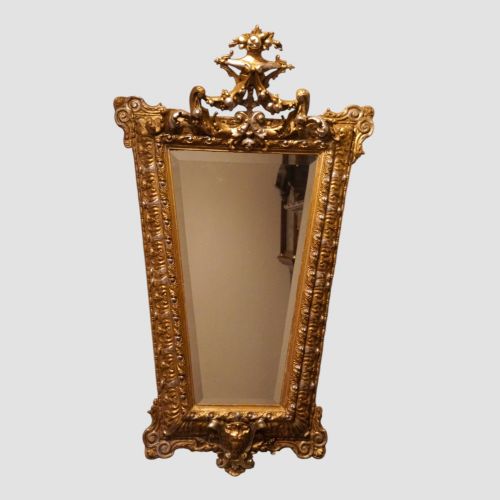
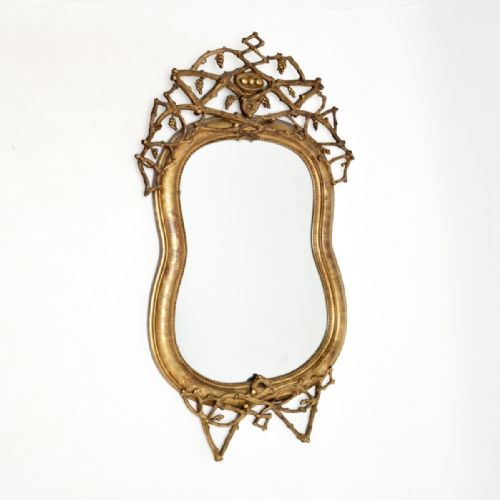
Gold Accent Mirror
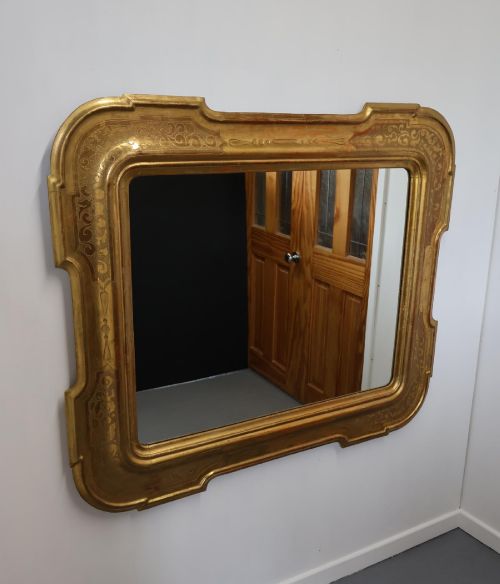
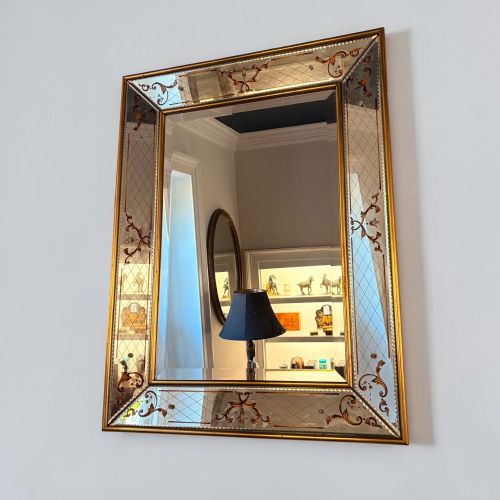
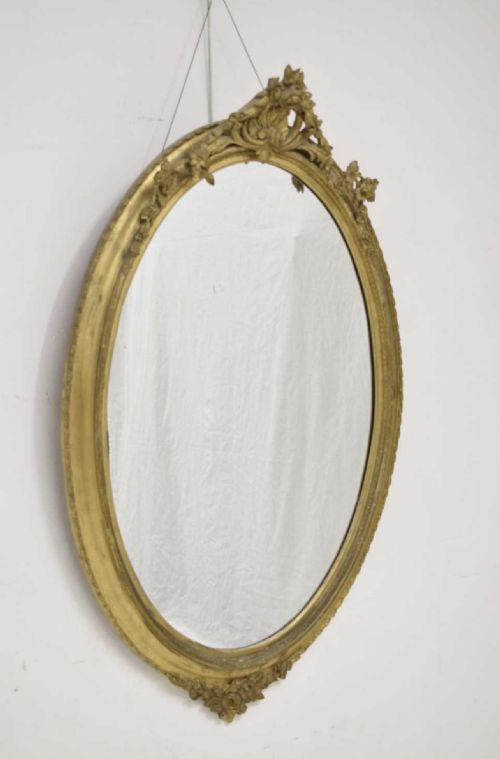
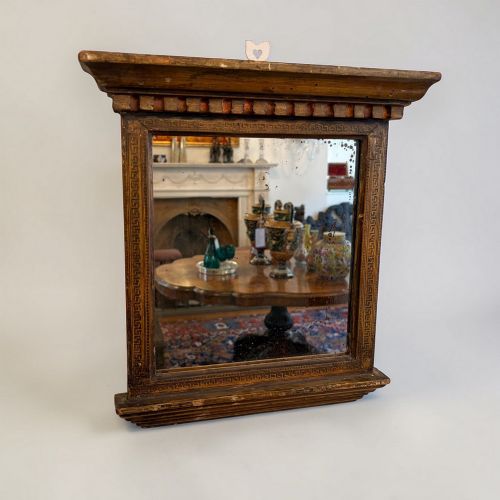
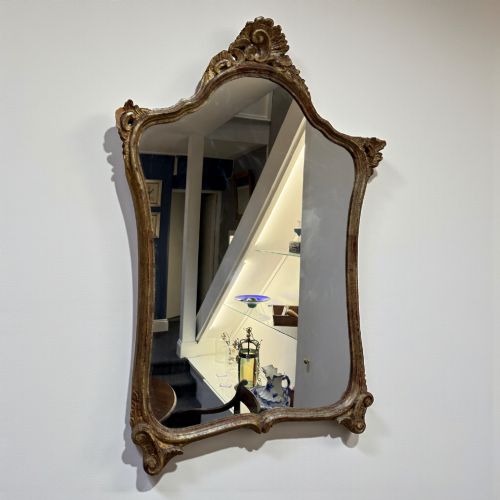
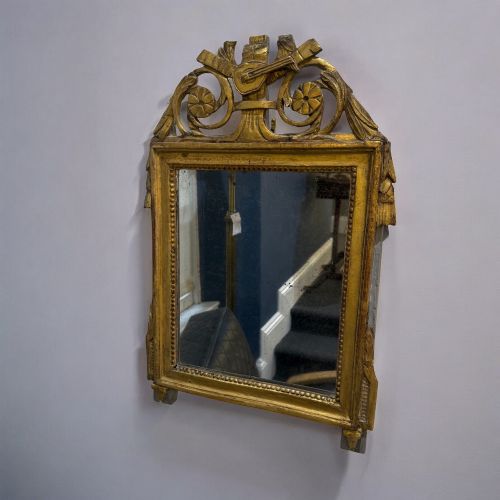
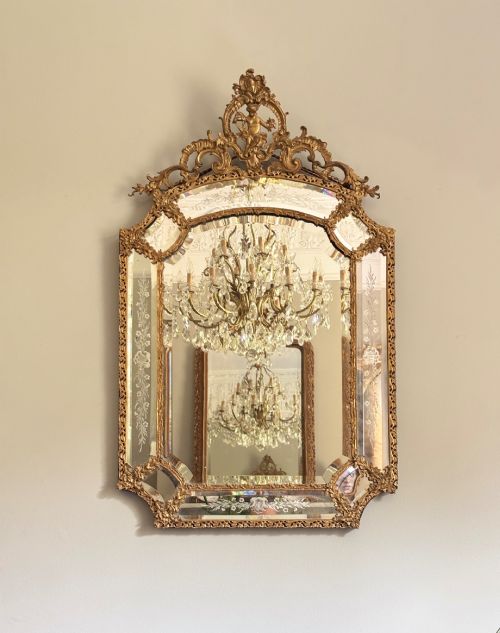
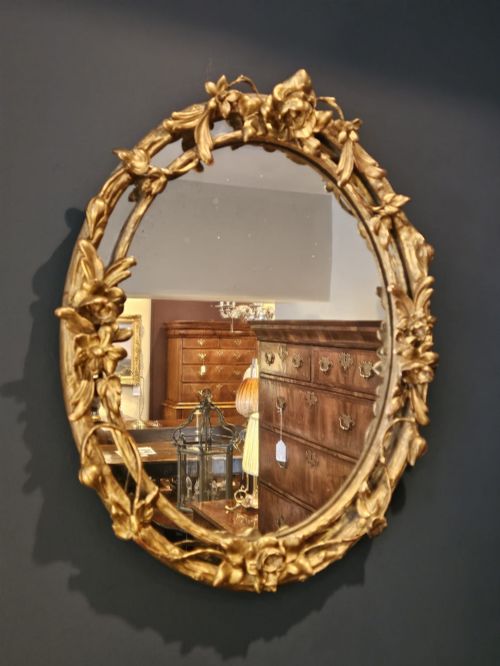
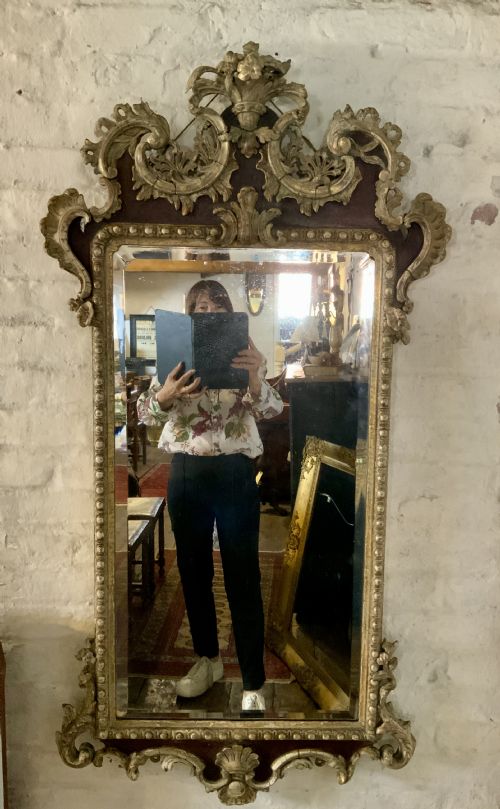
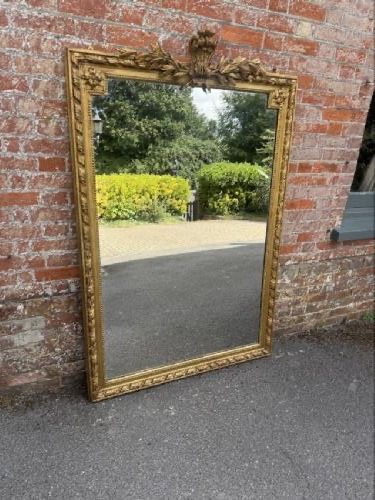
A gold accent mirror brings warmth and reflective depth to a room through carved giltwood, gesso, and ornate period detailing.
Gold Accent Mirror
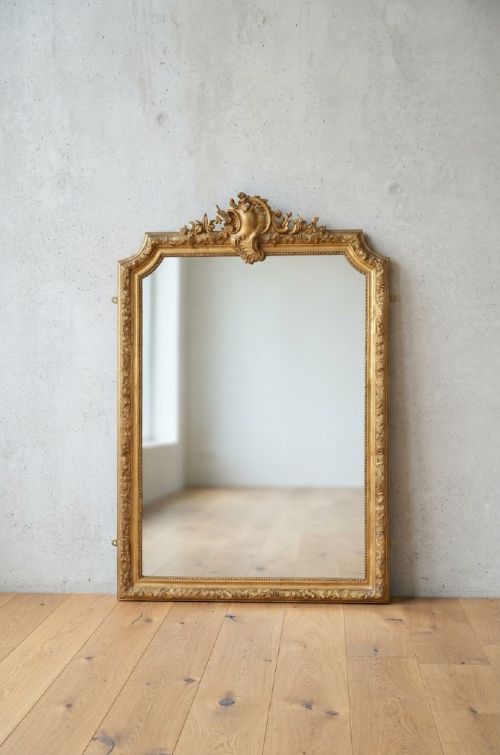
A gold accent mirror draws the eye through gilded surfaces and period proportions spanning the eighteenth, nineteenth, and early twentieth centuries. These pieces appear in forms ranging from small convex wall mirrors to large Victorian and French Rococo overmantels.
The most common examples on this page date from the nineteenth century, featuring Victorian or continental styles such as Rococo Revival, Baroque Revival, and Italian Florentine designs. Buyers encounter circular, oval, rectangular, and arched formats intended for hallways, principal rooms, and mantelpieces.
Originating across England, France, and Italy, these mirrors reflect local stylistic shifts from restrained walnut and parcel gilt construction to exuberant carved wood and gesso ornamentation. Each piece serves primarily as a decorative focal point while opening up interior spaces.
Materials and construction
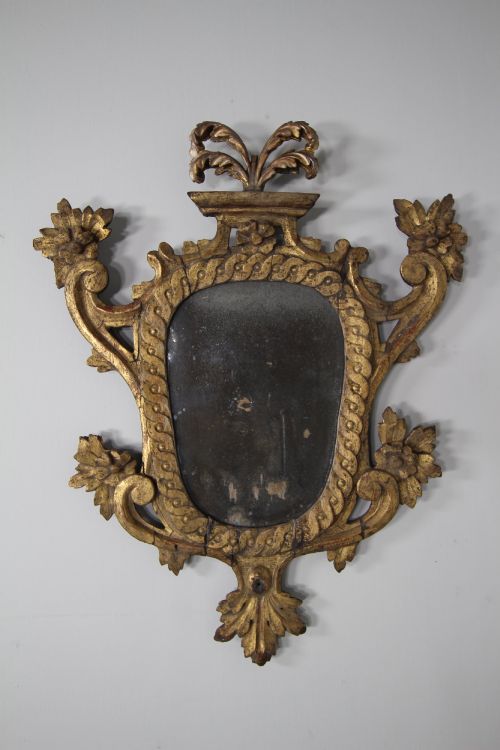
Makers built these frames using timber foundations such as oak, walnut, or carved wood, overlaid with gesso to create crisp relief details before applying gold leaf or gilt finishes. This composite method allowed artisans to achieve deep scrolling acanthus leaves, rose vines, and architectural cartouche forms.
Glass plates were silvered by hand, sometimes featuring engraved details, bevelled edges, or trapezoidal and convex shapes that distort or catch the light in specific ways. Timber substrates occasionally incorporated painted silk panels or parcel gilt highlights to contrast the primary gold finish.
Listings feature pieces spanning the 18th, 19th, and early 20th centuries, created in English, French, and Italian workshops.
Distinctions in quality
Quality rests upon the depth and precision of the carving within the wood and gesso, where master carvers achieved sharp undercut foliage rather than soft, moulded contours. The crispness of the gilt surface and the integrity of the original plate dictate the visual impact of the piece.
Proportion and balance separate standard decorative items from superior examples, particularly in revival pieces that emulate earlier Georgian or Louis XV aesthetics with harmonious symmetry and considered scale.
John Belchier
The Gold Accent Mirror Glossary
- Giltwood
- Wood that has been coated with gold leaf or gold paint. This technique provides the bright reflective finish characteristic of period frames.
- Gesso
- A plaster-like mixture applied to wood frames and carved before gilding. It holds intricate relief ornamentation and fine decorative detail.
- Overmantel mirror
- A large wall mirror specifically designed to hang above a fireplace mantel. These pieces often feature wide rectangular or arched formats.
- Convex mirror
- A round mirror with a bulging curved glass plate. This form provides a wide-angle reflection of the interior space.
- Cartouche
- An ornamental frame resembling a rolled-up scroll or shield. It frequently appears as a central motif in Rococo and Victorian revival designs.
Gold Accent Mirror: Frequently Asked Questions
Where should I hang a gold accent mirror?
These mirrors suit locations where they can capture natural light, such as opposite a window or above a fireplace mantelpiece.
Smaller convex or oval versions work effectively in narrow hallways or entryways to create a sense of expanded space.
How do I identify a Victorian mirror?
Victorian examples often display heavy carved wooden frames with gesso relief work, showing styles from high Victorian exuberance to Gothic and Rococo revivals.
Construction details on the reverse, alongside the composition of the glass plate, help confirm the nineteenth-century origin.
What is the difference between giltwood and gesso?
Giltwood refers to the wooden base material covered in gold leaf, whereas gesso is the plaster mixture applied beneath the gold to form sculpted details.
Carvers shaped the gesso layer to achieve sharp decorative motifs before the final gilding process took place.
How do I care for antique gilt surfaces?
Gilt surfaces require gentle dusting with a soft, dry cloth to prevent damage to the delicate gold leaf and underlying gesso.
Moisture and chemical cleaners must be avoided entirely to preserve the original metallic finish and patina.