




Art Nouveau Statue
An art nouveau statue brings organic line and natural form into a room, capturing the flowing grace of turn-of-the-century design.
Art Nouveau Statue
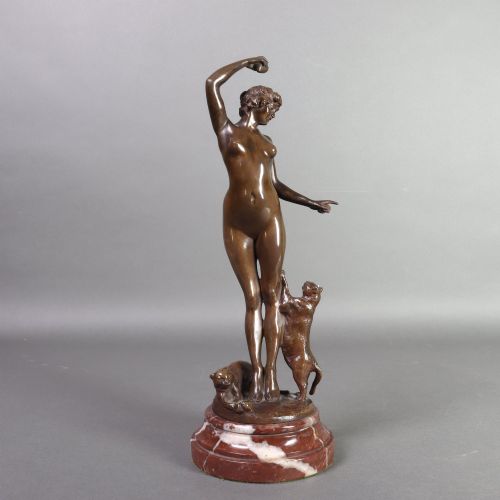
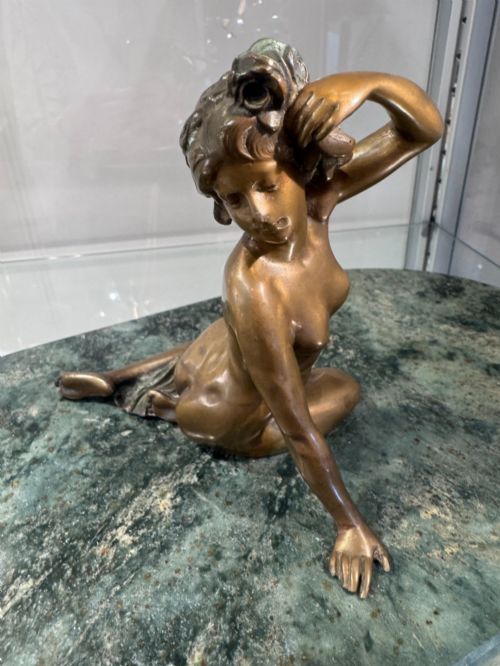
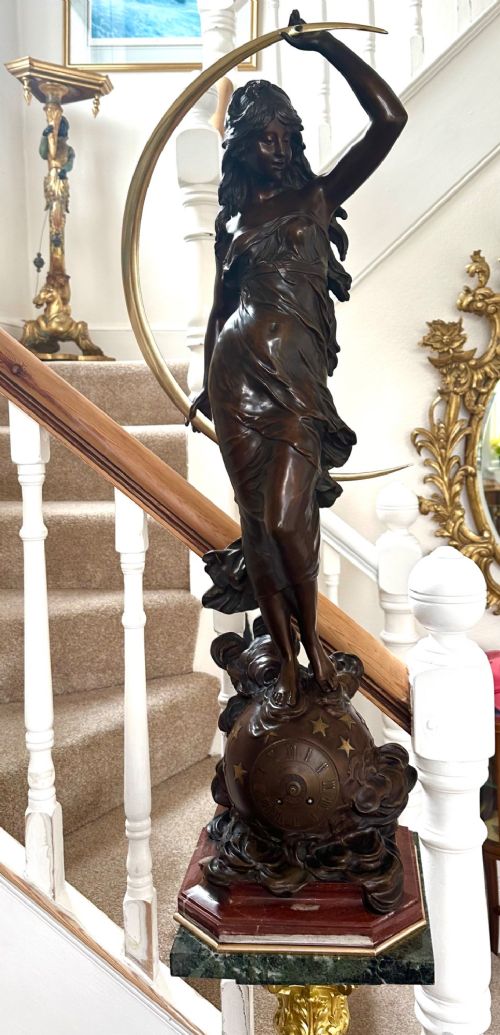
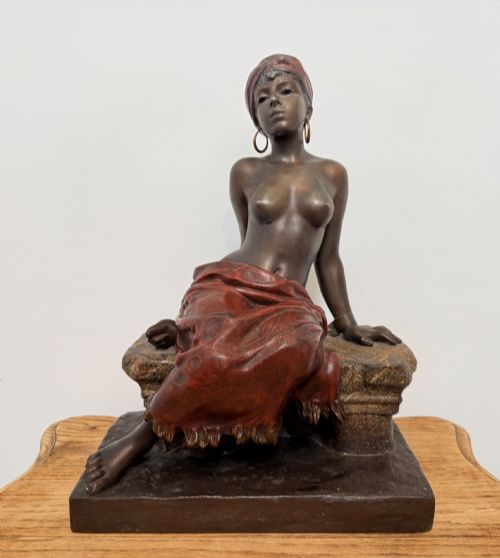
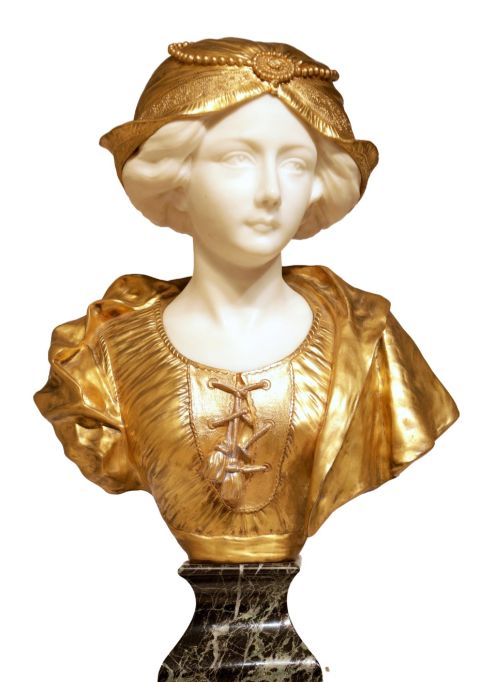
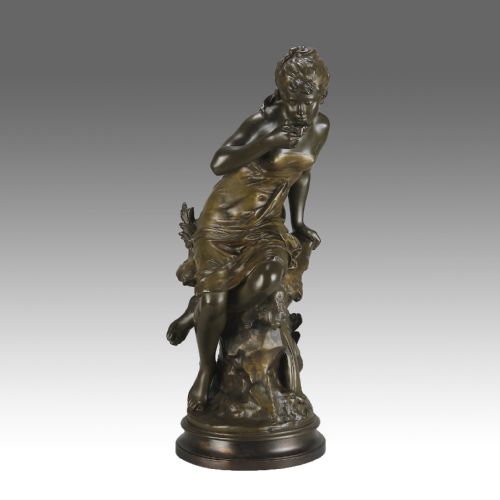
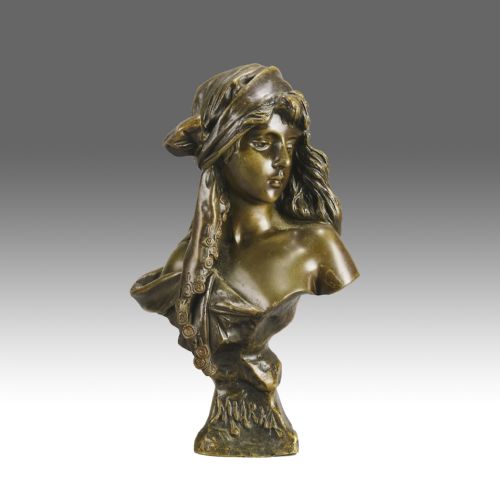
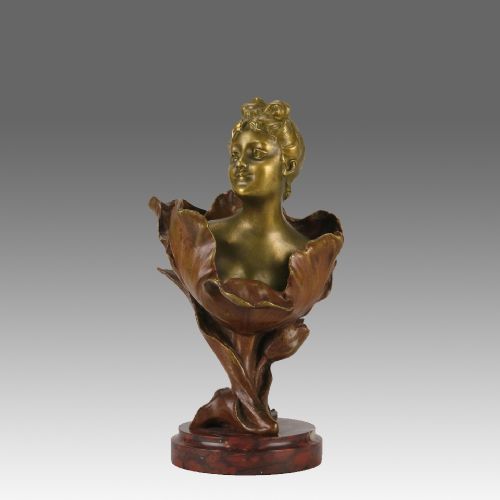
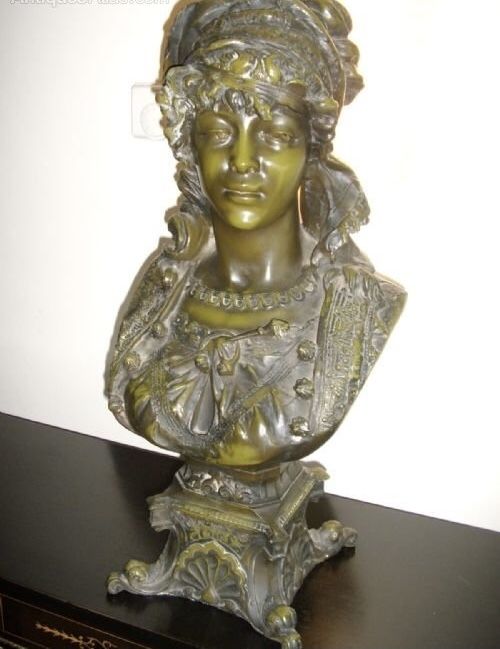
When you search for an art nouveau statue, you encounter figurative sculptures and busts spanning the late nineteenth century through to the early decades of the twentieth century. These pieces capture characteristic motifs of the period, including maidens, nymphs, allegorical figures, and natural elements like water carriers and floral spirits.
The versions most commonly met on this page include French and Austrian foundry bronzes, glazed and slip-cast terracotta figures, and carved alabaster busts. Many sit on integrated marble bases or incorporate functional elements such as floor lamps and table lamps.
Materials and casting methods
Foundries produced these sculptures primarily in bronze using the lost-wax casting method, often applying patinated or gilt surfaces to heighten tonal depth. Artisans also utilised cast metals like spelter, alongside carved alabaster and marble for busts and figural groups.
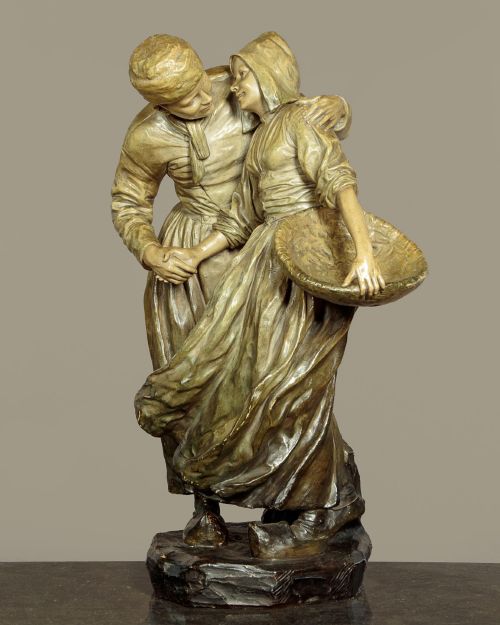
Ceramic works relied on terracotta and porcelain, including biscuit porcelain and slip-cast earthenware from factories like Royal Dux and Goldscheider. These ceramic pieces frequently combined painted polychrome finishes with gilt highlights.
Listings demonstrate a strong preference for female figures, ranging from allegorical maidens to mythological subjects executed in bronze, terracotta, and alabaster.
Distinctions in quality
Quality in these sculptures rests upon the crispness of the chase work and the subtlety of the surface patina. Finer bronzes retain sharp detail in hair, drapery, and facial expression without softening from worn casting moulds.
In carved stone pieces, superior examples display sensitive handling of the veining and translucent qualities of alabaster and marble. For ceramics, the precision of the moulding and the delicacy of hand-painted polychrome decoration separate standard production from exceptional studio output.
Goldscheider·Rudolf Küchler·Moreau Family·Hans Müller·Royal Dux Bohemia·Emmanuel Villanis·Emile Carlier·Mathurin Moreau·Henri Godet·A. Gamay·WMF·Auguste Henri Carli·Georges Van Der Straeten·Edouard Drouot·Richard Avrilli·Georges-Charles Coudray·Auguste Moreau·George Kemper·Luca Madrassi
The Art Nouveau Statue Glossary
- Patinated bronze
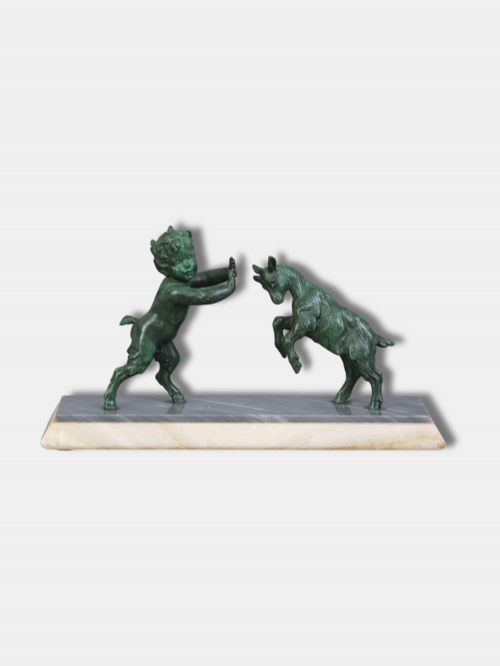
- A bronze sculpture treated with chemical solutions to produce a controlled surface colour, ranging from deep brown to verdigris green. This treatment protects the metal and accentuates sculptural contours.
- Spelter
- A zinc alloy frequently utilised as a less costly alternative to bronze during the period. It accepts bronze-like metallic paint or electroplated finishes readily.
- Slip cast
- A ceramic manufacturing technique where liquid clay slip is poured into a plaster mould. This process allows for the creation of complex figural forms with consistent wall thickness.
- Alabaster
- A fine-grained, translucent stone used extensively for carved portrait busts and sculptural figures. Its softness permits delicate undercutting and detailed carving.
- Gilt bronze
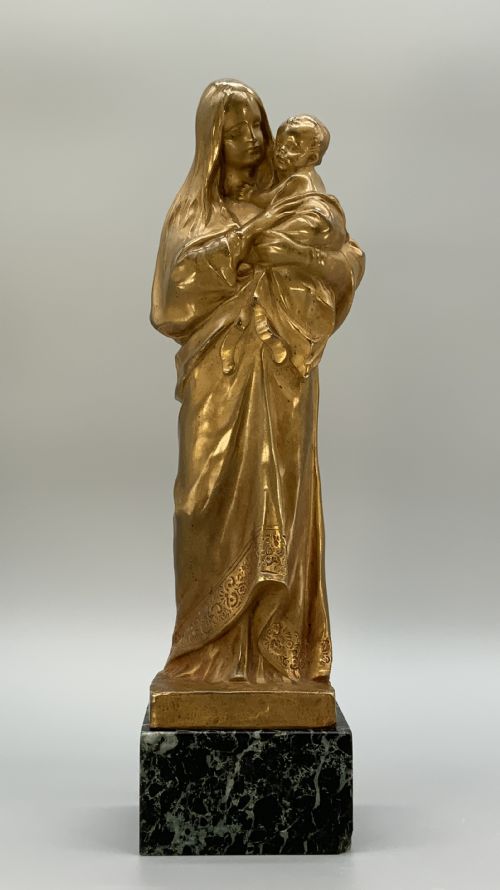
- Metalwork finished with a thin layer of gold applied by fire gilding or chemical methods. This technique imparts a lasting golden sheen to the sculptural surface.
Art Nouveau Statue: Frequently Asked Questions
How do I clean an antique bronze statue?
Dust the surface gently with a soft, dry brush to remove particulate matter without disturbing the underlying patina.
Avoid using water, chemical cleaners, or metal polishes, as these substances strip away historic patination and damage the metal.
Where should I place a marble sculpture?
Position the piece away from direct sunlight and heat sources to prevent thermal shock and potential surface drying.
Ensure the supporting furniture is level and sturdy enough to bear the considerable weight of stone and bronze figures.
How do I distinguish bronze from spelter?
Examine the underside or areas of wear for the silvery-grey colour characteristic of zinc-based spelter beneath the surface finish.
Bronze exhibits a warm reddish-brown metal tone where exposed and feels significantly heavier and colder to the touch than spelter.
What defines the art nouveau style in sculpture?
The aesthetic relies on asymmetrical compositions, whiplash curves, and flowing organic lines derived from plant stems and floral forms.
Subject matter draws heavily from mythology, allegory, and natural symbolism, portraying ethereal maidens and natural phenomena.