




Art Nouveau Spelter Figures
Art nouveau spelter figures bring sinuous nineteenth and twentieth century design into the home through expressive metal casting.
Art Nouveau Spelter Figures
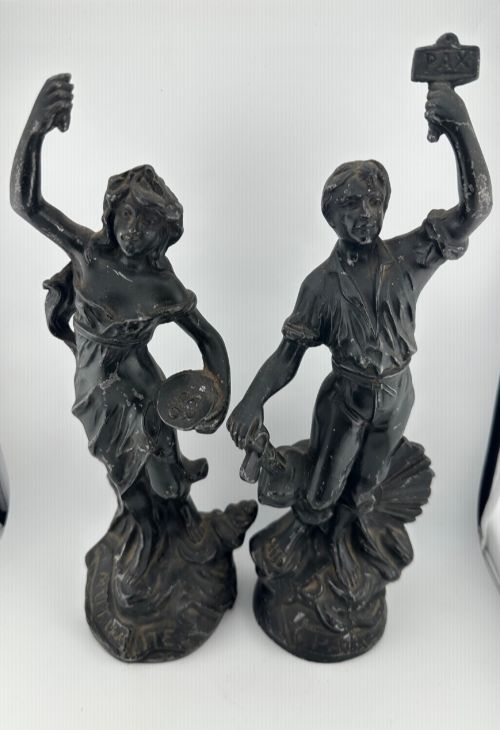
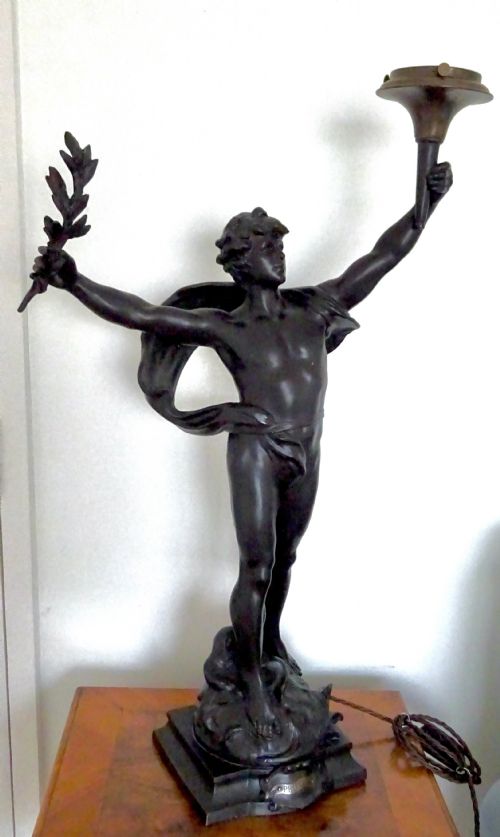
Art nouveau spelter figures comprise decorative sculptures, table lamps, figure mirrors, mantel clocks, and statues shaped during the late nineteenth and early twentieth centuries. These pieces typically depict female models and allegorical subjects rendered in the characteristic flowing lines of the period.
Buyers on this page most frequently encounter French examples from around 1890 to 1900, often mounted on marble bases or integrated into functional items such as lamps and clock garnitures. The forms range from single standing statues to matched pairs bearing allegorical titles.
The aesthetic relies heavily on the French Belle Epoque tradition, capturing organic motifs and graceful postures in cast metal. Such works served as domestic ornaments that brought contemporary artistic sculpture into middle-class interiors.
Materials and construction
These items are cast primarily in spelter, a zinc alloy, sometimes accompanied by brass, glass, wood, and painted or silvered finishes. Makers often mounted the metal figures on Verdi green marble bases to provide weight and visual contrast.
Surface treatments such as paint and silvering were applied to simulate more expensive bronzes, while glass components were integrated into lamp designs. The casting process captured the intricate drapery and hair details essential to the aesthetic style.
Art Nouveau Spelter Figures Retail Price Guide 2026
Typical asking prices for art nouveau spelter figures among the pieces listed under this phrase on Sellingantiques today, from the lower quarter to the upper quarter. They describe what is for sale here now, not the wider market.
Listings feature periods spanning from the 1880s through the 1920s, with materials including spelter, brass, glass, and marble.
Judging quality and execution
The quality of the surface finish, whether painted, silvered, or patinated, preserves the intended decorative effect without heavy loss or crude repainting. Heavier casting and more substantial marble plinths generally distinguish ambitious studio pieces from simpler commercial output.
L & F Moreau·Auguste Moreau
The Art Nouveau Spelter Figures Glossary
- Spelter
- A zinc-based alloy commonly used as a less expensive alternative to bronze for decorative figures and decorative hardware. It accepts a wide range of painted and metallic finishes.
- Belle Epoque
- A period of French history dating from the late nineteenth century to the First World War, noted for optimism, peace, and notable artistic innovation. Much of the domestic decorative arts trace to this cultural milieu.
- Allegorical
- Pertaining to the representation of abstract ideas, such as peace or mutual aid, through human figures and symbols. Such themes were popular in French sculpture of the period.
- Garniture
- A set of ornamental objects, such as a clock accompanied by matching vases or candelabra, designed to sit together on a mantelpiece. Figures were frequently incorporated into these matched sets.
- Patina
- The surface appearance acquired by metal over time through handling and age, or applied artificially by the maker to simulate oxidation. It enhances the depth of sculptural details.
Art Nouveau Spelter Figures: Frequently Asked Questions
What is spelter metal?
Spelter is a zinc alloy that was widely utilised across the nineteenth and twentieth centuries for decorative sculptures and household items. It offered manufacturers a cost-effective alternative to bronze while allowing for intricate casting.
The metal takes surface finishes like paint and silvering very well, which explains why many surviving examples retain decorative colouring or metallic patinas.
How should I clean my figure?
Dusting gently with a dry, soft cloth is the safest way to maintain these pieces. Moisture and chemical cleaners can damage painted or silvered surfaces.
Because spelter is a relatively soft metal, avoid rubbing or using abrasive materials that might wear away the historic surface finish.
Are these figures French?
Many examples originate from France, reflecting the strong connection between French foundries and the development of the style during the Belle Epoque. French makers produced numerous allegorical subjects and female models.
Items often bear French titles or signatures associated with Parisian studios, though production methods spread across Europe during the period.
How do I date these pieces?
Dating relies on stylistic indicators, materials, and associated elements like clock movements or lamp fittings. Pieces typically span the late nineteenth century through the Edwardian era up to the 1920s.
Signatures from known makers or foundry marks can also help narrow the period of manufacture, alongside construction techniques visible on the underside.