




Black Spelter Statues
Black spelter statues bring distinctive metal figures and lamps into a room, offering an affordable way to collect period design.
Black Spelter Statues
When you search for black spelter statues, you are looking at figurative metal sculptures and decorative objects finished with dark patination, often mounted on stone bases. These pieces span the Victorian era, the turn of the twentieth century, and the Art Deco period, capturing everything from allegorical figures to animals and athletes.
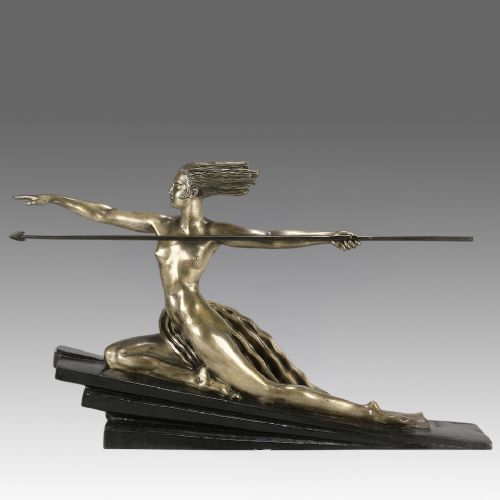
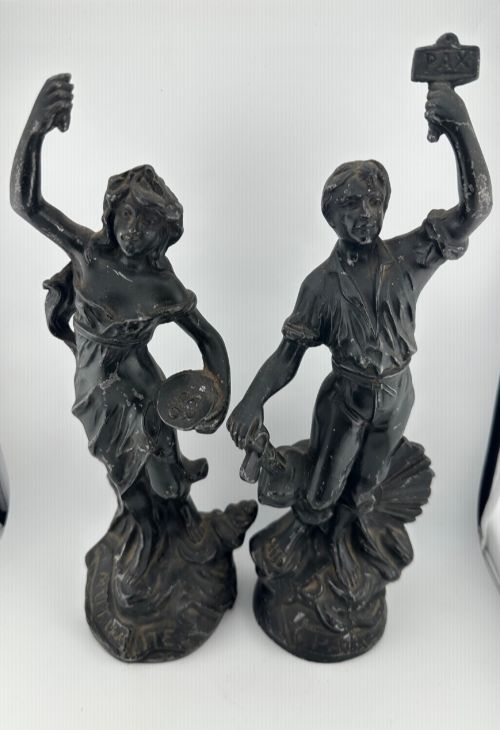
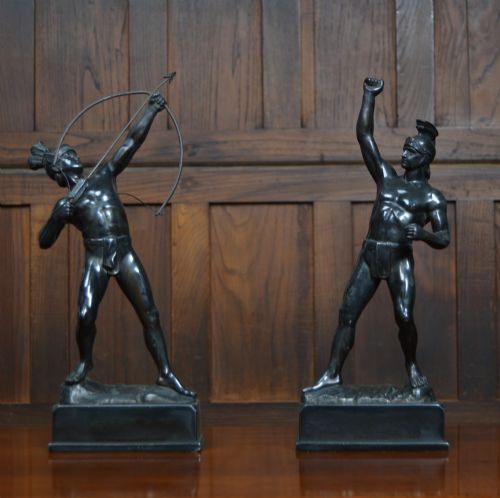
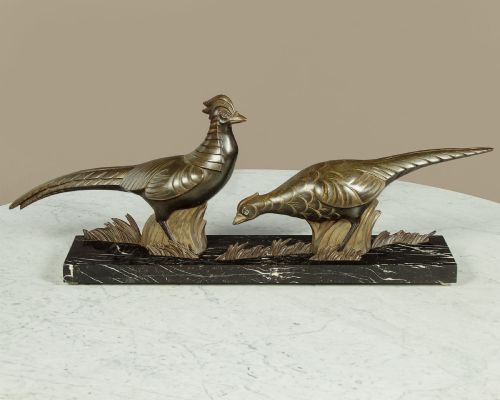
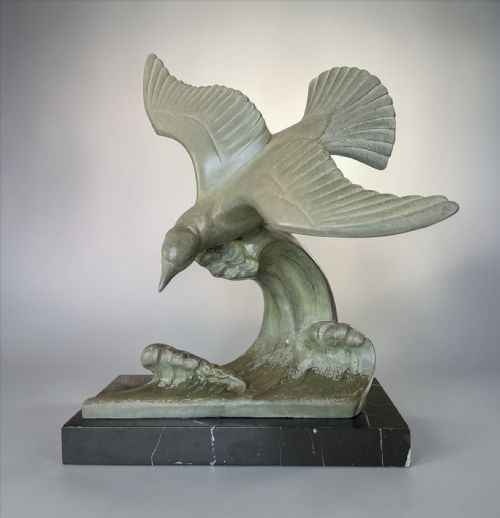
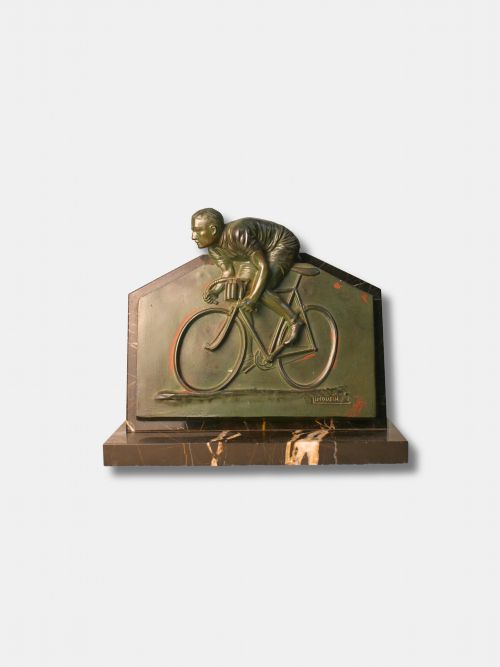
On this page, you are most likely to meet French Art Deco examples from the 1920s and 1930s depicting wildlife, sports figures, or dancers. Earlier Victorian and 1900 pieces tend to feature allegorical subjects or romantic figures, sometimes incorporating functional elements like lamps or night lights.
The forms range from single animal studies like whippets and pheasants to multi-figure groups and mounted athletic scenes. They reflect the changing tastes of European homes across several decades, moving from ornate classical subjects to sleek modernist lines.
How they were made
Spelter, essentially a zinc alloy, was cast into moulds to create detailed figures at a lower cost than bronze. Because the metal is relatively soft, makers applied dark patinated finishes to simulate the appearance of aged bronze or iron.
Many of these figures are set onto heavy contrasting plinths made of marble, onyx, or black marble to give the composition stability and a more substantial presence. Glass and crystal elements occasionally appear in related decorative objects and companion pieces.
Black Spelter Statues Retail Price Guide 2026
Typical asking prices for black spelter statues among the pieces listed under this phrase on Sellingantiques today, from the lower quarter to the upper quarter. They describe what is for sale here now, not the wider market.
Listings feature spelter combined with marble, onyx, and glass across various decorative forms.
What varies in quality
The quality of the mounting and the choice of base material also set pieces apart. Heavier, well-fitted marble or onyx plinths paired with stable patination elevate the overall character of the sculpture.
Jean de Roncourt·P. Sega·C Masson·Geo Maxim·Chiparus
The Black Spelter Statues Glossary
- Spelter
- A zinc-based alloy used extensively for decorative sculptures and figures during the nineteenth and twentieth centuries. It serves as a more affordable alternative to bronze.
- Patination
- The surface treatment applied to metal to impart colour, tone, or an aged appearance. Dark patinated finishes help spelter resemble heavier metals.
- Plinth
- A heavy base, often made of marble or onyx, supporting the main sculpture. It provides physical balance and visual weight to the piece.
- Allegorical
- Representing an abstract idea or quality through human or animal figures. Common subjects include peace, mutual aid, or classical virtues.
- Art Deco
- A design style prevalent in the 1920s and 1930s characterised by stylised forms, geometric shapes, and dynamic movement. It heavily influenced European metalwork of the period.
Black Spelter Statues: Frequently Asked Questions
What is spelter metal?
Spelter is a zinc alloy commonly used for decorative figures and lamps because it could be cast easily and finished to resemble bronze. It offers a lighter, more affordable alternative to traditional bronze casting.
While softer than bronze, spelter holds surface detail well when cast from good moulds and takes dark patination effectively to achieve an antique appearance.
How do I clean a spelter statue?
Dust these statues gently with a soft, dry cloth to remove surface dirt. Avoid using water, liquid cleaners, or metal polishes, which can strip the dark patination.
Keep the pieces out of direct sunlight and damp environments to protect both the metal surface and the stone base from deterioration.
How can I tell the period of a piece?
The styling of the figure and the choice of base usually indicate the period, with 1920s and 1930s pieces showing sleek Art Deco lines and geometric marble plinths. Earlier Victorian or 1900 figures tend to feature more ornate classical clothing and allegorical themes.
Signatures or foundry marks stamped into the metal or stone can also help identify the artist and timeframe of creation.
Why are they mounted on marble?
Marble and onyx bases were added to give lighter metal sculptures weight, stability, and a finished display presence. The dark stone also contrasts effectively with the dark patinated metal.
Many Art Deco designs rely on the geometric shape of the marble plinth to complete the modernist silhouette of the overall object.