


Art Nouveau Porcelain Urn
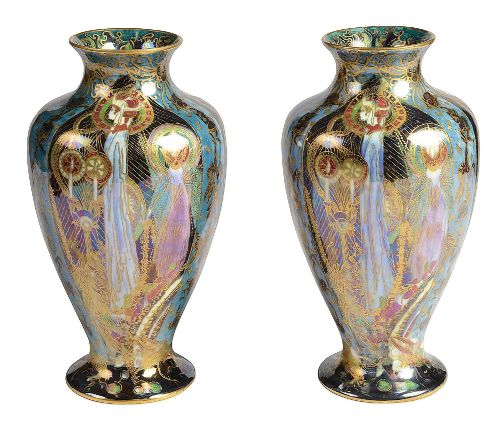
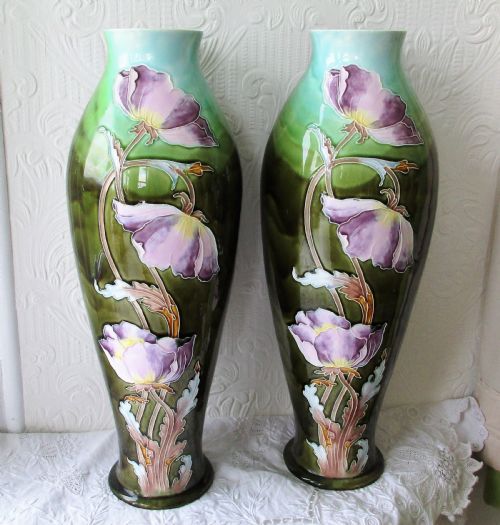
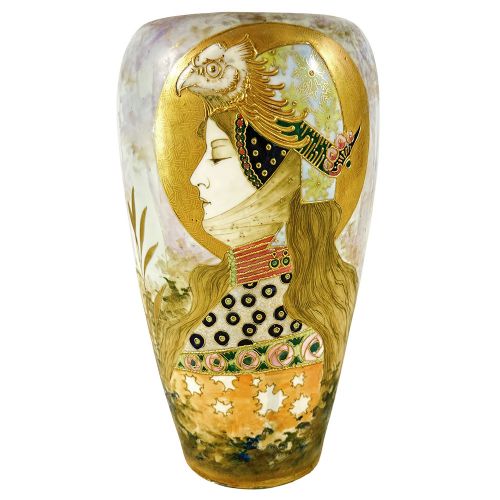
These art nouveau porcelain urn forms bring sweeping floral lines and hand-painted scenes right into a room.
Art Nouveau Porcelain Urn
An art nouveau porcelain urn stands as a key decorative form, drawing the eye with fluid contours and organic motifs drawn from nature. Collectors find these pieces bridging the late nineteenth century and the early decades of the twentieth century, often spanning the Art Nouveau, Art Deco, and Edwardian styles.
Vases and decorative vases dominate the selection on this page, appearing frequently in pairs or as single statement items. Origin points stretch across Austria, England, France, Holland, and Germany, reflecting diverse European ceramic traditions of the period.
The aesthetic leans heavily on stylised plant forms, portraits, and allegorical subjects rendered through careful brushwork. Buyers meet works shaped by prominent potteries and individual artists working within distinct regional workshops.
Materials and construction methods
Body materials span porcelain, earthenware, ceramic, and bone china, forming the sturdy base for intricate surface decoration. Potters shaped these clay bodies into baluster profiles, cornucopia vessels, and traditional urn shapes.
Artisans applied glazes and hand-painted pigments directly onto the ceramic surface, often highlighting details with enamel and gold leaf. Gilt accents catch the light, framing figurative scenes and botanical patterns established during firing.
Materials across this selection include porcelain, bone china, earthenware, and ceramic, enhanced with glaze, enamel, and gold leaf.
Assessing quality in ceramic vessels
Execution of hand-painted details dictates the distinction between standard production and exceptional studio output. Precision in brushwork, particularly in portraits and complex landscape scenes, separates finer examples from simpler factory pieces.
Application of gold leaf and enamel adds depth to the surface, where thicker, richer gilding indicates greater initial investment by the maker. The clarity of the glaze and the crispness of moulded organic contours reveal the underlying skill of the pottery.
Daisy Makeig Jones·Nicholas Kannhauser·Reissner Stellmacher and Kessel·Royal Doulton·Rozenburg·Ernst Wahliss·Royal Dux Bohemia·Alexandra Porcelain Works·Moorcroft Macintyre·Royal Bonn·Royal Vienna
The Art Nouveau Porcelain Urn Glossary
- Baluster
- A tall vase form with a rounded body that tapers toward a narrow neck. This shape provides a balanced canvas for sweeping floral designs.
- Gilt
- A thin layer of gold applied to the surface of the ceramic. It accentuates borders and highlights raised decorative motifs.
- Enamel
- Opaque glass-like material fused to the ceramic body through firing. It creates vibrant, durable colours across painted scenes.
- Cornucopia
- A horn-shaped vessel traditionally symbolising abundance. Makers adapted this classical form to fit flowing Art Nouveau contours.
Art Nouveau Porcelain Urn: Frequently Asked Questions
Where were these pieces made?
Production centres span several European countries, including Austria, England, France, Holland, and Germany. Different regions developed distinct painting styles and clay bodies.
Potteries ranged from large commercial works in England and Germany to specialised studios in Vienna and Bohemia.
How do I care for hand-painted ceramics?
Gentle dusting with a soft, dry cloth preserves the fragile enamel and gold leaf surfaces. Avoid chemical cleaners and water immersion.
Keep pieces away from direct sunlight to prevent fading of hand-painted pigments over time.
What periods do these items represent?
Most items date from the late nineteenth century through the early decades of the twentieth century. The dominant aesthetic draws from Art Nouveau design principles.
Some pieces reflect transitional styles reaching into Edwardian tastes and early Art Deco forms.
How were these urns used?
These vessels served primarily as decorative ornaments for mantelpieces, tables, and cabinets in middle and upper-class homes. Their scale made them natural focal points within a room.
Some functioned to display dried botanicals, though most remained purely ornamental to showcase the painter's skill.