


Art Nouveau Overlay Glass
When you search for art nouveau overlay glass, you enter a world of iridescent surfaces and metallic tracery made to catch the light.
Art Nouveau Overlay Glass
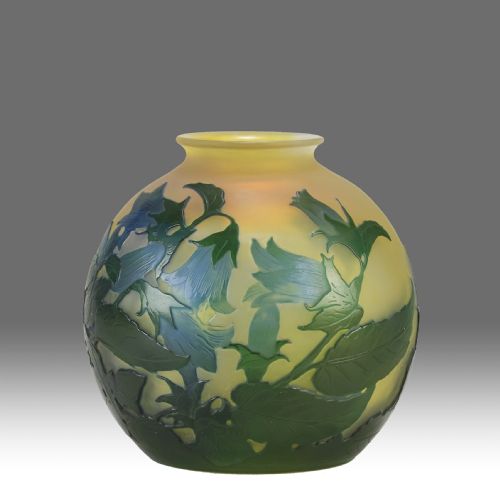
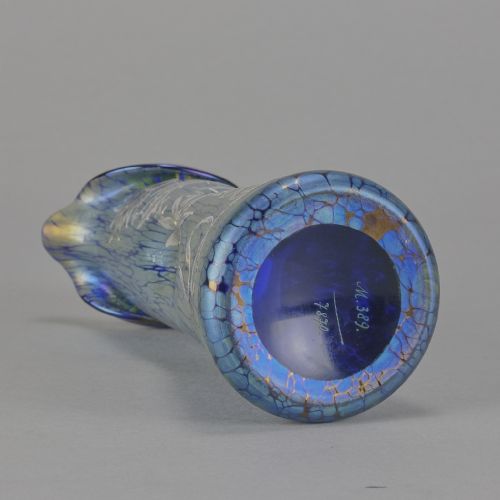
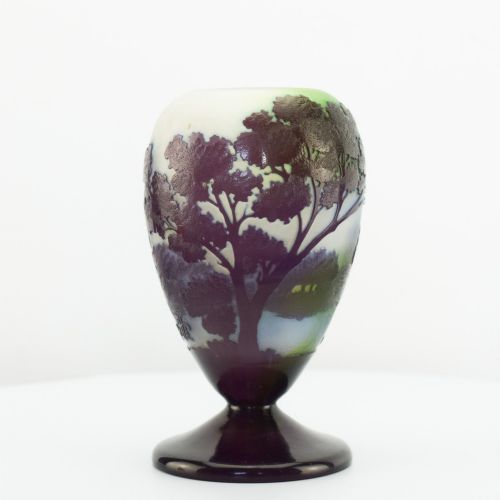
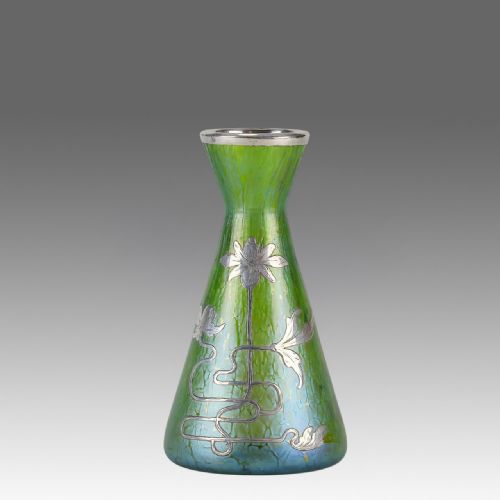
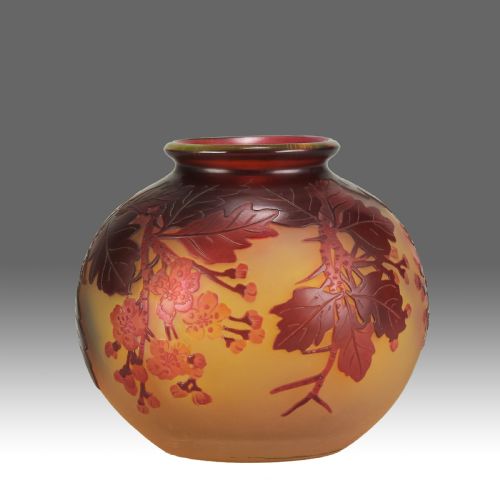
Art nouveau overlay glass brings together blown glass bodies and applied metallic layers or carved outer strata. Vases, scent bottles, and vanity sets form the core of what appears in this category.
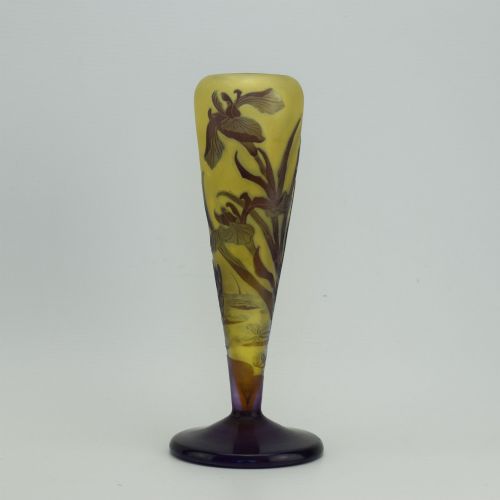
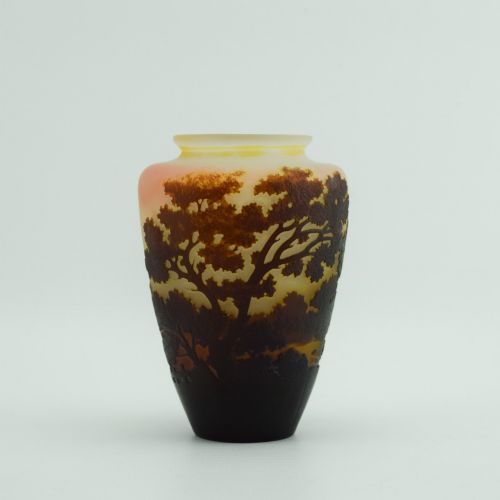
The aesthetic leans heavily toward natural motifs, featuring landscapes, floral designs, and aquatic scenes rendered across Victorian, Edwardian, and early twentieth-century production.
Visitors to this page encounter French cameo glass alongside Austrian iridescent vessels and sterling silver or pewter mounted glassware from diverse European workshops.
Materials and Construction
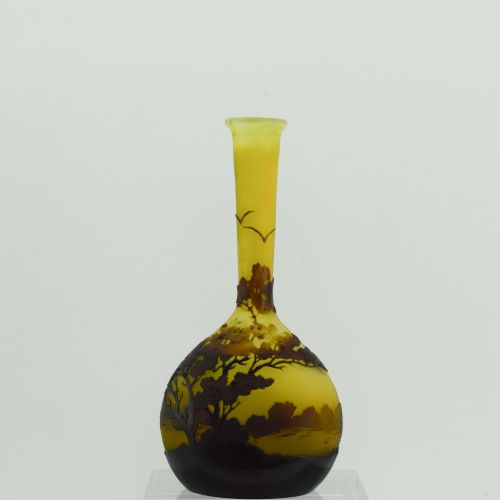
Makers utilised cameo glass techniques, acid-etching, and layered glass melts to build depth into the body of each vessel. Molten glass received applications of contrasting colours before carving or chemical treatment revealed the design.
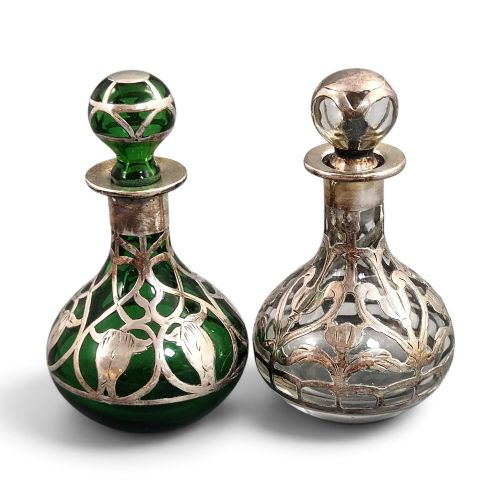
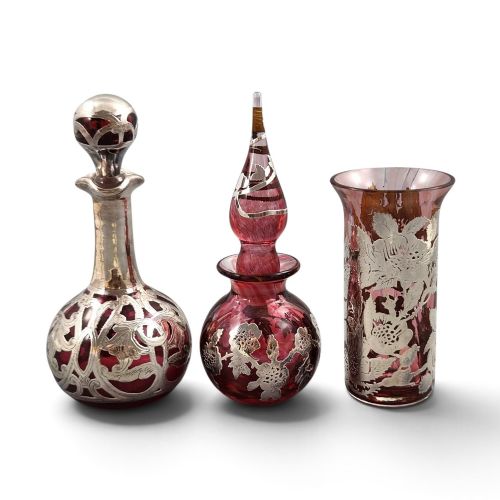
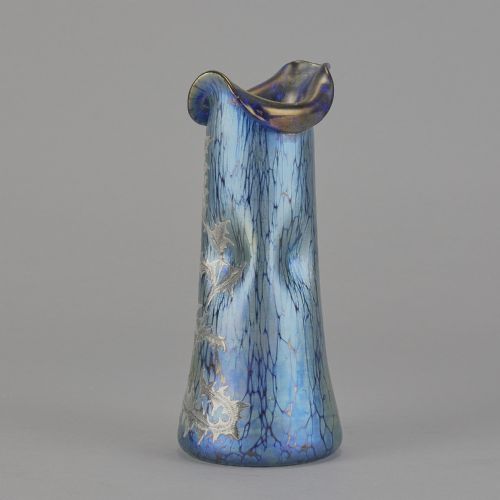
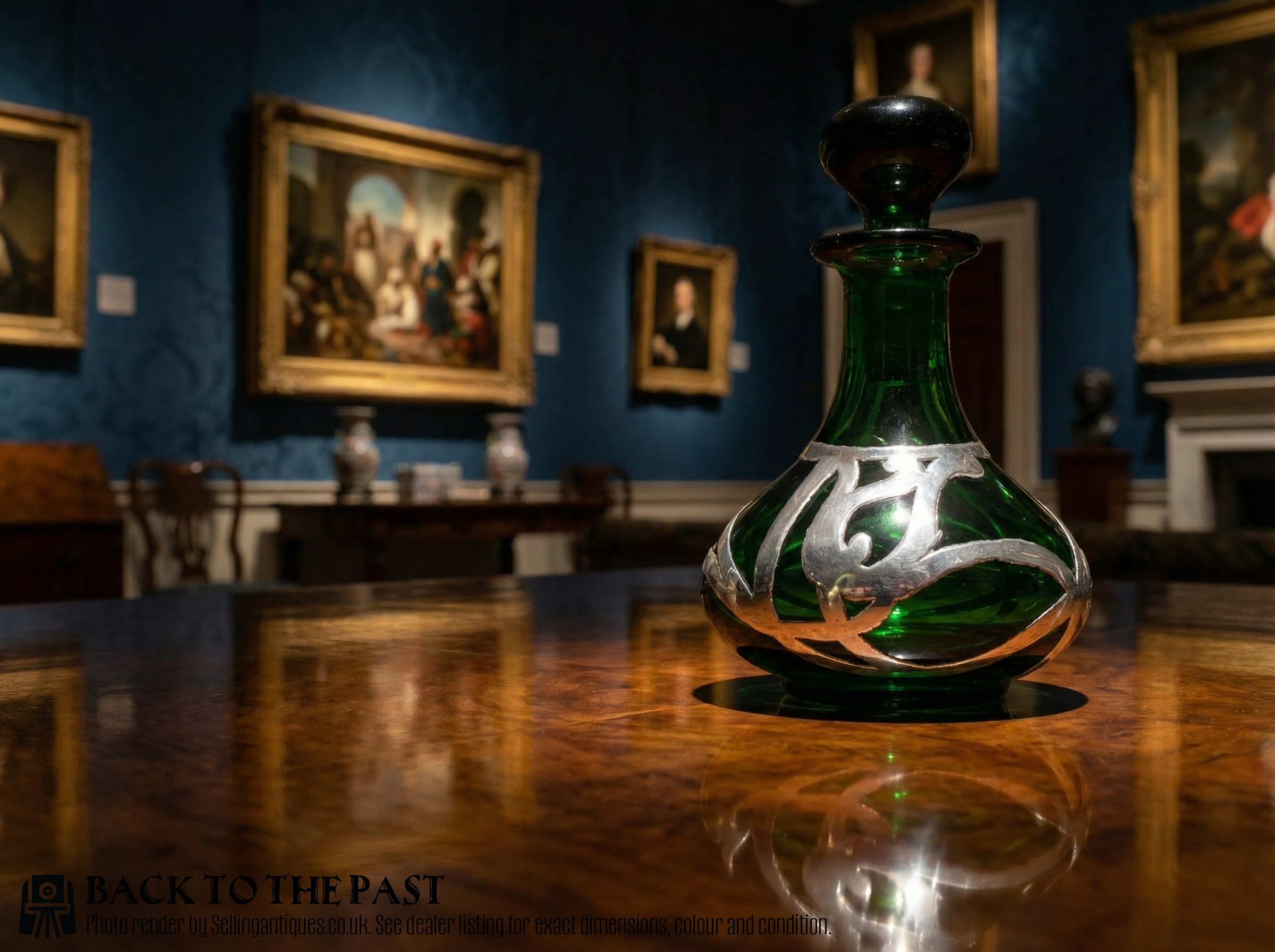
Metalwork involved piercing and shaping sterling silver, pewter, or copper directly onto the hardened glass surface. Some pieces integrated silver overlay through electroplating, while others secured metal collars and mounts by hand.
Several scent bottles in the archive wear their silver overlay like ill-fitting lace, proving that even historic artisans struggled with slippery glass.
Assessing Quality and Execution
Quality rests in the crispness of the carving and the precise registration of the metal overlay against the glass curves. Superior examples demonstrate a careful balance between the thickness of the background glass and the delicate relief of the foreground motifs.
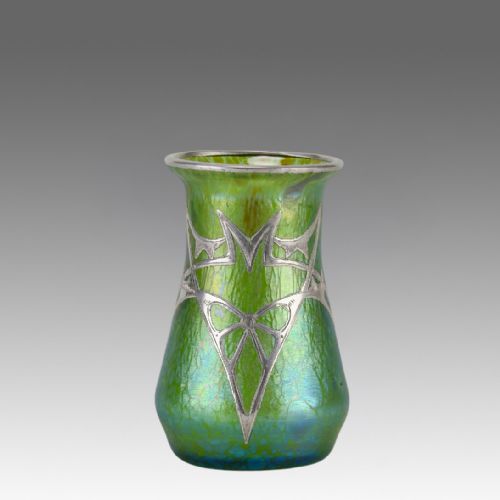
The integration of the metalwork defines the upper tier of production, where silver or pewter foliate designs follow the exact contours of the vessel without gaps or clumsy solder lines.
Emile Gallé·Loetz Witwe·Johann Loetz·Daum Frères·Gorham·Moser·Ferdinand von Poschinger
The Art Nouveau Overlay Glass Glossary
- Cameo glass
- Glass formed with multiple layers of distinct colours, where portions of the outer layers are carved away to create a raised design. This technique requires considerable skill to maintain even depth across curved surfaces.
- Silver overlay
- A decorative technique where sterling silver is applied to the exterior of a glass object, typically leaving open spaces of glass between intricate metallic tendrils and floral patterns.
- Iridescent glass
- Glass treated with metallic salts while hot to produce a shimmering, multicoloured sheen that reflects light across the surface. Loetz and other makers utilised this effect extensively.
- Acid-etched glass
- Glass decorated by submerging the vessel in acid to eat away exposed areas, leaving the protected design in relief. This method allowed for precise botanical and landscape scenes.
- Secessionist
- A stylistic movement associated with Central European artists and designers who broke away from traditional academic art to embrace geometric forms and stylised nature.
Art Nouveau Overlay Glass: Frequently Asked Questions
How do I clean art nouveau overlay glass?
Dust these pieces gently with a dry, soft cloth to protect both the glass and the delicate metal mounts. Avoid submerging silver-mounted or pewter-overlay vessels in water for extended periods.
Harsh chemical cleaners strip the patina from silver and damage iridescent surfaces. Spot clean the glass with a damp cloth while keeping moisture away from any metal junctions.
Were these glass pieces used daily?
Many scent bottles, vanity sets, and drinking glasses served functional roles on dressing tables and dining rooms during the Edwardian and Victorian eras. Their owners utilised them for perfumes, beverages, and personal grooming.
Over time, delicate cameo vases and silver-mounted vessels transitioned into display objects. Today, collectors preserve them primarily as decorative examples of early twentieth-century design.
How do I identify a cameo glass landscape?
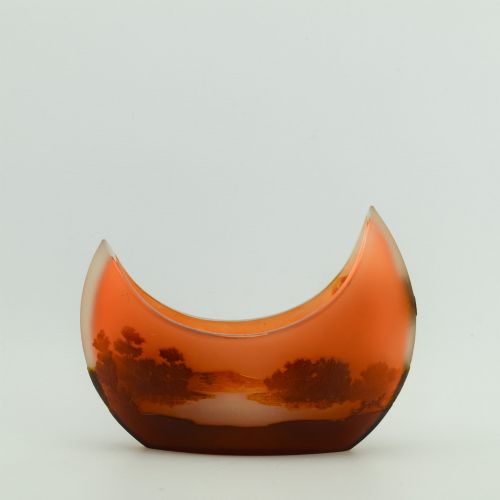
Landscape cameo pieces feature acid-etched or hand-carved trees, lakes, and floral scenes layered directly into the glass body. Makers such as Gallé often signed these vessels within the design itself.
Look closely at the horizon lines and foliage to determine the depth of the cameo layers. The colour transition between the background and the foreground reveals the complexity of the manufacturing process.
What is the difference between silver overlay and silver mounted?
Silver overlay describes metal applied directly to the glass surface in intricate patterns, often fused or electroplated onto the vessel. The metal forms an integral part of the exterior decoration.
Silver mounted pieces feature structural collars, rims, or stoppers attached to the glass neck or base. These functional metal additions secure stoppers or reinforce the edges of perfume bottles and decanters.